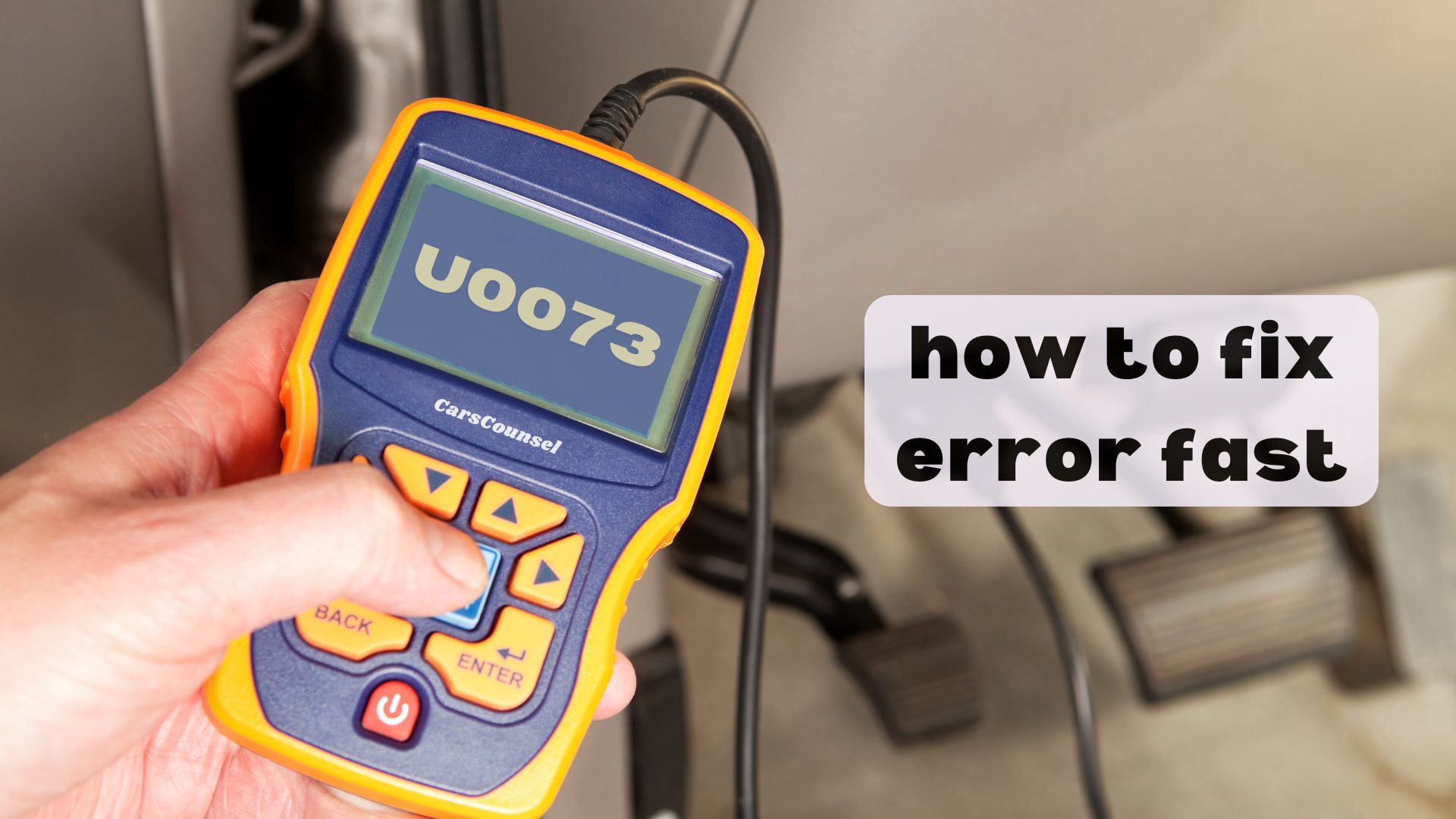
The U0073 code is a generic network code indicating that the Control Module Communication Bus “A” is off. This usually affects the high-speed CAN bus connecting major vehicle computers.
This code does not prove a single module has failed. The entire network may be down due to a short circuit, wiring fault, or a single module disrupting communication.
Quick Navigation
Key Takeaways
- U0073 indicates the high-speed communication network (Bus “A”) has stopped transmitting data.
- A single failed module or a short circuit in the wiring can bring down the entire network.
- Diagnosis requires checking CAN bus voltage levels and isolating modules to find the fault.
- Multiple warning lights and a no-start condition are common when this network fails.
U0073 Code Description and Implications
The U0073 code stands for “Control Module Communication Bus ‘A’ Off.” Modern vehicles use a Controller Area Network (CAN) to allow modules to share critical data.
Bus “A” typically refers to the high-speed powertrain or chassis network. When the network is “off,” communication signals have dropped completely.
This often happens due to a short to ground, a short to voltage, or a failed terminating resistor.
Because this is a generic network code, the exact modules affected depend on the vehicle’s specific architecture. Check your OBD2 Codes resources for specific vehicle details.
Common Causes of the U0073 Code
Multiple conditions can disable the communication network. The underlying cause must be confirmed through testing rather than assuming a single component has failed.
- Short to ground or voltage: Damaged wiring rubbing against the chassis can short the CAN High or CAN Low circuits, disabling the entire bus.
- Faulty control module: A single module with an internally shorted CAN transceiver can pull the entire network voltage down, preventing all communication.
- Open circuit or broken wire: A complete break in the network backbone prevents data from reaching other modules.
- Missing or faulty terminating resistors: The network requires specific electrical resistance to function correctly and prevent signal reflection.
Symptoms Associated With U0073
When the primary communication network fails, the vehicle cannot share data between critical computers. Symptoms depend on which systems rely on Bus “A”.
- Illuminated warning lamps: The Check Engine Light and multiple other dashboard warnings will typically turn on simultaneously.
- No-start condition: The immobilizer or engine computer may not receive the necessary network messages to allow the engine to crank or start.
- Loss of scanner communication: An OBD-II scanner may fail to communicate with several major modules when connected to the diagnostic port.
- Gauges dropping out: The instrument cluster may lose data from the engine or transmission, causing gauges to stop working.
Diagnosing the U0073 Trouble Code
Proper diagnosis begins by verifying the exact vehicle network architecture. Network diagnosis requires specific electrical tests and safety precautions.
- Verify module communication: Use a scan tool to see which modules are online and which are offline to identify the scope of the failure.
- Check network resistance: Disconnect the battery and measure the resistance across the CAN High and CAN Low pins at the OBD-II port.
- Check network voltage: With the key on, measure the voltage on the CAN High and CAN Low pins at the diagnostic port.
- Isolate modules: If a short is detected, systematically disconnect modules on Bus “A” to see if the network comes back online.
Repairing the U0073 Issue
Repairs must follow confirmed diagnostic testing. The exact repair path depends on whether the fault is in the wiring, a resistor, or a module.
- Wiring repair: Repair or replace any damaged CAN bus wiring, ensuring the twisted pair geometry is maintained to prevent signal interference.
- Module replacement: If a specific control module is confirmed to be pulling the bus down, replace and program the new module.
- Resistor replacement: Replace damaged terminating resistors if the network resistance is out of the manufacturer’s specification.
Cost Considerations for U0073 Repairs
Repair costs vary significantly based on the root cause, vehicle make, and labor accessibility. Exact pricing depends on your local shop rates.
- Wiring repair: Costs depend on the time required to trace and repair the damaged network harness hidden behind interior panels.
- Module replacement: Replacing and programming a major control module involves higher parts costs and specialized labor for software configuration.
Prevention Strategies for Future Occurrences
While electrical faults cannot always be prevented, protecting the vehicle’s wiring harnesses can reduce the risk of network shorts and communication failures.
- Protect wiring harnesses: Ensure network wiring is secured away from moving parts, sharp edges, and excessive heat sources.
- Address moisture intrusion: Repair weather seals to prevent water from corroding module connectors and causing network shorts.
Troubleshooting Tips and Best Practices
- Do not use standard test lights: Standard test lights can draw too much current and damage sensitive CAN bus transceivers. Use a digital multimeter.
- Check aftermarket accessories: Poorly installed aftermarket alarms or trackers spliced into the CAN bus can cause network failures and trigger this code.
- Verify battery voltage: Severely low system voltage can cause modules to drop off the network temporarily. Test the battery and charging system first.
- Use exact specifications: Always refer to the factory service manual for the correct network pinout diagrams and resistance values for your specific vehicle.
More OBD-II Codes
| U0001 | P0600 | P0601 | P0602 |
| P0603 | P0604 | U0100 | U0101 |
| U0107 | U0109 | U010C | U0121 |
| U0126 | U0140 | U0141 | U0151 |
| U0155 | U1000 | U1001 | U1017 |
| U1041 | U1064 | U1120 | U1900 |
Frequently Asked Questions
Is it safe to drive with a U0073 code?
No. A disabled high-speed network can prevent the engine from starting, disable stability control, and cause the transmission to enter limp mode. Diagnose immediately.
Can a bad battery cause a U0073 code?
Yes. Severely low system voltage can cause control modules to shut down or drop off the communication network. Always verify the battery first.
Will disconnecting the battery clear the U0073 code?
Disconnecting the battery may temporarily reset the modules, but it will not repair a physical short circuit. The code will return once monitors run.
Can aftermarket accessories trigger U0073?
Yes. Aftermarket alarms, trackers, or tuning devices spliced into the CAN bus wiring can disrupt the network signals or cause a short circuit.
How much does it cost to fix a U0073 code?
Costs vary widely. Repairing a chafed wire is relatively inexpensive, while diagnosing and replacing a failed internal control module requires significant labor and programming.
What Should You Do About the U0073 Code?
Confirm the exact network architecture for your specific vehicle application. Begin by checking the CAN bus resistance and voltage at the diagnostic port.
Do not replace control modules without verified diagnostic evidence. Follow the manufacturer’s pinpoint tests to isolate the fault before authorizing repairs.

