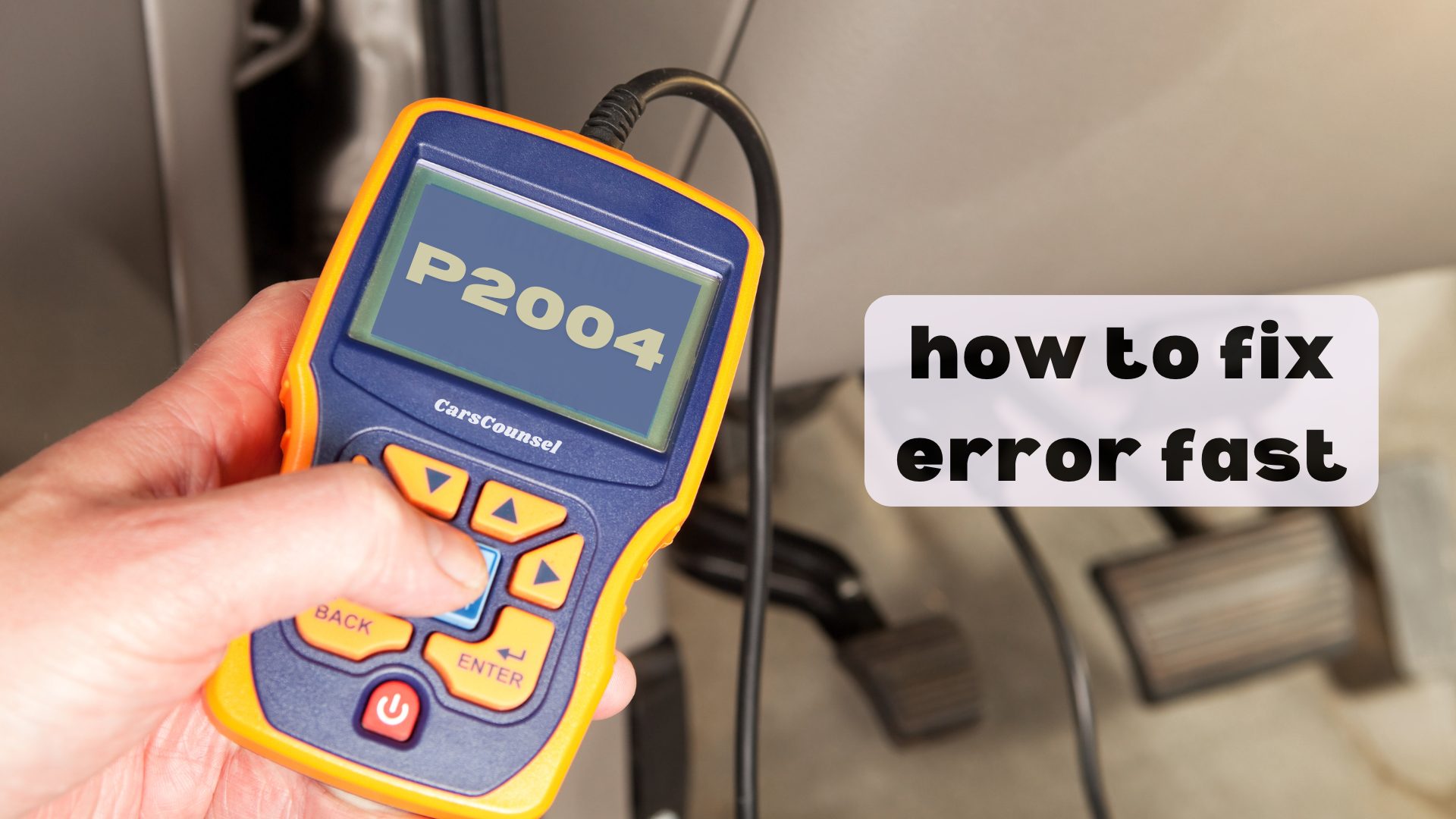
P2004 is a generic OBD-II powertrain code indicating an “Intake Manifold Runner Control Stuck Open Bank 1” condition. The powertrain control module (PCM) has detected that the intake manifold runners on bank 1 remain open when commanded to close.
This code identifies a mechanical or electrical performance condition and does not automatically prove the actuator has failed. Proper diagnosis requires inspecting the linkage, vacuum supply, and electrical circuits before replacing any components.
Quick Navigation
Key Takeaways
- P2004 indicates the PCM commanded the Bank 1 intake manifold runners to close, but they remained stuck in the open position.
- The code flags a performance or mechanical binding condition, which does not automatically confirm a failed electronic actuator.
- Broken plastic linkage arms and carbon buildup inside the manifold are verified causes on specific applications.
- Diagnosis requires verifying physical flap movement, vacuum supply, and actuator electrical circuits.
P2004 Code Description and Implications
The P2004 code stands for “Intake Manifold Runner Control Stuck Open Bank 1.” The powertrain control module (PCM) uses the Intake Manifold Runner Control (IMRC) system to optimize engine breathing.
At lower engine speeds, the PCM commands internal butterfly valves to close, lengthening the intake runners to increase air velocity. At higher RPMs, the flaps open to allow maximum airflow.
When the PCM commands the Bank 1 runners to close but receives feedback that they are still open, it stores the P2004 code. Bank 1 refers to the engine bank containing cylinder number one.
Common Causes of the P2004 Code
Mechanical and electrical conditions can prevent the intake runners from closing properly. The root cause depends on the specific intake architecture.
- Broken linkage or actuator arm: On certain verified applications, the plastic linkage connecting the vacuum actuator to the manifold flaps breaks or detaches from the pivot ball.
- Carbon buildup: Heavy carbon accumulation inside the intake manifold can physically bind the butterfly valves, preventing them from moving.
- Failed IMRC actuator or solenoid: A torn vacuum diaphragm in a pneumatic actuator or a failed electric motor will prevent movement.
- Vacuum leaks: Cracked, disconnected, or degraded vacuum lines supplying the IMRC solenoid or actuator will prevent the system from generating the required force.
- Wiring and connector issues: Corroded pins, chafed wires, or poor grounds in the IMRC control or feedback circuits can interrupt operation.
Symptoms Associated With P2004
Because P2004 relates to intake airflow optimization, symptoms affect low-speed drivability. The exact presentation depends on the severity of the fault.
- Illuminated Check Engine Light: The MIL will activate once the PCM confirms the runner position fault.
- Reduced low-end torque: The engine may feel sluggish during initial acceleration because the intake runners remain in the high-RPM open configuration.
- Rough idle or hesitation: Improper air velocity at low speeds can cause minor idle fluctuations or hesitation.
- Decreased fuel efficiency: Suboptimal air-fuel mixing at lower RPMs can slightly reduce fuel economy.
Diagnosing the P2004 Trouble Code
Accurate diagnosis requires verifying whether the fault is mechanical binding, vacuum loss, or electrical failure.
- Visual inspection of linkage: Inspect the external IMRC actuator arm and linkage. The plastic clips or arms may break, leaving the flaps stuck open.
- Check vacuum supply: If the system uses a vacuum actuator, verify that engine vacuum reaches the IMRC solenoid and the actuator diaphragm. Inspect all related hoses for cracks.
- Command the solenoid: Use a scan tool with bidirectional controls or apply manual vacuum to the actuator to see if the flaps physically move and hold position.
- Test electrical circuits: If the actuator is electronic or the solenoid is unresponsive, test the reference voltage, ground, and control circuits according to the manufacturer wiring diagram.
- Inspect for internal binding: If the external linkage moves but the code persists, the internal manifold flaps may be bound by carbon deposits.
Repairing the P2004 Issue
Repairs must address the specific root cause identified during diagnosis. Clearing the code without fixing the underlying condition will result in its return.
- Linkage repair or replacement: If the plastic arm or bushing is broken, replace the linkage kit or the entire actuator assembly depending on manufacturer availability.
- Vacuum line replacement: Replace any cracked, brittle, or leaking vacuum hoses supplying the IMRC system.
- Solenoid or actuator replacement: If the vacuum diaphragm is ruptured or the electronic actuator fails electrical testing, replace the confirmed faulty component.
- Intake manifold cleaning or replacement: If internal carbon buildup has permanently seized the flaps, the intake manifold may require intensive cleaning or complete replacement.
- Wiring repair: Repair any damaged wiring or corroded connectors in the IMRC control circuit.
Cost Considerations for P2004 Repairs
Repair costs for a P2004 code vary based on the underlying cause and the vehicle’s design.
- Linkage repair kit: On applications where a repair kit is available, this is a low-cost fix requiring minimal labor.
- Vacuum hose or solenoid replacement: Inexpensive, primarily involving the cost of the hose or solenoid and minor labor.
- Actuator replacement: Moderate cost, depending on part price and accessibility on the intake manifold.
- Intake manifold replacement: If internal flaps are broken or seized, replacing the entire manifold assembly involves substantial parts and labor costs.
Prevention Strategies for Future Occurrences
While mechanical linkage failures cannot always be prevented, maintaining the intake system reduces the likelihood of carbon binding.
- Address PCV system issues: A failing positive crankcase ventilation (PCV) system can draw excessive oil vapor into the intake, accelerating carbon buildup on the IMRC flaps.
- Use quality fuel and induction services: Periodic intake system cleaning services can help minimize carbon deposits on the internal butterfly valves.
- Inspect vacuum lines during service: Checking engine bay vacuum hoses for dry rot during routine maintenance can prevent sudden IMRC vacuum loss.
Troubleshooting Tips and Best Practices
When addressing a P2004 code, avoid common diagnostic shortcuts that lead to unnecessary parts replacement.
- Do not ignore broken plastic clips: On specific engines, the linkage arm simply pops off. Replacing the entire intake manifold is unnecessary if an aftermarket linkage repair kit is available.
- Verify vacuum before replacing parts: Never replace an IMRC actuator without first confirming that adequate engine vacuum is reaching the component.
- Check for related codes: Review other OBD2 Codes stored in the PCM. Codes for the IMRC position sensor circuit can pinpoint electrical failures.
- Clear adaptation memory: After repairing the linkage or replacing the actuator, some vehicles require a PCM reset or idle relearn procedure to recalibrate the flap position sensors.
More OBD-II Codes
| P1870 | P1860 | P1811 | P1810 |
| P1790 | P1788 | P2005 | P2006 |
| P2007 | P2008 | P2009 | P2012 |
| P2014 | P2015 | P2020 | P2022 |
| P0171 | P0174 | P0101 | P0300 |
| P0420 | P0430 | P0440 | P0455 |
Frequently Asked Questions
Is P2004 a generic or manufacturer-specific code?
P2004 is a generic OBD-II code. Its basic definition regarding the intake manifold runner control being stuck open on Bank 1 is standardized, though the specific actuator design varies by application.
Can I drive my car with a P2004 code?
The vehicle may be driven cautiously, but you might experience reduced low-end acceleration. Prolonged driving with mechanically bound flaps can damage the actuator linkage or internal manifold components.
Will an intake cleaner fix the P2004 code?
An induction service may resolve the code if light carbon buildup is temporarily binding the flaps. If the plastic linkage is broken or the internal flaps are permanently seized, chemical cleaners will not fix the issue.
Does P2004 mean my intake manifold needs to be replaced?
Not necessarily. On various applications, only the external vacuum actuator, solenoid, or plastic linkage arm has failed. The intake manifold itself only requires replacement if the internal butterfly valves are broken or permanently seized.
Can a vacuum leak cause the P2004 code?
Yes. If the IMRC system uses a vacuum actuator, a cracked or disconnected vacuum hose will prevent the actuator from pulling the linkage to close the flaps, causing the PCM to register a stuck-open condition.
What Should You Do About the P2004 Code?
When the P2004 code appears, your first step should be to visually inspect the external IMRC linkage and vacuum lines on the intake manifold. Do not immediately replace the entire intake manifold.
Confirm the exact factory definition and diagnostic procedure for your specific vehicle application. Have a qualified technician verify the physical movement of the flaps and test the actuator circuit before authorizing major component replacements.

