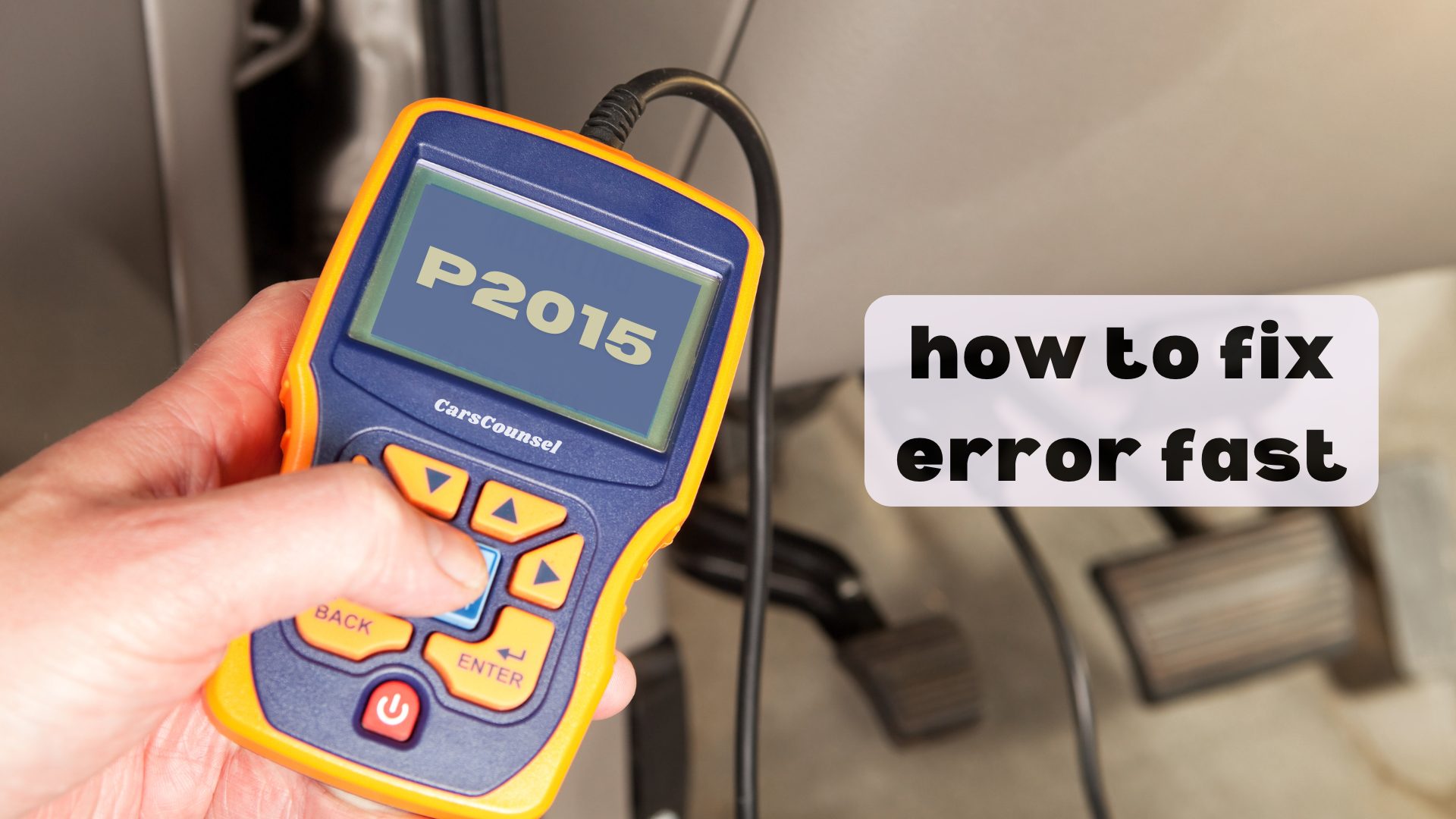
P2015 is a generic OBD-II diagnostic trouble code indicating the Powertrain Control Module detected a range or performance issue with the Intake Manifold Runner Position Sensor circuit for Bank 1. This means the sensor signal is outside expected parameters or does not match the commanded flap position.
This code identifies a monitored circuit condition rather than confirming a single failed component. The underlying cause could involve the position sensor, the runner actuator, carbon buildup restricting the flaps, or wiring issues, requiring targeted diagnosis before any parts are replaced.
Quick Navigation
Key Takeaways
- P2015 indicates the control module detected an irrational or out-of-range signal from the Bank 1 intake manifold runner position sensor.
- Possible causes include a faulty position sensor, a failing runner actuator motor, carbon buildup binding the flaps, or damaged wiring.
- Diagnosis requires comparing live sensor data against commanded positions and physically inspecting the intake manifold linkage for restrictions.
- Repairs depend on the confirmed root cause and may involve cleaning carbon deposits, repairing wiring, or replacing the sensor or actuator.
P2015 Code Description and Implications
The P2015 code indicates that the Powertrain Control Module (PCM) has detected an irrational or out-of-range signal from the Intake Manifold Runner Position Sensor for Bank 1.
Many modern engines use variable intake manifolds with internal flaps to optimize airflow velocity and turbulence at different engine speeds.
The control module commands an actuator to move these flaps and monitors the position sensor to verify they reached the correct angle.
A range or performance fault means the sensor’s reported position does not align with the commanded position, or the signal is erratic.
Because P2015 is a generic code, this fundamental rationality logic applies across various manufacturers.
However, the exact component design, monitoring criteria, and diagnostic steps vary significantly by application. Certain verified Volkswagen and Audi TDI applications, for example, frequently experience this code due to specific intake manifold flap motor and sensor designs.
Common Causes of the P2015 Code
The underlying causes for an intake manifold runner position code generally involve the sensor circuit, the mechanical linkage, or the actuator itself.
Carbon Buildup and Mechanical Binding: On many direct-injection and diesel applications, carbon accumulation can physically restrict the intake flaps. If the flaps cannot move freely, the actuator stalls and the position sensor reports a performance fault.
Sensor and Actuator Faults: The position sensor itself may fail internally, providing a static or erratic signal. The runner actuator motor or vacuum solenoid may also fail to move the linkage.
Wiring and Connector Issues: Damaged wiring, chafed insulation, or corroded connectors in the sensor or actuator circuits can disrupt the signal between the components and the control module.
Symptoms Associated With P2015
The most immediate symptom is the illumination of the Check Engine Light or a specific intake system warning indicator.
Depending on the manufacturer’s fail-safe strategies, the vehicle may enter a reduced-power limp mode to protect the engine from improper airflow.
Drivers might notice rough idling, hesitation during acceleration, or a general lack of low-end torque because the intake runners cannot optimize airflow.
In some applications, a failing intake flap actuator may produce an audible clicking or buzzing noise from the engine bay as it attempts to move a stuck flap.
Diagnosing the P2015 Trouble Code
Diagnosis must begin by confirming the exact factory service information for the vehicle’s make, model, and engine.
When diagnosing OBD2 codes related to intake airflow, generic diagnostic paths cannot account for manufacturer-specific monitor logic or proprietary actuator testing procedures.
Start by visually inspecting the intake manifold runner linkage and actuator. Check for broken plastic clips, disconnected vacuum hoses, or heavy carbon buildup restricting the flap movement.
Next, use a scan tool capable of displaying live data and bidirectional controls. Command the intake runners to open and close while monitoring the position sensor data.
If the commanded position changes but the actual sensor data remains static or erratic, the issue may be a failed sensor or binding linkage.
If the linkage moves freely by hand but the actuator fails to move it during a command test, the actuator motor or its control circuit is likely faulty.
Repairing the P2015 Issue
Repairs must follow confirmed diagnosis. Never replace the position sensor or actuator solely based on the presence of the code without verifying mechanical movement and circuit integrity.
If heavy carbon buildup is physically restricting the intake flaps, the intake manifold may require professional cleaning or replacement, depending on the severity and manufacturer procedure.
If wiring damage or connector corrosion is found, repair the harness and secure the connections before re-evaluating the system.
If live data and electrical testing confirm the position sensor or actuator motor has failed, replace the confirmed faulty component.
On some applications, the position sensor is integrated into the actuator motor or the intake manifold assembly, requiring replacement of the entire unit.
Cost Considerations for P2015 Repairs
Repair costs vary widely depending on the confirmed root cause and the specific vehicle application.
Cleaning carbon deposits from the intake linkage or repairing a minor wiring harness issue is relatively inexpensive and primarily involves standard labor.
If the diagnosis confirms the intake manifold runner actuator or position sensor requires replacement, the parts cost can be moderate to high, especially if the sensor is integrated into the manifold assembly.
Cost depends on diagnostic time, component accessibility, required parts, programming requirements, and labor.
Prevention Strategies for Future Occurrences
Preventing intake manifold runner codes requires attention to engine maintenance and managing carbon accumulation.
On direct-injection and diesel engines, carbon buildup on the intake flaps is a known wear mechanism that cannot always be entirely prevented.
Using high-quality fuel and adhering to strict maintenance schedules for the EGR and PCV systems can help slow the rate of carbon deposition.
Inspecting the intake linkage and actuator arms during routine under-hood maintenance can help identify developing mechanical wear or broken clips before they cause a circuit fault.
Troubleshooting Tips and Best Practices
Always check for Technical Service Bulletins (TSBs) related to P2015 for your specific vehicle application.
Manufacturers frequently release updated intake manifold flap repair kits, revised actuator motors, or software updates to address common mechanical failures and false rationality faults.
Do not assume the position sensor is faulty simply because it is the easiest component to test.
A physically stuck flap will cause a perfectly good sensor to report a range or performance fault because the flap is not moving to the commanded position.
If the vehicle recently underwent intake or engine work, verify that all linkage arms and vacuum hoses were reconnected correctly.
More OBD-II Codes
| P2006 | P2007 | P2008 | P2009 |
| P2012 | P2014 | P2020 | P2022 |
| P2033 | P2035 | P2048 | P2055 |
| P2004 | P2005 | P2066 | P2072 |
| P0101 | P0171 | P0420 | P0300 |
| P0440 | P0505 | P0705 | P0335 |
Frequently Asked Questions
Is the P2015 code generic or manufacturer-specific?
P2015 is a generic SAE-defined OBD-II code. Its fundamental definition regarding intake manifold runner position sensor rationality applies across various manufacturers, though exact diagnostic steps vary by vehicle application.
Can carbon buildup cause a P2015 code?
Yes. Heavy carbon accumulation on the intake manifold flaps can physically restrict their movement. When the flaps bind, the actuator cannot reach the commanded position, triggering the performance code.
Will a P2015 code cause my car to fail an emissions test?
Likely, yes. A malfunctioning intake runner system disrupts optimized airflow and combustion efficiency. This can increase emissions and will cause the vehicle to fail an OBD-II inspection due to the active fault code.
Can I drive my vehicle with a P2015 code?
Driving with this code is not recommended for extended periods. The control module may default to a limp mode with reduced power, and continued operation with binding flaps can damage the actuator motor or break the linkage.
Is the intake manifold runner position sensor easy to replace?
Accessibility varies significantly by application. On some vehicles, the sensor is externally mounted and easily accessible. On others, it is integrated into the actuator motor or buried beneath the intake manifold, requiring significant disassembly.
What Should You Do About the P2015 Code?
Confirm the exact factory definition and diagnostic procedure for your specific vehicle application before attempting repairs.
Do not assume the intake manifold runner position sensor has failed based solely on the presence of the diagnostic trouble code.
Inspect the intake linkage for mechanical binding, verify the wiring harness integrity, and review live data to rule out actuator faults.
Follow the applicable manufacturer diagnostic workflow to isolate the relevant system and components before replacing any intake hardware.

