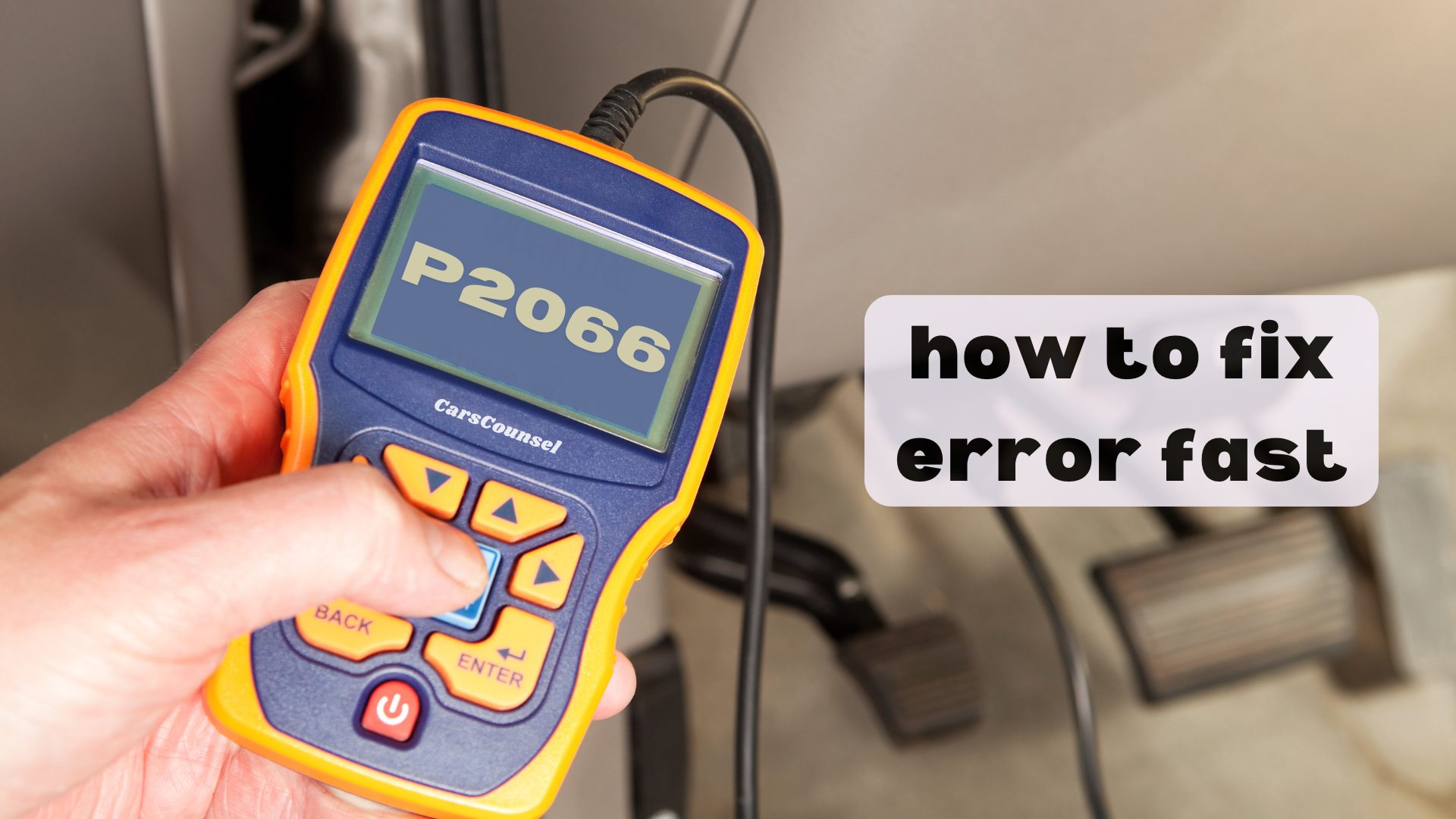
The P2066 code is a generic OBD-II diagnostic trouble code indicating “Fuel Level Sensor ‘B’ Performance.” It means the powertrain control module detected an erratic or implausible signal from the secondary fuel level sensor.
This code does not automatically prove the sensor has failed. Diagnosis requires inspecting the wiring, testing the sensor resistance, and verifying the live data before replacing components.
Quick Navigation
Key Takeaways
- The P2066 code indicates the control module detected a performance fault in the secondary fuel level sensor circuit.
- Possible causes include a failing fuel level sending unit, damaged wiring, corroded connectors, or a faulty instrument cluster.
- Diagnosis involves inspecting the sensor harness, testing the variable resistor, and comparing live data between sensor A and sensor B.
- Repairs may involve repairing wiring, cleaning connectors, or replacing the confirmed failed fuel level sensor.
P2066 Code Description and Implications
The P2066 code indicates that the powertrain control module detected a performance or rationality fault in the Fuel Level Sensor “B” circuit. This generic category of diagnostic trouble codes applies to vehicles equipped with dual fuel tanks, saddle tanks, or secondary fuel level sensors.
The control module monitors the voltage or resistance signal from the fuel level sensors to calculate the total fuel volume. Sensor “B” typically monitors a secondary tank or the secondary half of a saddle-style tank.
When the module detects that the Sensor “B” signal is erratic, stuck, or does not correlate with expected fuel consumption and Sensor “A” data, it stores this code.
Common Causes of the P2066 Code
A failing fuel level sending unit is a possible cause. The internal variable resistor or float mechanism can wear out, causing dead spots or erratic resistance changes as the fuel level changes.
Damaged wiring, chafed insulation, or corroded connectors in the sensor harness will interrupt the signal circuit or introduce high resistance, leading to a performance fault.
In some applications, a faulty instrument cluster or a software calibration issue in the control module can cause incorrect interpretation of the sensor data.
Symptoms Associated With P2066
An illuminated Check Engine Light is expected once the monitor detects the sensor performance fault. MIL behavior varies by application, but the light commands when the rationality fault is verified.
You may notice an inaccurate fuel gauge, such as the gauge dropping to empty suddenly, reading full constantly, or fluctuating wildly while driving.
In vehicles with dual tanks, the system may fail to draw fuel from the secondary tank, potentially leading to a stall if the primary tank runs dry.
Diagnosing the P2066 Trouble Code
Diagnosis must begin by confirming the exact factory definition and checking for related fuel system or sensor circuit codes. Record freeze-frame data and review the live data for both Fuel Level Sensor A and Sensor B.
Perform a thorough visual inspection of the wiring harness and connectors leading to the fuel tank and the secondary fuel level sensor. Look for chafed wires, corrosion, or physical damage.
Use a multimeter to test the fuel level sensor’s resistance across its range of motion and compare it to the exact manufacturer specification. Check the signal circuit for high resistance or intermittent open circuits.
If the wiring and sensor test correctly, the fault may lie within the instrument cluster or the control module’s internal processing.
Repairing the P2066 Issue
Repairs must follow confirmed diagnosis. If the wiring harness is found to be damaged or corroded, repair the circuit and apply dielectric grease to the connectors to prevent future moisture intrusion.
If electrical testing confirms the fuel level sending unit has dead spots or fails the resistance test, replace the sensor assembly using a component meeting the exact vehicle specification.
If the manufacturer diagnostic procedure confirms the instrument cluster or control module as the fault, follow the applicable module service or replacement procedure.
Cost Considerations for P2066 Repairs
Cost depends on diagnostic time, component accessibility, required parts, programming requirements, and labor.
Replacing a fuel level sensor often requires dropping the fuel tank or removing the bed on some trucks, which increases labor time.
If the sensor is integrated into the fuel pump module, the entire module may need to be replaced, increasing parts costs.
Prevention Strategies for Future Occurrences
Inspecting exposed chassis wiring harnesses and electrical connectors under the vehicle during routine service can help identify developing insulation damage or corrosion before it causes a signal fault.
Keeping the fuel tank adequately filled helps prevent the fuel pump and sending unit from overheating, though this primarily affects the pump rather than the level sensor.
Some sending unit failures occur due to normal component aging and exposure to fuel contaminants, and cannot be reliably prevented.
Troubleshooting Tips and Best Practices
Do not attempt to fix a P2066 code by simply replacing the fuel pump without verifying the fuel level sensor circuit first. The level sensor and fuel pump are often on the same hanger but are distinct electrical circuits.
Always verify the exact physical location of Fuel Level Sensor “B.” On saddle-tank applications, it is typically located on the opposite side of the driveshaft from Sensor “A.”
Check for technical service bulletins for your exact vehicle application, as some manufacturers release updated sending unit designs or revised software calibrations to address chronic fuel gauge fluctuation issues.
More OBD-II Codes
| P2055 | P2048 | P2035 | P2033 |
| P2022 | P2020 | P2068 | P2070 |
| P2072 | P2073 | P2074 | P2076 |
| P0462 | P0463 | P2005 | P2006 |
| P2007 | P2008 | P2009 | P2012 |
| P2014 | P2015 | P2080 | P2088 |
Frequently Asked Questions
Is the P2066 code generic or manufacturer-specific?
Yes, P2066 is a generic SAE OBD-II diagnostic trouble code. However, the exact fuel tank configuration and testing procedures vary by manufacturer and vehicle application.
Will a P2066 code cause my engine to stall?
It can if your vehicle has dual tanks. If the system fails to switch to or draw from the secondary tank due to a sensor fault, the engine may stall when the primary tank runs dry.
Does a P2066 code mean my fuel pump is broken?
Not necessarily. While the sensor and pump are often on the same assembly, this code specifically targets the fuel level sensor circuit. The fuel pump may still operate normally.
Can a bad ground cause a P2066 code?
Yes. A poor ground connection for the fuel level sensor will cause high resistance or an erratic signal, leading the control module to detect a performance or rationality fault.
Can I clear the P2066 code without fixing the problem?
Clearing the code only resets the warning light. If the underlying wiring fault, bad ground, or failed sending unit remains, the monitor will detect the fault and turn the light back on.
What Should You Do About the P2066 Code?
Confirm the exact factory definition and check for related fuel level codes for your specific vehicle application. Follow the applicable manufacturer diagnostic procedure to verify whether the fault lies in the sensor wiring, the sending unit, or the control module.
Once testing confirms the root cause, repair or replace the confirmed failed component in the relevant system and components, then retest the fuel gauge operation and clear the codes.

