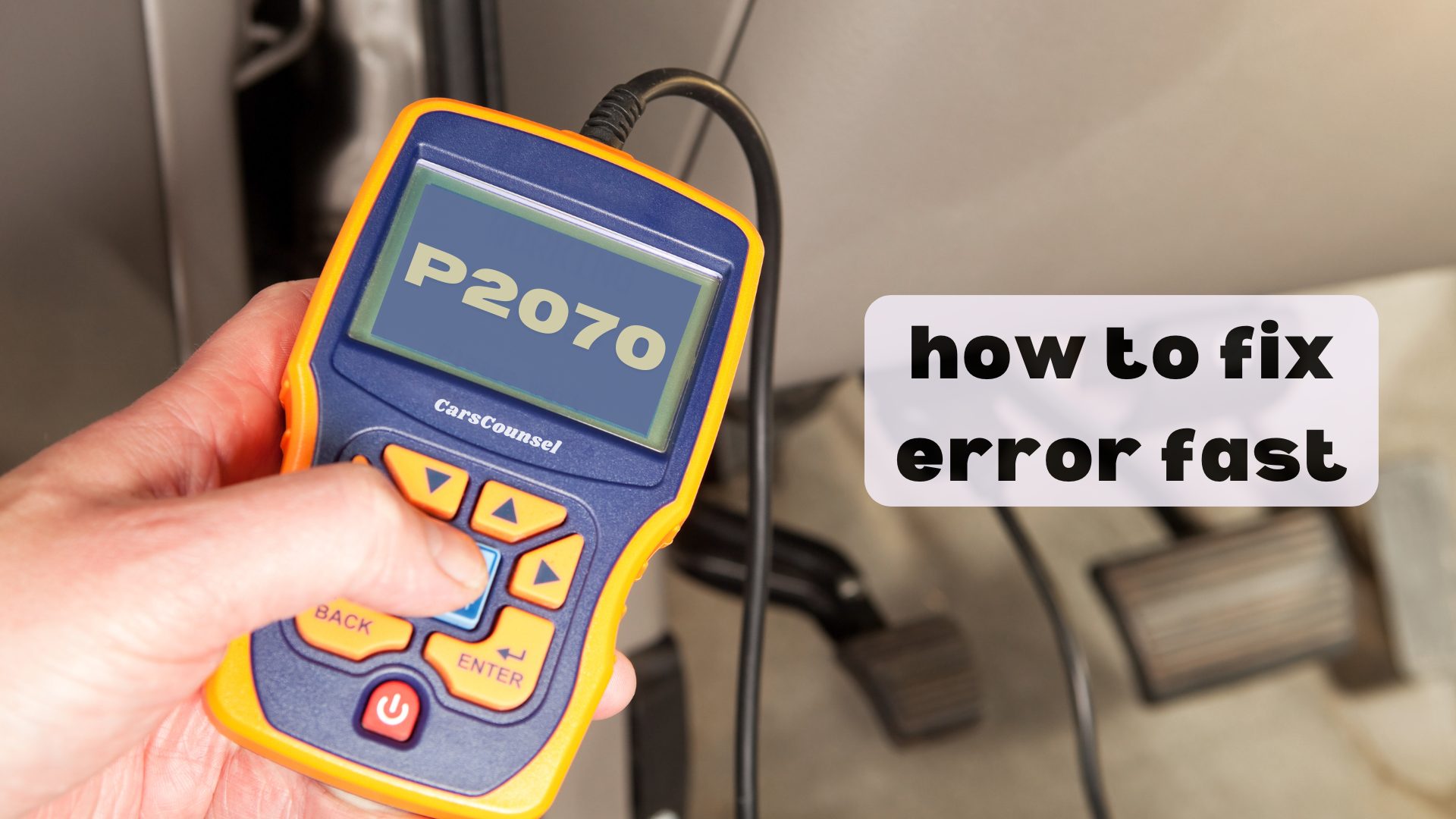
The P2070 code is a generic OBD-II diagnostic trouble code indicating “Intake Manifold Tuning (IMT) Valve Stuck Open Bank 1.” It means the powertrain control module detected that the Bank 1 IMT valve is stuck in the open position.
This code does not automatically prove the valve has failed. Diagnosis requires inspecting the valve linkage for carbon buildup, testing the actuator, and verifying the control circuit before replacing components.
Quick Navigation
Key Takeaways
- The P2070 code indicates the control module detected the Bank 1 intake manifold tuning valve is mechanically stuck open.
- Possible causes include heavy carbon buildup binding the valve, a broken linkage, or a failed IMT valve actuator.
- Diagnosis involves inspecting the valve mechanism for physical binding, testing the actuator operation, and checking the control circuit.
- Repairs may involve cleaning carbon deposits, repairing broken linkage, or replacing the confirmed failed IMT valve assembly.
P2070 Code Description and Implications
The P2070 code indicates that the powertrain control module detected the Bank 1 intake manifold tuning valve is stuck in the open position. This generic category of trouble codes applies to vehicles equipped with variable intake manifold systems.
The intake manifold tuning system adjusts the length of the intake runners or opens flaps to optimize airflow and engine torque across different RPM ranges. The control module commands the valve actuator and monitors its position.
When the module detects that the Bank 1 valve remains open when it is commanded closed, or fails to reach the closed position within a specified time, it stores this code and may illuminate the Check Engine Light.
Common Causes of the P2070 Code
Heavy carbon buildup inside the intake manifold is a primary cause. Accumulated carbon can physically bind the IMT valve flaps or linkage, preventing them from closing completely.
A broken or disconnected mechanical linkage between the IMT valve actuator and the valve flaps will prevent the valves from moving, leaving them stuck in one position.
A failed IMT valve actuator, such as a burnt-out vacuum diaphragm or a failed electric motor, can also prevent the valve from moving to the commanded closed position.
Symptoms Associated With P2070
An illuminated Check Engine Light is expected once the monitor detects the stuck valve condition. MIL behavior varies by application, but the light commands when the mechanical fault is verified.
You may experience a lack of low-end torque, sluggish acceleration, or poor overall engine performance because the intake runners are not optimizing airflow for lower RPM ranges.
In some applications, the engine may idle roughly or hesitate during initial acceleration due to the altered intake airflow dynamics.
Diagnosing the P2070 Trouble Code
Diagnosis must begin by confirming the exact factory definition and checking for related intake manifold or actuator circuit codes. Record freeze-frame data to note the engine RPM and load when the code set.
Perform a thorough visual inspection of the IMT valve linkage and actuator on Bank 1. Look for disconnected rods, broken plastic clips, or severe carbon buildup binding the mechanism.
Use a scan tool to command the IMT valve actuator on and off while observing the physical movement of the linkage. If the actuator moves but the valve does not, the linkage or valve is broken or bound.
If the valve moves freely by hand but the actuator fails to operate, test the actuator’s power, ground, and control circuits according to the manufacturer procedure.
Repairing the P2070 Issue
Repairs must follow confirmed diagnosis. If heavy carbon buildup is binding the valve flaps, remove the intake manifold and clean the carbon deposits using appropriate chemical cleaners and manual scrubbing.
If the mechanical linkage is broken or disconnected, repair or replace the linkage components to restore proper movement between the actuator and the valve flaps.
If electrical and mechanical testing confirms the IMT valve actuator is internally failed, replace the actuator or the complete intake manifold assembly using a component meeting the exact vehicle specification.
Cost Considerations for P2070 Repairs
Cost depends on diagnostic time, component accessibility, required parts, programming requirements, and labor.
Cleaning carbon deposits from the intake manifold involves significant labor to remove and reinstall the manifold, along with the cost of gaskets and cleaning supplies.
If the intake manifold tuning valve actuator or the entire intake manifold assembly requires replacement, the cost of the component and the labor to access it will dictate the overall repair price.
Prevention Strategies for Future Occurrences
Addressing positive crankcase ventilation (PCV) system issues and using high-quality fuel can help reduce the rate of carbon accumulation inside the intake manifold and on the valve flaps.
Inspecting the exposed IMT valve linkage and actuator during routine under-hood service can help identify developing physical damage or disconnected clips before they cause a mechanical fault.
Some carbon accumulation is a normal byproduct of direct injection engine operation and cannot be entirely prevented over the vehicle’s lifespan.
Troubleshooting Tips and Best Practices
Do not attempt to fix a P2070 code by simply replacing the IMT actuator without checking the linkage and valve flaps first. Physical binding from carbon buildup is a frequent cause.
Always verify the exact physical location of the Bank 1 intake manifold tuning valve. On V-configured engines, Bank 1 is typically the side containing cylinder 1, but exact placement varies by manufacturer.
Check for technical service bulletins for your exact vehicle application, as some manufacturers release revised linkage designs or updated intake manifold assemblies to address chronic carbon binding issues.
More OBD-II Codes
| P2068 | P2066 | P2055 | P2048 |
| P2035 | P2033 | P2072 | P2073 |
| P2074 | P2076 | P2078 | P2080 |
| P2004 | P2005 | P2006 | P2007 |
| P2008 | P2009 | P2014 | P2015 |
| P2096 | P2097 | P2098 | P2099 |
Frequently Asked Questions
Is the P2070 code generic or manufacturer-specific?
Yes, P2070 is a generic SAE OBD-II diagnostic trouble code. However, the exact intake manifold tuning system architecture and testing procedures vary by manufacturer and vehicle application.
Will a P2070 code cause my engine to stall?
It typically will not cause stalling. However, you may experience a lack of low-end torque, sluggish acceleration, or poor overall engine performance due to the intake runners remaining open.
Does a P2070 code mean my IMT valve actuator is broken?
Not necessarily. While the actuator can fail, the code is frequently caused by heavy carbon buildup physically binding the valve flaps or a broken mechanical linkage. Proper visual inspection is required first.
Can carbon buildup cause a P2070 code?
Yes. Severe carbon accumulation inside the intake manifold can physically bind the IMT valve flaps or linkage, preventing them from closing when commanded by the control module.
Can I clear the P2070 code without fixing the problem?
Clearing the code only resets the warning light. If the underlying carbon binding, broken linkage, or failed actuator remains, the monitor will detect the stuck valve condition immediately and turn the light back on.
What Should You Do About the P2070 Code?
Confirm the exact factory definition and check for related intake manifold codes for your specific vehicle application. Follow the applicable manufacturer diagnostic procedure to verify whether the fault lies in the valve linkage, the actuator, or the control circuit.
Once testing confirms the root cause, repair or replace the confirmed failed component in the relevant system and components, then retest the intake manifold tuning operation and clear the codes.

