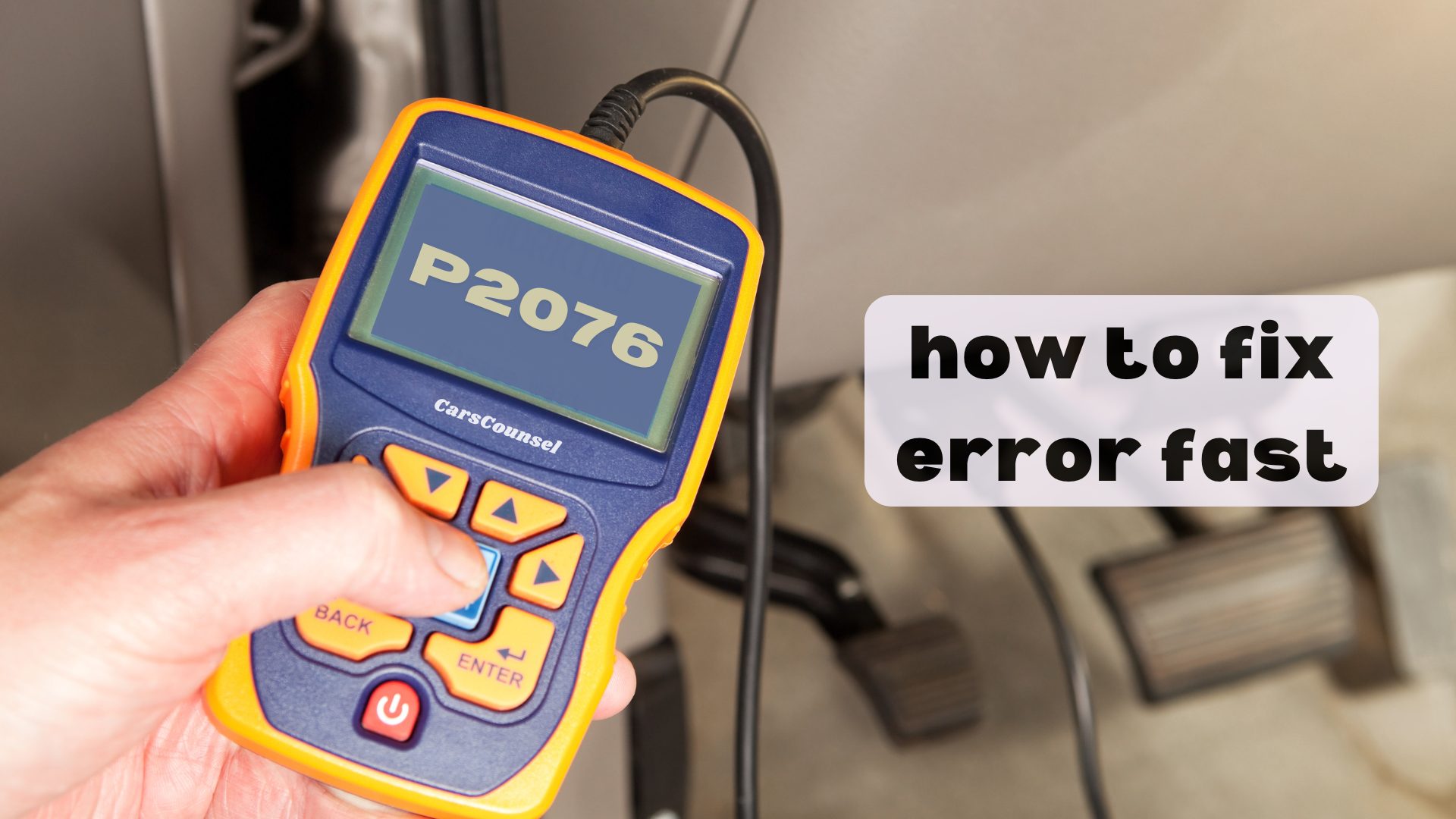
Among OBD2 error codes, P2076 is a generic powertrain definition indicating an Intake Manifold Tuning (IMT) Valve Position Sensor Circuit Range/Performance fault on Bank 1. It means the control module detected unexpected feedback from the intake runner control system.
Because this is a range/performance code, it does not automatically prove a sensor failure. The intake flaps may be mechanically bound by carbon, or the actuator may be failing. Verifying the exact mechanical and electrical condition is required.
Quick Navigation
Key Takeaways
- Condition detected: The powertrain control module detected that the intake manifold runner position sensor signal does not match the expected performance parameters.
- Mechanical binding: Heavy carbon buildup inside the intake manifold can physically bind the tuning flaps, preventing them from moving correctly.
- Electrical checks: Diagnosis involves inspecting the actuator linkage, testing the position sensor circuits, and commanding the valve with a scan tool.
- Component testing: The sensor, actuator, and mechanical linkage must be evaluated to isolate the root cause before replacing parts.
P2076 Code Description and Implications
The P2076 code is a generic SAE definition for Intake Manifold Tuning (IMT) Valve Position Sensor/Switch Circuit Range/Performance Bank 1. Some manufacturers refer to this system as Intake Manifold Runner Control (IMRC).
The powertrain control module uses these flaps to alter the intake runner length, optimizing torque and horsepower at different engine speeds. The module monitors the position sensor to verify the flaps move as commanded.
When the actual sensor feedback deviates from the expected performance parameters, the module stores P2076. This indicates a mechanical binding, actuator issue, or sensor circuit fault, rather than a simple open or short.
Common Causes of the P2076 Code
- Carbon buildup: Heavy carbon deposits inside the intake manifold can physically bind the tuning flaps or linkage, preventing smooth movement.
- Failed actuator or motor: The electronic actuator or vacuum diaphragm responsible for moving the flaps may fail mechanically or lose vacuum supply.
- Broken linkage or clips: The plastic clips or metal rods connecting the actuator to the intake flaps frequently wear out, break, or detach.
- Faulty position sensor: The internal potentiometer or Hall-effect sensor may wear out, sending erratic or stuck voltage signals to the control module.
- Damaged wiring: Chafed wires or corroded connectors in the sensor or actuator circuits can disrupt the feedback signal.
Symptoms Associated With P2076
Possible symptoms include:
- Illuminated Check Engine Light (MIL).
- Reduced engine performance, hesitation, or sluggish acceleration due to incorrect intake runner length.
- Decreased fuel economy as the engine operates outside its optimized airflow parameters.
- Rough idle or unstable engine speed if the flaps are stuck in an intermediate position.
Diagnosing the P2076 Trouble Code
Diagnosing an intake manifold runner code requires a scan tool with bidirectional controls, a digital multimeter, and the vehicle’s specific service information. The first step is to verify the exact factory definition.
A professional diagnostic workflow includes:
- Visual inspection: Inspect the IMT/IMRC actuator, linkage, and vacuum lines for broken clips, disconnected rods, or physical damage.
- Check for binding: Manually move the linkage to check for mechanical binding caused by carbon buildup inside the manifold.
- Command the actuator: Use a bidirectional scan tool to command the valve open and closed while monitoring the position sensor PID for smooth feedback.
- Test sensor circuits: If the sensor reading is erratic, test the reference voltage, ground, and signal circuits according to the manufacturer procedure.
Repairing the P2076 Issue
Repairs must follow confirmed diagnosis. Never replace the intake manifold or control module based solely on the presence of a P2076 code.
- Carbon cleaning: If the flaps are bound by carbon, remove the intake manifold and chemically or mechanically clean the runners and flap shafts.
- Linkage repair: Replace broken plastic clips, worn bushings, or disconnected linkage rods with updated components meeting the correct vehicle specification.
- Actuator or sensor replacement: If the actuator motor fails or the position sensor fails electrical testing, replace the faulty component and retest the system.
- Wiring repair: Repair any chafed wires or corroded connectors found during the circuit inspection.
Cost Considerations for P2076 Repairs
The cost to resolve a P2076 code depends heavily on the root cause, diagnostic time, and component accessibility.
If the issue is a broken external linkage clip, the repair primarily involves inexpensive parts and minimal labor. If the intake manifold must be removed for deep carbon cleaning, the price increases significantly due to labor time.
Prevention Strategies for Future Occurrences
While internal sensor failures are not always predictable, you can protect the intake system from common mechanical issues.
- Address oil consumption: Excessive PCV oil vapor entering the intake accelerates carbon buildup on the flaps. Fixing oil consumption issues helps keep the runners clean.
- Use quality fuel and additives: Regular use of top-tier fuel and approved intake system cleaners can help slow carbon accumulation on the manifold components.
- Inspect linkage during service: When performing spark plug or coil pack service, visually check the external IMRC linkage for wear or loose clips.
Troubleshooting Tips and Best Practices
- Do not assume the sensor is dead: A range/performance code frequently points to a mechanical binding issue or broken linkage rather than a failed electrical sensor. Always verify mechanical movement first.
- Check for TSBs: Some manufacturers issue Technical Service Bulletins for updated linkage repair kits or revised PCM software to address chronic flap binding issues.
- Verify vacuum supply: On older applications using a vacuum actuator, ensure the engine is producing adequate manifold vacuum and the supply lines are intact.
More OBD-II Codes
| P2066 | P2068 | P2070 | P2072 |
| P2073 | P2074 | P2078 | P2080 |
| P2088 | P2096 | P2097 | P2098 |
| P2004 | P2005 | P2006 | P2007 |
| P2008 | P2009 | P2014 | P2015 |
| P0171 | P0174 | P0101 | P0100 |
Frequently Asked Questions
Can carbon buildup cause a P2076 code?
Yes. Heavy carbon deposits inside the intake manifold can physically bind the tuning flaps or their shafts. If the flaps cannot move freely, the position sensor will report a range or performance fault to the control module.
Is it safe to drive with a P2076 code?
You can typically drive the vehicle to a repair facility, but you may experience reduced power and poor fuel economy. If the intake flaps are stuck in the wrong position, the engine will not produce optimal torque or horsepower.
Will cleaning the intake manifold fix a P2076 code?
If the root cause is carbon buildup binding the flaps, a thorough chemical or mechanical cleaning of the intake runners and shafts will resolve the issue. However, if the sensor or actuator is physically broken, cleaning will not help.
Does P2076 mean my intake manifold needs to be replaced?
Not necessarily. While some manufacturers require replacing the entire manifold if internal flaps break, many issues are caused by external linkage clips, vacuum leaks, or carbon buildup. Proper diagnosis is required before condemning the manifold.
Can a vacuum leak trigger a P2076 code?
Yes, on applications that use a vacuum actuator to move the intake flaps. If the vacuum supply line is cracked, disconnected, or leaking, the actuator will not have enough force to move the flaps, triggering a performance code.
What Should You Do About the P2076 Code?
Because the P2076 code indicates a range or performance fault in the intake manifold tuning system, it requires verifying the mechanical movement of the flaps before replacing electrical components. Confirm the exact factory definition for your vehicle.
Inspect the linkage and actuator for physical damage or carbon binding. Command the system with a scan tool and test the relevant circuits. Follow the manufacturer’s diagnostic procedure to isolate the faulty component, repair the confirmed root cause, and verify the repair.

