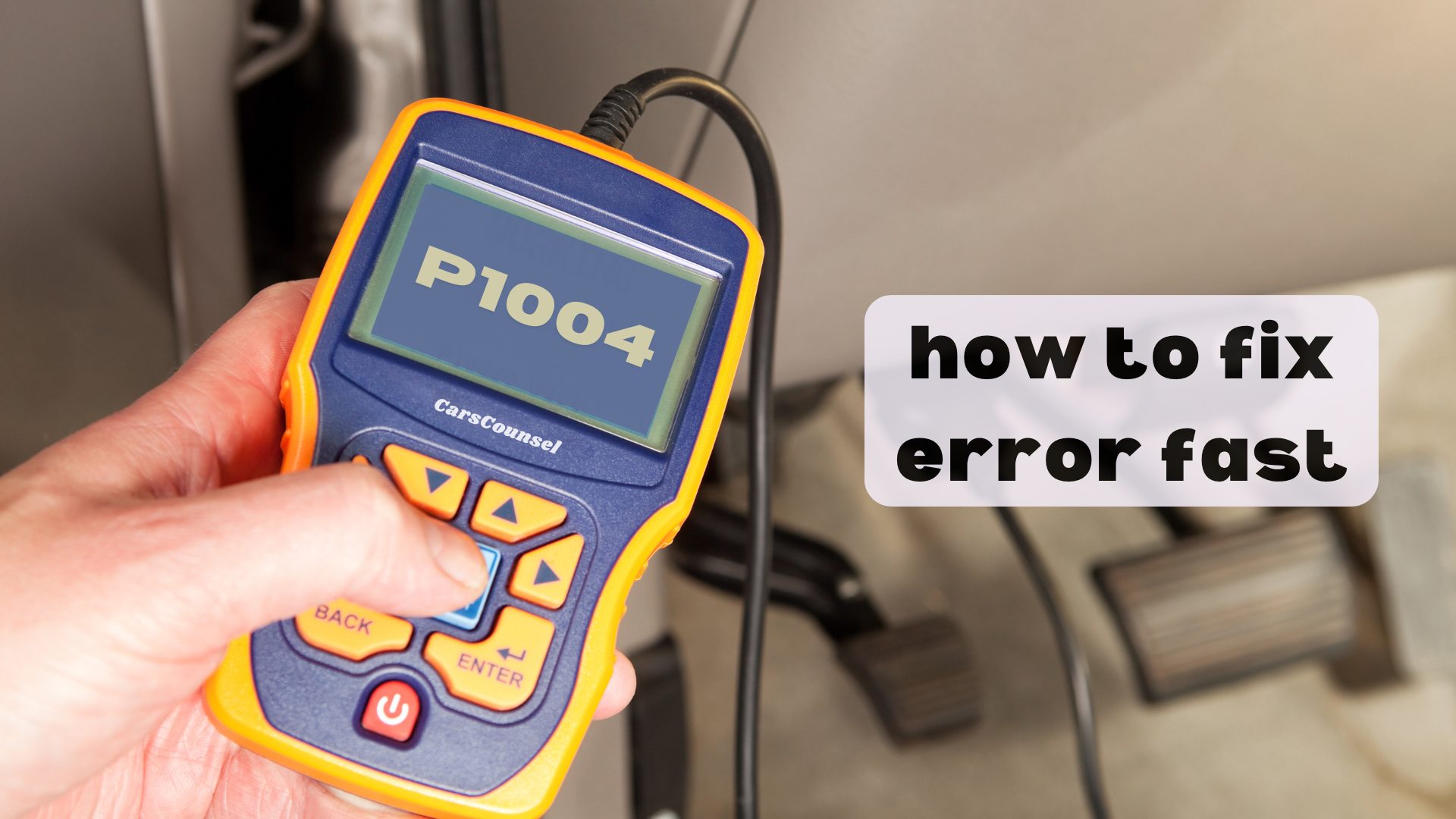
The P1004 code is a manufacturer-specific OBD-II diagnostic trouble code indicating “Short Runner Valve Control Performance.” It means the powertrain control module detected the intake manifold short runner valve is not operating as commanded.
This code does not automatically prove the actuator motor has failed. Diagnosis requires inspecting the valve mechanism for carbon binding and testing the actuator circuit before replacing components.
Quick Navigation
Key Takeaways
- The P1004 code indicates the control module detected a performance fault with the short runner valve actuator.
- Possible causes include heavy carbon buildup binding the valve shaft, a failed actuator motor, or damaged wiring.
- Diagnosis involves physically inspecting the valve linkage for free movement and testing the actuator electrical circuit.
- Repairs may involve cleaning carbon deposits, repairing wiring, or replacing the confirmed failed actuator or intake manifold assembly.
P1004 Code Description and Implications
The P1004 code indicates a performance fault in the Short Runner Valve (SRV) system. This manufacturer-specific error code is predominantly found on Chrysler, Dodge, Jeep, and Ram vehicles equipped with specific V6 and V8 engines.
The intake manifold uses a variable runner system to optimize engine torque. At lower RPMs, the runners remain long to improve low-end torque. At higher RPMs, the SRV actuator opens a flap to shorten the runners, increasing high-end airflow and power.
When the powertrain control module commands the valve to move but detects that the actual position does not match the desired position within a specified time, it stores this code.
Common Causes of the P1004 Code
Heavy carbon accumulation inside the intake manifold is a primary cause. Carbon deposits can physically bind the short runner valve shaft or flaps, preventing the actuator from moving them fully to the commanded position.
A failed short runner valve actuator motor or internal gear failure will prevent the valve from moving, even if the electrical signals are correct.
Damaged wiring, chafed insulation, or corroded connectors at the actuator harness will interrupt the control signals from the powertrain control module.
In rare instances, an internal fault within the control module itself may prevent it from properly driving the actuator circuit.
Symptoms Associated With P1004
An illuminated Check Engine Light is expected once the monitor detects the performance fault. MIL behavior varies by application, but the light commands when the fault is verified.
You may experience a noticeable lack of high-end power or poor acceleration above 4,000 RPM, as the intake manifold cannot switch to the short-runner configuration.
In some applications, a rough idle or slight hesitation may occur if the valve is physically stuck in an intermediate or incorrect position.
Diagnosing the P1004 Trouble Code
Diagnosis must begin by confirming the exact factory definition for your specific application. Record freeze-frame data to see the engine RPM and vehicle speed when the code set.
Perform a physical inspection of the short runner valve linkage on the intake manifold. Attempt to move the external lever by hand to check for mechanical binding caused by carbon buildup.
If the linkage moves freely, use a scan tool with bidirectional controls to command the short runner valve actuator while observing its movement.
If the actuator does not move, use a multimeter to test the actuator harness for proper reference voltage, ground, and control signals according to the manufacturer wiring diagram.
Repairing the P1004 Issue
Repairs must follow confirmed diagnosis. If the valve shaft is bound by carbon, the intake manifold must be removed for thorough manual cleaning or chemical decarbonization to restore free movement.
If electrical testing confirms the actuator motor is internally faulty or receives proper signals but fails to move, replace the actuator using a component meeting the exact vehicle specification.
If the wiring harness is damaged or connectors are corroded, repair the circuit and secure the harness to prevent future rubbing or heat damage.
Cost Considerations for P1004 Repairs
Cost depends on diagnostic time, component accessibility, required parts, programming requirements, and labor.
Replacing an externally mounted short runner valve actuator involves moderate parts and minimal labor expenses.
If the intake manifold requires removal for deep carbon cleaning or if the valve mechanism is integrated and requires full manifold replacement, labor hours and overall repair costs increase significantly.
Prevention Strategies for Future Occurrences
On applications prone to heavy carbon buildup, using high-quality fuel and occasionally running approved intake system cleaners may help reduce the rate of carbon accumulation on the runner flaps.
Inspecting exposed actuator wiring and connectors near the hot intake manifold during routine service can help identify developing heat damage before it causes a circuit fault.
Some mechanical actuator failures occur due to normal internal component aging and cannot be reliably prevented through standard maintenance.
Troubleshooting Tips and Best Practices
Do not assume the entire intake manifold must be replaced simply because a performance code is stored. The external actuator motor is a frequent failure point and is often serviceable separately.
Always verify the mechanical linkage moves freely before condemning the electrical actuator. A physically jammed valve will cause the exact same code as a dead motor.
Check for technical service bulletins for your exact vehicle application. Some manufacturers release revised actuator designs or updated software calibrations to address chronic false performance codes.
More OBD-II Codes
| P1000 | P1001 | P1002 | P1003 |
| P0780 | P0785 | P1005 | P1008 |
| P1009 | P1010 | P1011 | P1013 |
| P2004 | P2005 | P2006 | P2007 |
| P0171 | P0174 | P0300 | P0420 |
| P0440 | P0446 | P0455 | P0456 |
Frequently Asked Questions
Is the P1004 code generic or manufacturer-specific?
No. P1004 is a manufacturer-specific code. It predominantly applies to Chrysler, Dodge, Jeep, and Ram vehicles, specifically monitoring the Short Runner Valve system.
Will a P1004 code cause my vehicle to fail an emissions test?
It typically will. The powertrain control module cannot complete the comprehensive component monitor while this fault is present, resulting in an automatic failure.
Can carbon buildup cause a P1004 code?
Yes. Heavy carbon deposits can physically bind the short runner valve shaft. If the valve cannot move, the actuator will detect a lack of movement and trigger a performance fault.
Does a P1004 code mean I need a new intake manifold?
Not necessarily. While severe internal damage might require it, the code is frequently caused by a failed external actuator motor or dirty linkage. Proper testing is required first.
Can I clear the P1004 code without fixing the problem?
Clearing the code only resets the warning light. If the underlying carbon blockage or failed actuator remains, the monitor will detect the issue and turn the light back on.
What Should You Do About the P1004 Code?
Confirm the exact factory definition for your specific vehicle application, then follow the applicable manufacturer diagnostic procedure. Verify whether the fault lies in the mechanical linkage, wiring, or the actuator itself.
Once testing confirms the root cause, repair or replace the confirmed failed component in the relevant system, then retest the actuator operation to ensure it moves freely across its full range.

