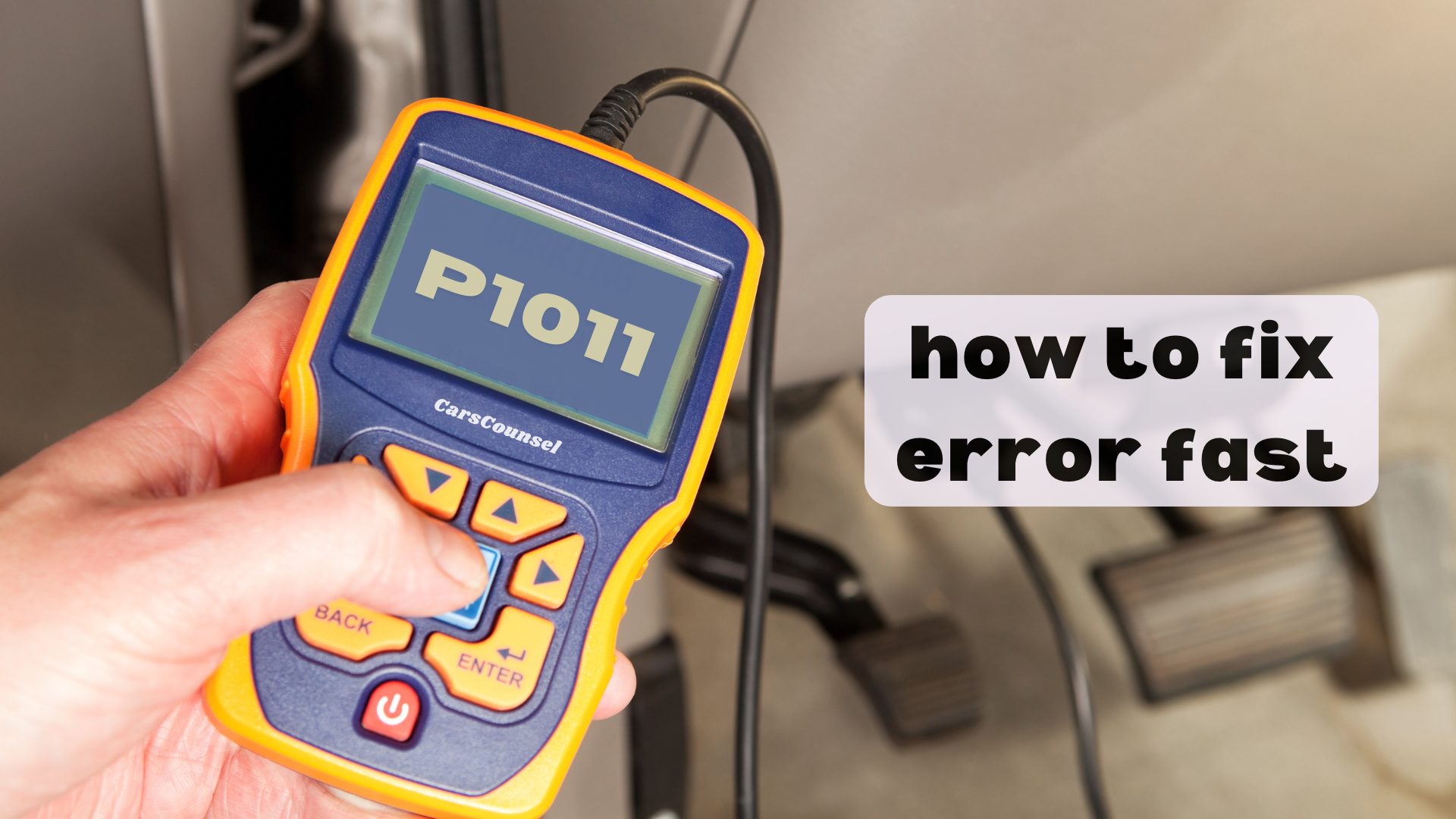
P1011 is a manufacturer-specific powertrain code. Its exact definition depends entirely on the vehicle make, meaning it can indicate a fuel delivery issue, a variable valve timing fault, or a turbocharger wastegate problem.
Because it is manufacturer-specific, the exact application must be verified before diagnosis. This code identifies a detected condition but does not automatically prove a specific internal component has failed.
Quick Navigation
Key Takeaways
- P1011 is a manufacturer-specific code with different meanings depending on the vehicle make and application.
- On Dodge Cummins diesel applications, it typically indicates low fuel pump delivery pressure.
- On BMW and MINI applications, it often points to a Valvetronic (VVT) eccentric shaft sensor or guiding sensor gradient error.
- Accurate diagnosis requires verifying the exact factory definition for your specific vehicle before testing or replacing any components.
P1011 Code Description and Implications
P1011 is a manufacturer-specific diagnostic trouble code. Because it is not a generic SAE code, its exact definition and the monitored system depend entirely on the manufacturer and application.
Some Dodge Ram Cummins diesel applications: P1011 indicates Fuel Pump Delivery Pressure Too Low. The engine control module detects that the actual fuel supply pressure is below the desired threshold.
Certain BMW and MINI applications: P1011 points to a Valvetronic (VVT) Guiding Sensor Gradient Error or eccentric shaft sensor fault, affecting the variable valve lift system.
Specific Ford applications: P1011 can indicate a Wastegate Control Pressure Sensor Circuit Range/Performance fault, impacting turbocharger boost control.
Common Causes of the P1011 Code
Because P1011 applies to entirely different systems depending on the vehicle, the possible causes vary significantly by application.
For Dodge Cummins applications: A clogged fuel filter, a failing lift pump, or a fuel leak can cause low delivery pressure to the high-pressure injection pump.
For BMW and MINI applications: A failing eccentric shaft sensor, damaged Valvetronic wiring, or oil contamination in the sensor connector can disrupt the variable valve lift signal.
For Ford applications: A faulty wastegate pressure sensor, damaged vacuum lines, or a failing turbocharger wastegate actuator can trigger the range/performance fault.
Symptoms Associated With P1011
Symptoms depend heavily on the specific system and the underlying fault.
On Dodge Cummins applications, drivers may experience hard starting, engine stalling, lack of power, or the engine entering a limp mode due to low fuel rail pressure.
On BMW and MINI applications, the engine may idle roughly, lack power, or trigger a reduced engine power warning due to the Valvetronic system defaulting to a fail-safe position.
On Ford applications, the vehicle may exhibit reduced boost pressure, poor acceleration, or an illuminated Check Engine Light.
MIL behavior varies by application. Some vehicles may illuminate the Check Engine Light immediately, while others may store the DTC and trigger specific drivability warnings.
Diagnosing the P1011 Trouble Code
Diagnosis must begin by confirming the exact factory definition and service information for the specific make, model, and engine.
Retrieve the code and record any freeze-frame data or related OBD2 problem codes using a scan tool capable of accessing manufacturer-specific live data.
For Dodge Cummins applications, test the fuel supply pressure using a mechanical gauge between the lift pump and the high-pressure injection pump to verify it meets the manufacturer specification.
For BMW and MINI applications, inspect the eccentric shaft sensor connector for oil intrusion and monitor the Valvetronic sensor live data while commanding valve lift changes.
For Ford applications, inspect the wastegate vacuum lines and test the wastegate control pressure sensor signal circuit for proper voltage and continuity.
Repairing the P1011 Issue
Repairs must follow the confirmed root cause identified during system-specific testing.
If the fuel filter is restricted or the lift pump fails testing on a diesel application, replace the confirmed failed component and prime the fuel system.
If oil is found in the eccentric shaft sensor connector on a BMW application, replace the sensor and the valve cover gasket to prevent future oil intrusion.
If the wastegate pressure sensor or vacuum lines are damaged on a turbocharged application, repair or replace the confirmed failed components and verify boost pressure.
Cost Considerations for P1011 Repairs
Repair costs for P1011 vary widely based on the underlying fault, the specific vehicle application, and local labor rates.
Replacing a fuel filter or wastegate pressure sensor involves minimal to moderate parts costs and standard labor time.
Replacing a Valvetronic eccentric shaft sensor or a diesel lift pump involves higher parts costs and moderate labor.
Cost depends on diagnostic time, component accessibility, required parts, programming requirements, and labor.
Prevention Strategies for Future Occurrences
Replacing the fuel filter at the manufacturer-specified intervals helps prevent fuel delivery restrictions that trigger low-pressure codes on diesel applications.
Addressing valve cover gasket leaks promptly on BMW and MINI engines can help prevent oil from contaminating the eccentric shaft sensor connector.
Troubleshooting Tips and Best Practices
Do not assume a P1011 code requires replacing the high-pressure fuel pump or the engine control module immediately; on diesel applications, a simple clogged fuel filter or failing low-pressure lift pump is a frequent culprit.
On BMW applications, always check the eccentric shaft sensor connector for oil before condemning the Valvetronic motor or the sensor itself, as oil wicking through the wiring harness is a known issue.
Check for applicable technical service bulletins, as manufacturers occasionally release updated sensor part numbers or software recalibrations to address chronic gradient or pressure faults.
More OBD-II Codes
| P1005 | P1008 | P1009 | P1010 |
| P0745 | P0746 | P1013 | P1014 |
| P1015 | P1016 | P1017 | P1018 |
| P0087 | P0011 | P0014 | P0016 |
| P0017 | P2261 | P2262 | P2263 |
| P0101 | P0171 | P0300 | P0420 |
Frequently Asked Questions
Is P1011 a generic or manufacturer-specific code?
No. P1011 is a manufacturer-specific powertrain code. Its exact definition depends on the vehicle make, ranging from fuel delivery faults to variable valve timing or turbocharger sensor issues.
Can a P1011 code cause my engine to stall?
Yes. On diesel applications where P1011 indicates low fuel pump delivery pressure, the engine may stall, lack power, or fail to start due to insufficient fuel reaching the injection system.
Will P1011 clear itself if I change the fuel filter?
Not automatically. While replacing a clogged filter may resolve the underlying pressure drop, the stored code usually requires a scan tool to clear before the monitor can reset.
Is it safe to drive with the P1011 code active?
Driving is conditional. If the code indicates a severe fuel delivery issue or a variable valve timing fault, the vehicle may stall or enter a reduced-power limp mode, making it unsafe.
Does P1011 mean my high-pressure fuel pump is broken?
No. P1011 identifies a detected condition in the delivery circuit or sensor. While pumps can fail, clogged filters, lift pump issues, or wiring faults must be ruled out through testing.
What Should You Do About the P1011 Code?
Confirm the exact factory definition and technical service bulletins for your specific vehicle application.
Follow the applicable manufacturer diagnostic procedure to test the relevant fuel delivery circuits, variable valve timing sensors, or turbocharger control components based on your vehicle’s specific architecture.
Repair or replace the confirmed failed component, then retest the system to ensure the engine management system operates correctly.

