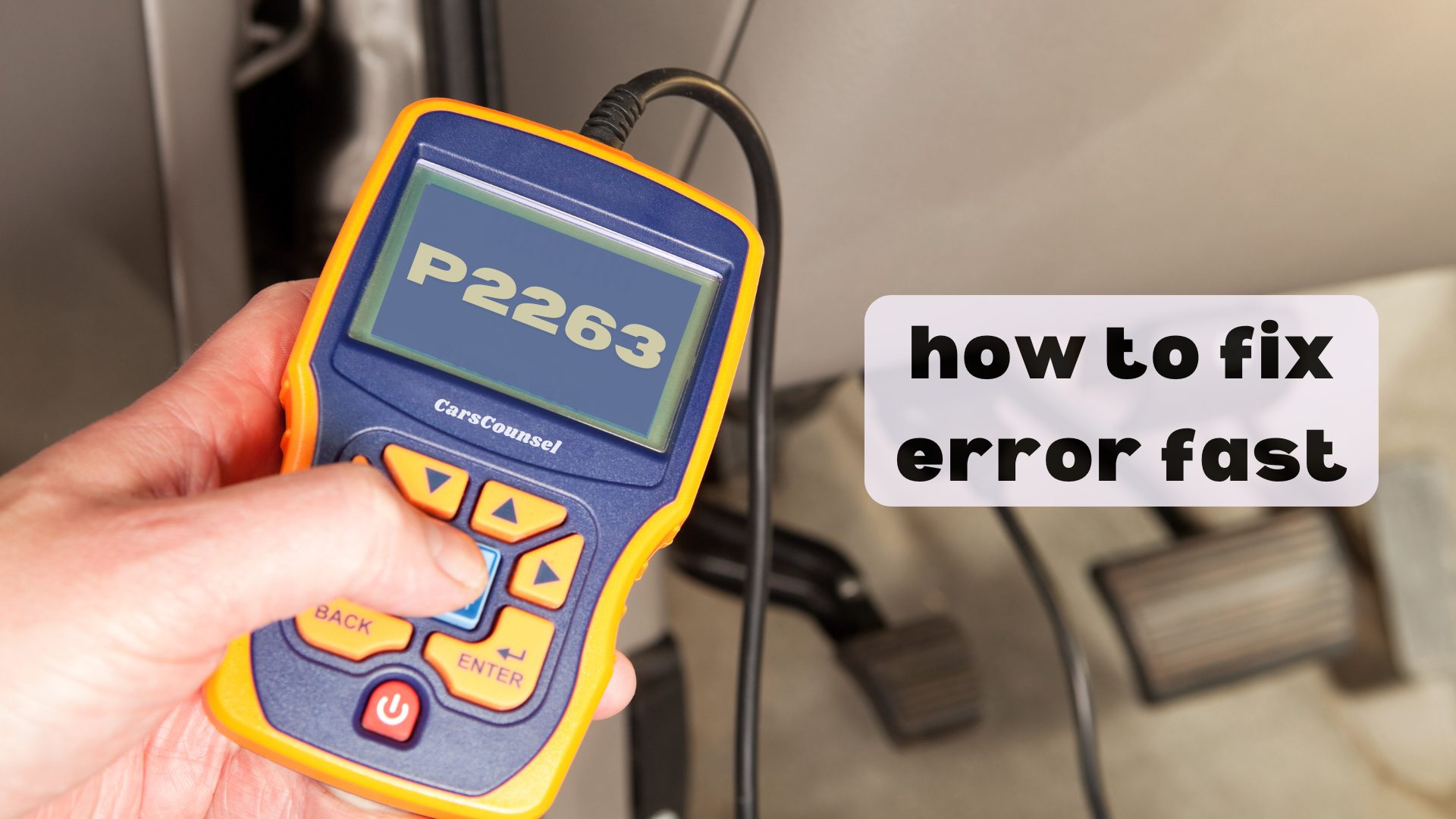
The P2263 code is a generic OBD-II diagnostic trouble code indicating “Turbocharger/Supercharger Boost System Performance.” It means the powertrain control module detected a discrepancy between the commanded and actual boost pressure.
This code does not automatically prove the turbocharger has failed. Diagnosis requires verifying the intake system for leaks, checking the wastegate actuator, and monitoring live boost data before replacing any components.
Quick Navigation
Key Takeaways
- The P2263 code indicates the control module detected that actual boost pressure deviates from the commanded target.
- Possible causes include boost leaks, a sticking wastegate, carbon buildup in VGT turbos, or a faulty MAP sensor.
- Diagnosis involves smoke testing the intake system, inspecting the wastegate actuator, and comparing live data for commanded versus actual boost.
- Repairs may involve replacing leaking hoses, repairing the wastegate mechanism, or addressing mechanical turbocharger issues.
P2263 Code Description and Implications
The P2263 code indicates that the powertrain control module detected a performance issue with the turbocharger or supercharger boost system. This generic OBD2 code applies to many forced-induction applications.
The module uses the manifold absolute pressure sensor to monitor actual boost. When the actual pressure deviates significantly from the commanded target for a specific duration, this code is stored.
Common Causes of the P2263 Code
A physical boost leak is a primary cause. Cracked intercooler end tanks, loose hose clamps, or split boost pipes allow pressurized air to escape before reaching the engine.
Wastegate or bypass valve issues can prevent proper boost control. A stuck wastegate, broken actuator rod, or failed boost control solenoid will cause the system to over-boost or under-boost.
On vehicles equipped with variable geometry turbochargers, heavy carbon buildup can cause the internal vanes to stick, preventing the turbo from adjusting its aspect ratio correctly.
A failing manifold absolute pressure sensor may send incorrect data to the control module, causing a false performance rationality fault even if the mechanical system is functioning properly.
Symptoms Associated With P2263
An illuminated Check Engine Light is expected once the monitor detects the boost deviation. MIL behavior varies by application, but the light commands when the fault is verified.
Drivers may experience reduced engine power or a limp mode. The control module restricts fueling and boost to protect the engine from potential damage caused by incorrect air delivery.
You may notice poor acceleration, hesitation under load, or a distinct hissing noise from the engine bay if a pressurized boost hose has split or disconnected.
Diagnosing the P2263 Trouble Code
Diagnosis must begin by confirming the exact factory definition and checking for related sensor or solenoid codes. Record freeze-frame data to see the engine load and RPM when the code set.
Perform a thorough visual inspection of the entire intake tract. Check all boost hoses, intercooler connections, and clamps for signs of separation, oil residue, or physical damage.
Use a smoke machine to pressurize the cold-side intake piping. This is the most reliable method to pinpoint small pinhole leaks that visual inspection might miss.
Monitor live data with a scan tool while driving. Compare the commanded boost pressure against the actual boost pressure to verify if the system is under-boosting or over-boosting.
Inspect the wastegate actuator, vacuum lines, and control solenoids. For variable geometry turbochargers, check the vane actuator linkage for free movement and inspect for heavy carbon accumulation.
Repairing the P2263 Issue
Repairs must follow confirmed diagnosis. If a boost leak is found, replace the damaged hose, intercooler, or tighten the clamps to restore system integrity.
If the wastegate actuator or boost control solenoid fails testing, replace the confirmed failed component using a part meeting the exact vehicle specification.
If carbon buildup is binding the variable geometry turbo vanes, the turbocharger may require removal for manual cleaning, chemical decarbonization, or complete replacement if internally damaged.
Cost Considerations for P2263 Repairs
Cost depends on diagnostic time, component accessibility, required parts, programming requirements, and labor.
Replacing a split boost hose or a faulty boost control solenoid involves moderate parts and minimal labor expenses.
If the variable geometry turbocharger requires removal for deep cleaning or complete assembly replacement due to internal mechanical failure, labor hours and parts costs increase significantly.
Prevention Strategies for Future Occurrences
Inspecting exposed boost hoses and intercooler connections during routine engine bay checks can help identify developing rubber deterioration or loose clamps before they cause a major leak.
On variable geometry turbo applications, following manufacturer-recommended oil change intervals and using the exact specified oil grade helps prevent the carbon buildup that causes vane sticking.
Some mechanical turbocharger failures occur due to normal wear over high mileage and cannot be reliably prevented through standard maintenance.
Troubleshooting Tips and Best Practices
Do not automatically replace the turbocharger simply because a boost performance code is stored. A simple split hose or disconnected vacuum line is a very common cause.
Always check the manifold absolute pressure sensor data against a known good source or mechanical gauge. A faulty sensor can trick the module into setting a false performance code.
Check for technical service bulletins for your exact vehicle application. Some manufacturers release updated boost control solenoids or revised software calibrations to address chronic wastegate flutter issues.
More OBD-II Codes
| P2227 | P2228 | P2229 | P2237 |
| P2261 | P2262 | P2401 | P2402 |
| P2404 | P2407 | P2419 | P242F |
| P0299 | P0101 | P0171 | P0174 |
| P0300 | P0420 | P0455 | P0135 |
| P0440 | P0446 | P0411 | P0100 |
Frequently Asked Questions
Is the P2263 code generic or manufacturer-specific?
The P2263 code is a generic SAE OBD-II diagnostic trouble code. However, the exact design of the boost control system and diagnostic steps vary by manufacturer and engine application.
Can a bad intercooler cause a P2263 code?
Yes. If the intercooler is cracked or its end tanks are leaking, pressurized air escapes before reaching the engine. This causes actual boost to drop below the commanded target, triggering the code.
Will a P2263 code put my car in limp mode?
It can. If the control module detects severe over-boosting or under-boosting, it may command a fail-safe or limp mode to restrict engine power and prevent internal mechanical damage.
Does a P2263 code mean I need a new turbo?
Not necessarily. While internal turbo failure is a possible cause, the code is frequently caused by external boost leaks, faulty solenoids, or stuck wastegates. Proper system testing is required first.
Can I clear the P2263 code without fixing the problem?
Clearing the code only resets the warning light. If the underlying boost leak or mechanical fault remains, the monitor will detect the pressure deviation immediately and turn the light back on.
What Should You Do About the P2263 Code?
Confirm the exact factory definition and check for related sensor codes for your specific vehicle application. Follow the applicable manufacturer diagnostic procedure to verify whether the fault lies in the intake plumbing, boost control solenoids, or the turbocharger itself.
Once testing confirms the root cause, repair or replace the confirmed failed component, then retest the system under load to ensure actual boost matches the commanded target.

