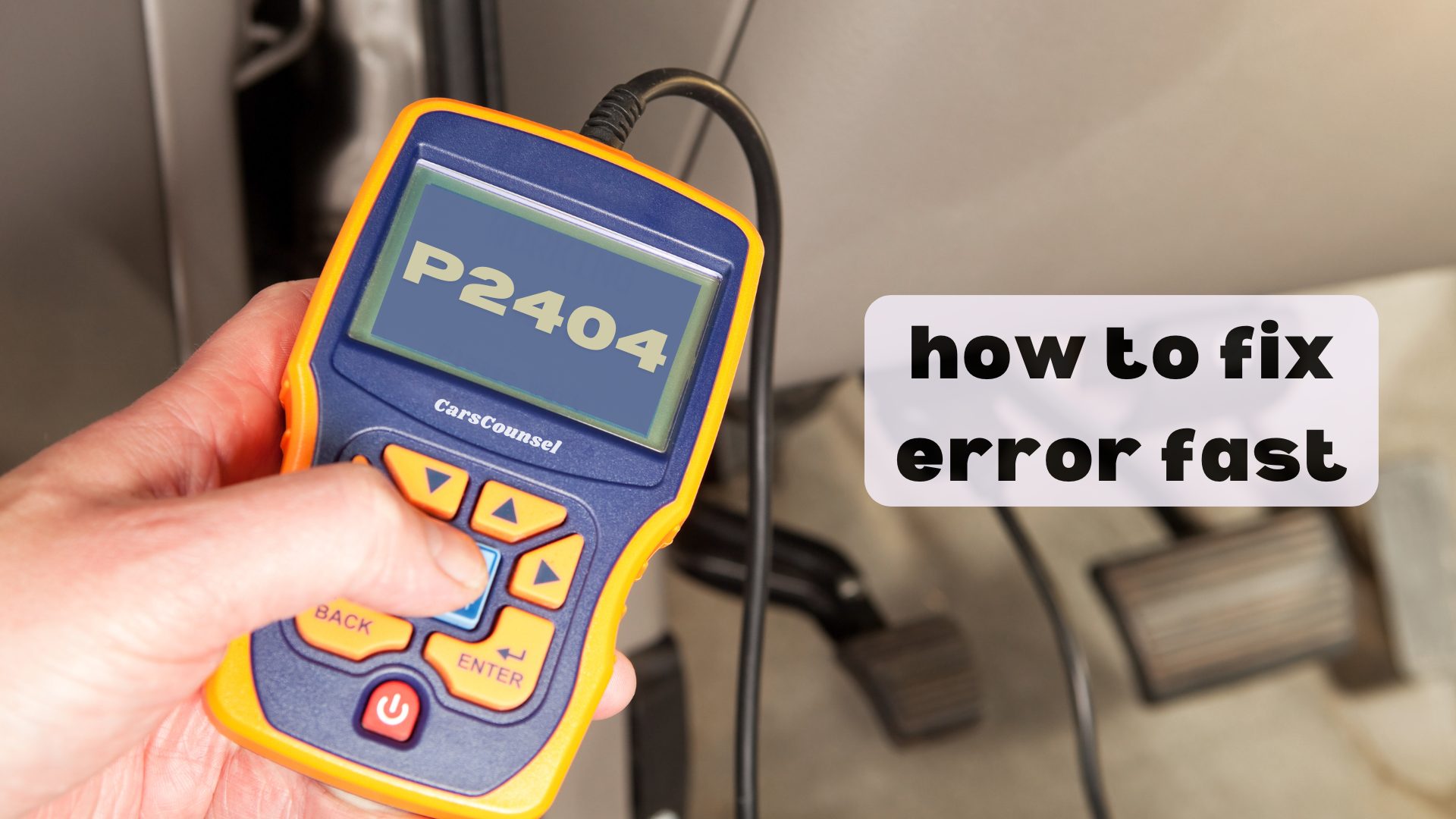
P2404 is a generic OBD-II powertrain code indicating a range or performance issue in the evaporative emission system leak detection pump sense circuit. This standardized code applies across most vehicle manufacturers.
Because this code monitors the pump feedback signal, it does not automatically prove the pump has failed. Wiring issues or blocked hoses must be verified first.
Quick Navigation
Key Takeaways
- P2404 indicates the powertrain control module detected an erratic or out-of-range signal from the EVAP leak detection pump sense circuit.
- The leak detection pump pressurizes the evaporative emission system to monitor for fuel vapor leaks during specific drive cycles.
- Possible causes include a failing leak detection pump, damaged wiring, corroded connectors, or blocked EVAP hoses.
- Diagnosis requires testing the pump sense circuit and verifying system integrity before replacing parts.
P2404 Code Description and Implications
P2404 is a generic diagnostic trouble code defined as EVAP System Leak Detection Pump Sense Circuit Range/Performance.
The powertrain control module uses the leak detection pump to pressurize the evaporative emission system and monitor for fuel vapor leaks.
When the module detects that the sense circuit signal is erratic, out of the expected range, or does not correlate with pump operation, it sets P2404.
This code specifically identifies an electrical or performance issue with the pump feedback circuit, rather than a simple vapor leak.
Common Causes of the P2404 Code
- A failing leak detection pump with internal electrical faults or mechanical binding.
- Damaged, chafed, or broken wiring in the leak detection pump sense circuit.
- Corroded, loose, or moisture-intruded electrical connectors at the pump or control module.
- Blocked, kinked, or disconnected EVAP hoses preventing the pump from building pressure.
- In rare cases, an internal fault within the powertrain control module.
Symptoms Associated With P2404
- Illuminated Check Engine Light.
- The vehicle may fail an emissions inspection because the EVAP monitor cannot complete.
- Some applications may display a specific check gas cap or EVAP system warning message on the dashboard.
- Note that a P2404 circuit code does not normally cause physical engine drivability issues like misfires or rough idling.
Diagnosing the P2404 Trouble Code
Diagnosing P2404 requires verifying the electrical integrity of the leak detection pump sense circuit and the mechanical operation of the pump.
First, retrieve all stored error code entries and freeze-frame data. Check for related EVAP pressure or solenoid codes.
Visually inspect the wiring harness and connectors at the pump, which is located near the EVAP canister under the vehicle.
Using a digital multimeter, test the pump reference voltage, sense circuit, and ground according to the manufacturer procedure.
If the electrical circuit tests normal, use a scan tool to command the pump on while monitoring EVAP pressure data to verify it can physically build pressure.
Repairing the P2404 Issue
Repairs must follow confirmed electrical and mechanical testing.
If wiring damage or connector corrosion is found, repair the harness or replace the connector pigtail.
If the EVAP hoses are kinked or blocked, clear the obstruction or replace the hose.
If the leak detection pump fails the electrical or functional testing, replace the pump assembly.
Clear the codes and perform a drive cycle to verify the EVAP monitor completes successfully.
Cost Considerations for P2404 Repairs
Cost depends on diagnostic time, component accessibility, required parts, programming requirements, and labor.
The leak detection pump is often located under the vehicle near the fuel tank, which may require lifting the vehicle and dealing with rusted fasteners.
Prevention Strategies for Future Occurrences
Inspecting exposed wiring harnesses and EVAP hoses near the fuel tank and undercarriage can help identify developing damage before it causes a circuit fault.
Ensuring electrical connectors are fully seated and their environmental seals are intact may reduce moisture intrusion.
Troubleshooting Tips and Best Practices
Do not automatically replace the EVAP canister or purge solenoid when a P2404 code appears. This code monitors the leak detection pump sense circuit specifically.
Always verify the exact physical location and type of leak detection system for your specific vehicle, as designs vary significantly by manufacturer.
Check for technical service bulletins related to updated EVAP wiring harnesses, revised pump designs, or control module recalibrations for your specific make and model.
More OBD-II Codes
| P2402 | P2401 | P2407 | P2419 |
| P2431 | P2433 | P0440 | P0441 |
| P0442 | P0446 | P0455 | P0456 |
| P0449 | P0450 | P0451 | P0452 |
| P0453 | P0443 | P0444 | P0445 |
| P0447 | P0448 | P1441 | P1450 |
Frequently Asked Questions
Is P2404 a generic or manufacturer-specific code?
Yes. P2404 is a generic OBD-II code. It has a standardized definition across most vehicle makes, indicating a range or performance issue in the EVAP leak detection pump sense circuit.
Can a loose gas cap cause a P2404 code?
No. A loose gas cap causes vapor leak codes like P0442 or P0455. P2404 specifically monitors the electrical sense circuit and performance of the leak detection pump itself.
Will disconnecting the battery clear a P2404 code?
Disconnecting the battery may temporarily clear the code, but it does not repair the underlying electrical fault or blocked hose. The code will return after the EVAP monitor runs again.
Does P2404 mean my EVAP canister is broken?
No. P2404 indicates an issue with the leak detection pump sense circuit. While the pump is often mounted near the canister, the canister itself is not the primary suspect for this specific code.
Is it safe to drive with a P2404 code?
Driving is conditionally safe, as this code affects the emissions monitoring system. However, the vehicle will likely fail an emissions inspection, and fuel vapors may not be properly contained.
What Should You Do About the P2404 Code?
Confirm the exact factory definition and diagnostic procedure for your specific vehicle application. Because P2404 monitors the EVAP leak detection pump sense circuit, a thorough evaluation of the pump wiring and hoses is required.
Inspect the relevant harnesses, connectors, and the pump itself for confirmed faults. Repair or replace the confirmed failed components, then retest the system to verify the repair.

