The P1632 code is a manufacturer-specific powertrain diagnostic trouble code. Its exact definition and monitored system depend entirely on the vehicle make, model, and year.
Because definitions vary widely, this code does not automatically prove a specific component has failed. You must verify the exact factory definition for your vehicle before beginning any diagnostic testing.
Quick Navigation
Key Takeaways
- P1632 is a manufacturer-specific code with varying definitions across different automakers.
- Common applications include theft deterrent systems, generator control circuits, or accelerator pedal sensors.
- The code indicates a detected condition but does not confirm a specific component failure.
- Accurate diagnosis requires verifying the exact factory definition for your specific vehicle application.
P1632 Code Description and Implications
General Motors (GM) applications: P1632 often relates to the theft deterrent system, indicating a fuel disable signal or a start signal communication issue between the body control module and the powertrain control module.
Ford applications: The code frequently identifies a fault in the generator or alternator control circuit, where the powertrain control module detects an unexpected signal from the charging system.
Toyota and Lexus applications: P1632 may indicate a range or performance problem with the accelerator pedal position sensor circuit, affecting electronic throttle control inputs.
Other manufacturers: Definitions can include speedometer signal circuits, electronic throttle actuators, or specific module communication faults depending on the exact platform.
Common Causes of the P1632 Code
Because P1632 definitions vary, possible causes depend on the verified system. For theft deterrent applications, issues may involve the ignition lock cylinder, Passlock sensor, or related wiring.
On charging system applications, possible causes include a faulty generator, damaged control circuit wiring, or poor electrical connections at the alternator or powertrain control module.
For electronic throttle or pedal sensor applications, causes may include a failed accelerator pedal position sensor, damaged harness routing near the pedal assembly, or connector corrosion.
General electrical issues, such as corroded grounds, damaged module connectors, or software calibration errors, can also trigger manufacturer-specific powertrain codes across various platforms.
Symptoms Associated With P1632
Symptoms vary significantly based on the affected system. On theft deterrent applications, the engine may crank but not start, or the security warning light may illuminate.
For charging system faults, you might observe an illuminated battery warning light, dimming headlights, or a depleted battery from inadequate generator output.
If the code relates to an accelerator pedal position sensor, symptoms can include reduced engine power, hesitation during acceleration, or the illumination of the check engine light.
The malfunction indicator lamp behavior depends on the specific manufacturer and the severity of the detected fault condition.
Diagnosing the P1632 Trouble Code
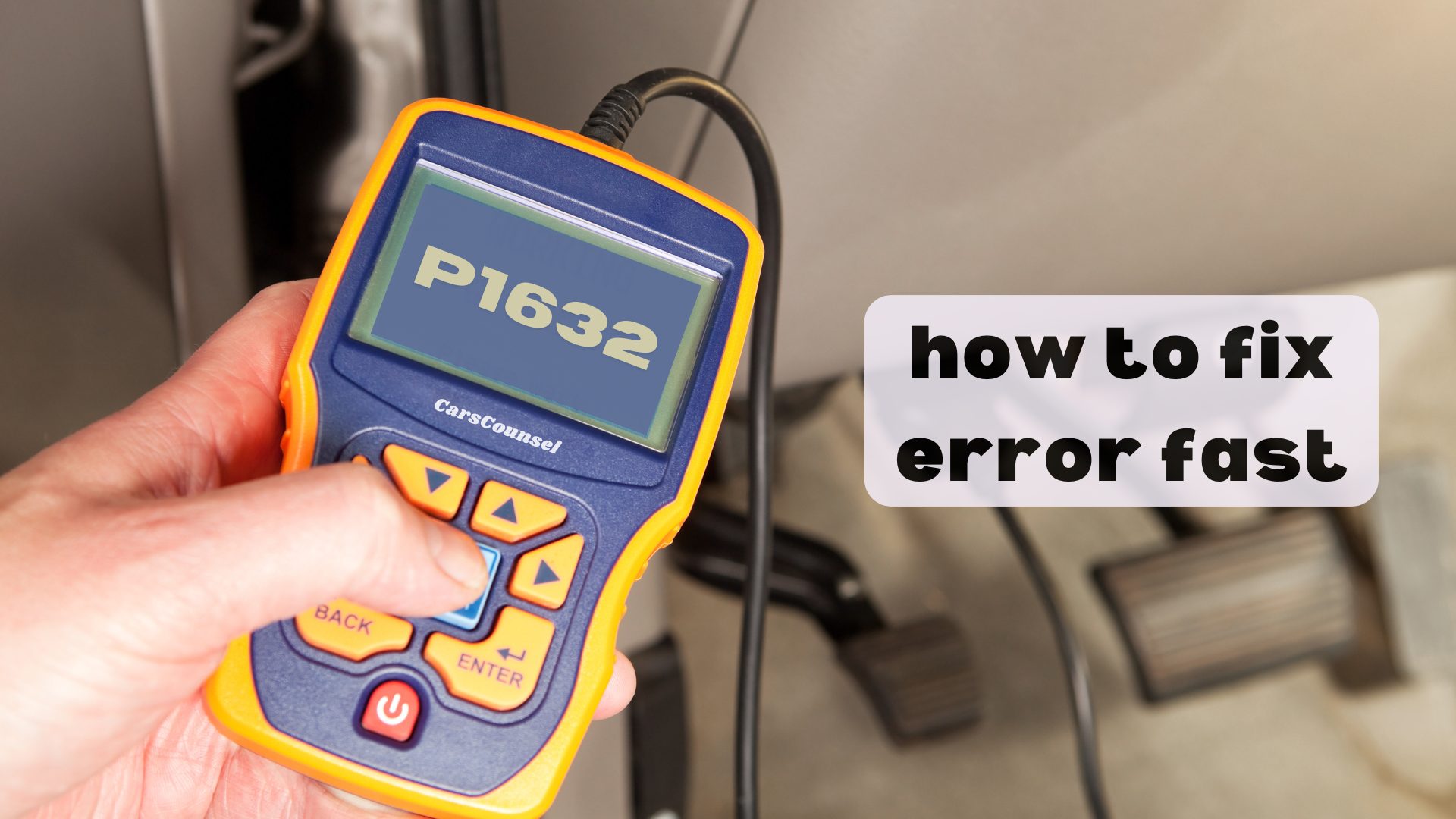
Diagnosis must begin by using a diagnostic scanner to confirm the exact OBD2 error and verify the factory definition for your specific vehicle make, model, and year.
For theft deterrent systems, a professional scan tool is often required to read security module data and perform relearn or reset procedures after verifying wiring integrity.
On generator control circuits, technicians typically measure the control signal duty cycle or voltage at the alternator connector and compare it against manufacturer specifications.
For pedal sensor or throttle actuator faults, live data monitoring of the sensor voltages while operating the pedal helps identify range, performance, or correlation errors before replacing components.
Repairing the P1632 Issue
Repairs must follow the confirmed diagnosis for your specific application. If the generator control circuit is confirmed faulty, repairing the wiring or replacing the generator may be required.
For theft deterrent faults, replacing the Passlock sensor or ignition cylinder, followed by the manufacturer-specific security relearn procedure, often resolves the issue.
If an accelerator pedal position sensor fails testing, the pedal assembly is typically replaced, and the electronic throttle control system may require a calibration reset.
Always clear the codes and perform a test drive to verify that the monitor completes successfully and the condition does not return.
Cost Considerations for P1632 Repairs
Repair costs depend entirely on the verified cause and the specific vehicle application. Diagnosing a manufacturer-specific code typically requires professional service information and specialized scan tools.
Fixing a wiring issue or performing a security system relearn may involve minimal parts cost but requires diagnostic labor. Replacing a generator, pedal sensor, or ignition cylinder involves higher parts and labor expenses.
Costs will vary based on component accessibility, programming requirements, and local labor rates.
Prevention Strategies for Future Occurrences
Keeping electrical connectors clean and securely fastened can help prevent moisture intrusion and signal loss in sensitive control circuits.
Avoiding physical damage to the wiring harness near the accelerator pedal or steering column reduces the risk of intermittent circuit faults.
Maintaining a healthy battery and charging system ensures stable voltage for the powertrain and body control modules, reducing the chance of communication errors.
Troubleshooting Tips and Best Practices
Never assume P1632 universally means a failed alternator or a broken security sensor. Always verify the exact manufacturer definition before purchasing parts.
Check for applicable technical service bulletins or software updates for your specific vehicle, as some manufacturers release calibrations to address false manufacturer-specific codes.
Inspect related systems for additional codes, as a single network or ground fault can sometimes trigger multiple module-specific diagnostic trouble codes.
More OBD-II Codes
| P1631 | P1629 | P1628 | P1626 |
| P1614 | P1611 | P1633 | P1635 |
| P1637 | P1638 | P1639 | P1641 |
| P1650 | P1660 | P1682 | P1684 |
| P0562 | P0563 | P0601 | P0607 |
| P0700 | P0420 | P0300 | P0171 |
Frequently Asked Questions
Is P1632 a generic OBD-II code?
No. P1632 is a manufacturer-specific code. Its exact definition and monitored system depend entirely on the vehicle make, model, and year.
Can a bad battery cause a P1632 code?
A weak battery can cause low system voltage, potentially triggering module communication or control circuit faults. However, the battery itself is rarely the direct cause of the specific P1632 condition.
Will P1632 prevent my car from starting?
It depends on the application. On some vehicles with theft deterrent systems, this code can disable fuel delivery and prevent the engine from starting. Other applications may only illuminate a warning light.
How do I clear a P1632 code?
Clearing the code with a scan tool does not fix the underlying issue. The fault must be diagnosed and repaired according to the manufacturer procedure, or the code will likely return.
Is it safe to drive with a P1632 code?
It depends on the affected system. If the code relates to a charging system fault or electronic throttle issue, driving may be unsafe or cause further damage. Always verify the exact application first.
What Should You Do About the P1632 Code?
Confirm the exact factory definition for your specific vehicle, then follow the applicable manufacturer diagnostic procedure.
Because this code is manufacturer-specific, testing the relevant system and components identified by your vehicle’s service information is required to find the root cause.
Once the fault is confirmed, perform the necessary repairs and verify the fix by clearing the codes and completing a test drive.

