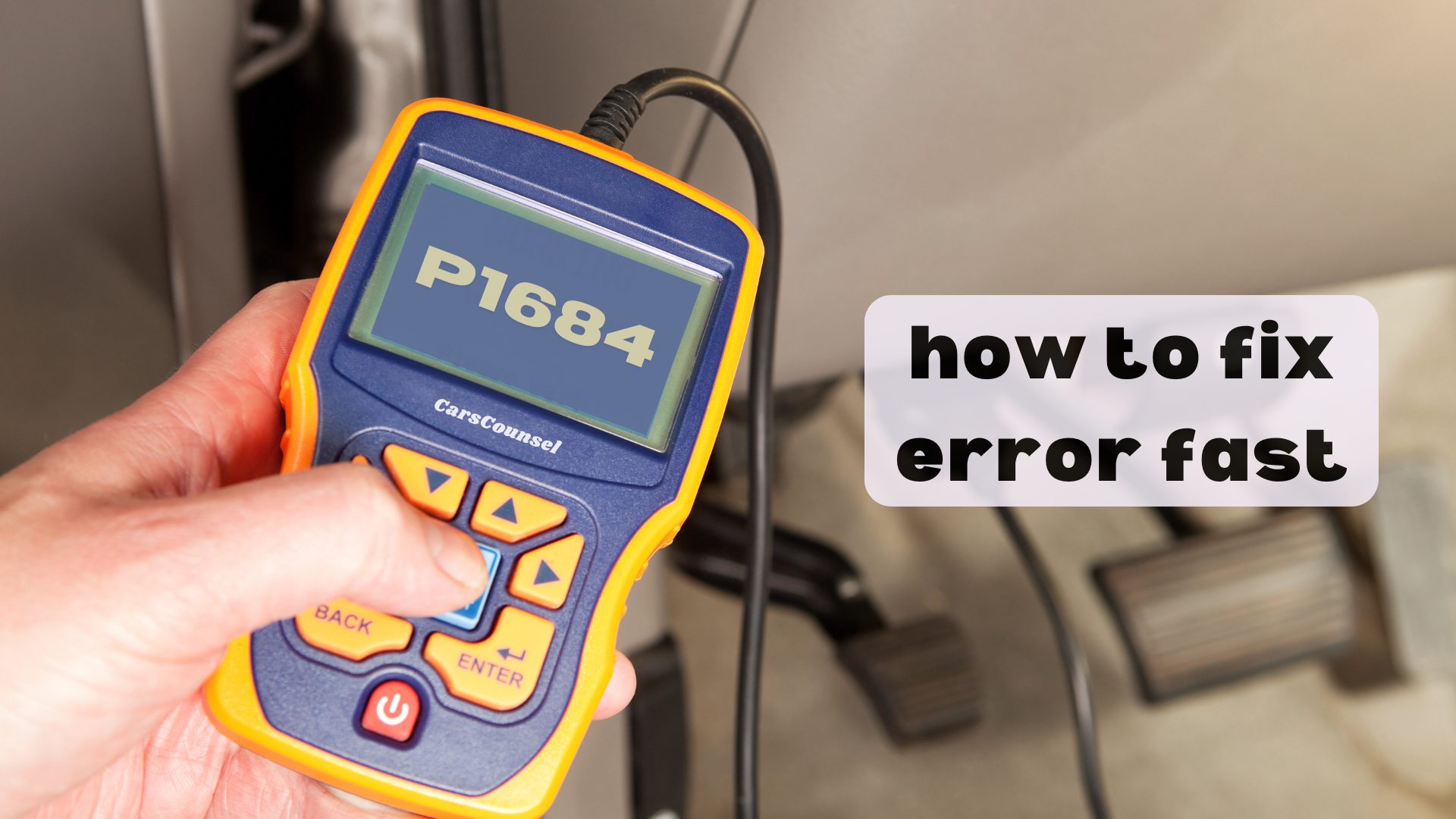
P1684 is a manufacturer-specific OBD-II diagnostic trouble code, primarily found on Chrysler, Dodge, Jeep, and Ram vehicles. It indicates that the Powertrain Control Module detected a loss of constant battery power within the last 50 ignition cycles.
This code is often an informational status flag rather than a confirmed component failure. It frequently appears after routine maintenance, but if the battery was not disconnected, it requires targeted electrical diagnosis to find the power interruption.
Quick Navigation
Key Takeaways
- P1684 indicates the control module lost constant battery power, often due to a recent battery disconnection or replacement.
- If the battery was not disconnected, possible causes include corroded terminals, loose ground connections, or a failing power feed circuit.
- Diagnosis involves verifying recent maintenance history, inspecting battery connections, and testing the module’s power and ground circuits.
- Repairs depend on the root cause and may simply require clearing the code after a battery change, or repairing damaged wiring.
P1684 Code Description and Implications
P1684 is a manufacturer-specific code, meaning its exact definition and diagnostic procedures depend on the vehicle application.
On most Chrysler, Dodge, Jeep, and Ram applications, P1684 indicates that the Powertrain Control Module lost its Keep Alive Memory power supply recently.
The control module uses constant battery power to retain adaptive shift strategies, idle trim values, and emission monitor status when the ignition is off.
When this power is interrupted, the module resets its adaptive memory and logs this code to inform the technician that a power loss occurred.
Because it is an informational code, it does not automatically prove that a sensor, module, or wiring harness has failed.
When diagnosing OBD2 codes related to module memory, understanding recent vehicle service history is the most critical first step.
Common Causes of the P1684 Code
The most frequent cause is the intentional disconnection of the battery for routine maintenance, battery replacement, or electrical system repairs.
If the battery was not recently disconnected, loose or heavily corroded battery terminals can cause intermittent power loss to the vehicle’s main computers.
A poor chassis ground or a corroded power distribution center connection can also interrupt the constant power feed to the control module.
In some applications, a failing Ignition Off Draw fuse or a damaged wiring harness between the battery and the module may be responsible.
Symptoms Associated With P1684
The most common symptom is the illumination of the Check Engine Light, though some applications may store the code without triggering the light.
Drivers may notice that the radio presets, clock, and power window auto-up/down features have been reset.
The transmission may shift harshly or erratically for the first few miles of driving until the control module relearns its adaptive shift strategies.
Engine idle quality may be slightly rough until the idle air control or electronic throttle adaptations are re-established.
Diagnosing the P1684 Trouble Code
Diagnosis must begin by verifying whether the vehicle’s battery was recently disconnected or replaced.
If a recent battery disconnection is confirmed, the code is functioning as designed and simply needs to be cleared with a scan tool.
If no maintenance was performed, visually inspect the battery terminals for corrosion, looseness, or physical damage.
Check the main chassis grounds and the power distribution center for secure, clean connections.
Use a digital multimeter to verify that the control module is receiving constant battery voltage at its memory power feed pins with the ignition off.
Repairing the P1684 Issue
Repairs must follow confirmed diagnosis and the actual cause of the power interruption.
If the code resulted from a recent battery replacement, simply clear the code and allow the vehicle to complete its drive cycles.
If battery terminals are corroded or loose, clean the posts and tighten the connections to the manufacturer’s torque specification.
If wiring damage or a blown constant power fuse is found, repair the circuit and replace the fuse using the correct amperage rating.
If the battery itself is failing and dropping voltage during cranking, replace the battery and retest the charging system.
Cost Considerations for P1684 Repairs
Cost depends on diagnostic time, component accessibility, required parts, programming requirements, and labor.
If the code is simply a byproduct of a recent battery change, clearing it with a scan tool involves no repair costs.
Cleaning battery terminals or tightening ground straps involves minimal labor and no parts.
Replacing a failing battery or repairing a damaged power feed wire will involve standard parts and electrical labor costs.
Prevention Strategies for Future Occurrences
Preventing false P1684 codes requires maintaining secure electrical connections throughout the vehicle.
Keeping battery terminals clean and applying a dielectric protectant helps prevent corrosion that can lead to intermittent power loss.
Ensuring that battery hold-down clamps are secure prevents the battery from vibrating and loosening the cable connections over time.
When performing electrical work, ensuring all connections are fully seated and tightened prevents unexpected memory resets.
Troubleshooting Tips and Best Practices
Always check for Technical Service Bulletins related to P1684 for your specific vehicle application.
Manufacturers may release updated software calibrations to address overly sensitive memory loss monitoring logic.
Do not assume the Powertrain Control Module has failed simply because it logged a memory loss code.
A simple loose battery cable or a momentary voltage drop during engine cranking is a much more probable cause than an internal module fault.
If the vehicle exhibits harsh shifting alongside this code, allow the transmission to complete its adaptive relearn procedure before attempting further repairs.
More OBD-II Codes
| P1683 | P1682 | P1681 | P1680 |
| P1679 | P1678 | P1685 | P1686 |
| P1687 | P1688 | P1689 | P1690 |
| P0562 | P0563 | P0601 | P0602 |
| P0603 | P0604 | P0605 | P0606 |
| P0607 | P1604 | P0700 | U0100 |
Frequently Asked Questions
Is the P1684 code generic or manufacturer-specific?
No. P1684 is a manufacturer-specific code. It is primarily used by Chrysler, Dodge, Jeep, and Ram to indicate a loss of constant battery power to the control module.
Will disconnecting the battery cause a P1684 code?
Yes. Disconnecting the battery intentionally for maintenance or replacement will interrupt the Keep Alive Memory circuit, causing the module to log this code upon the next start.
Can I drive my vehicle with a P1684 code?
Driving is generally safe, as this is an informational code. However, the transmission may shift harshly until it relearns its adaptive strategies, and readiness monitors may be incomplete.
Does P1684 mean my PCM is broken?
No. This code simply indicates that the module lost power. It does not prove the PCM has failed internally. Wiring issues, loose terminals, or a recent battery change are much more likely causes.
How do I clear the P1684 code?
If the battery was recently disconnected, you can clear the code using an OBD-II scan tool. If the battery was not disconnected, the underlying power loss issue must be diagnosed and repaired first.
What Should You Do About the P1684 Code?
Confirm whether the vehicle’s battery was recently disconnected or replaced before attempting any electrical diagnosis.
Do not assume the Powertrain Control Module has failed based solely on the presence of this diagnostic trouble code.
Inspect the battery terminals, chassis grounds, and constant power circuits to rule out external power interruptions.
Follow the applicable manufacturer diagnostic workflow to isolate the relevant system and components before replacing any hardware.

