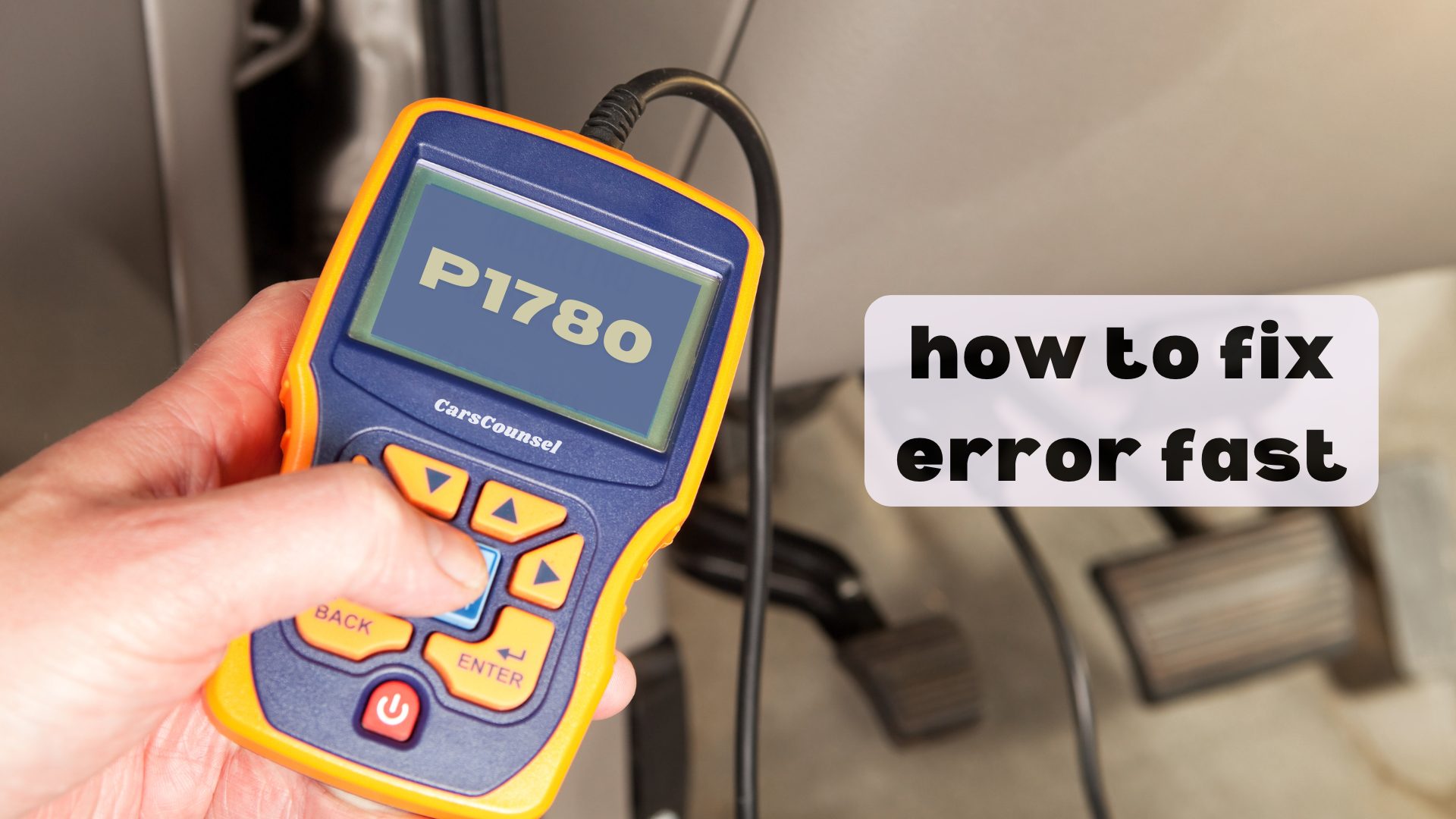
Among OBD2 codes, P1780 is a manufacturer-specific powertrain definition. Its exact meaning depends on the vehicle application, commonly indicating a fault in the transmission control switch or park/neutral position switch circuit.
Because this code is manufacturer-specific, the exact diagnostic path varies. The DTC alone does not prove a failed switch or module. Verifying the factory definition and testing the relevant circuits is required to identify the root cause.
Quick Navigation
Key Takeaways
- Condition detected: The control module identified an electrical or performance fault in a specific transmission switch circuit, such as the overdrive cancel or park/neutral position switch.
- Application dependent: The exact monitored component varies by manufacturer, requiring verification of the specific factory definition before diagnosis.
- Electrical checks required: Diagnosis involves inspecting the switch wiring, testing circuit continuity, and verifying switch operation.
- Component testing: The switch, wiring harness, and control module must be tested to isolate the exact failing component.
P1780 Code Description and Implications
P1780 is a manufacturer-specific powertrain code. Its exact definition depends on the vehicle application.
Some Ford applications: P1780 indicates a Transmission Control Switch (TCS) circuit fault, often related to the overdrive cancel switch on the gear selector.
Certain Toyota and Lexus applications: P1780 typically points to a Park/Neutral Position (PNP) switch circuit malfunction, which verifies the transmission is in Park or Neutral for starting.
Because the code is manufacturer-specific, it indicates that the control module detected an electrical fault in the designated switch circuit. It does not automatically prove the switch itself has failed.
Common Causes of the P1780 Code
- Damaged or chafed wiring: The harness routing to the transmission range sensor or gear selector switch is exposed to heat and movement, making it vulnerable to physical damage.
- Corroded or loose connectors: Moisture intrusion at the switch connector or transmission harness can interrupt the signal or cause a short circuit.
- Faulty switch or sensor: The internal contacts of the transmission control switch or park/neutral position switch may wear out or fail mechanically.
- Misadjusted linkage: On applications using a mechanical linkage to the transmission range sensor, improper adjustment can cause the switch signal to fall out of the expected range.
- PCM/TCM driver failure: The internal circuitry within the control module that monitors the switch may be damaged.
Symptoms Associated With P1780
Possible symptoms include:
- Illuminated Check Engine Light (MIL).
- Inability to crank or start the engine if the park/neutral position switch fails to register Park or Neutral.
- Overdrive function failing to engage or disengage when the button is pressed.
- Harsh or erratic transmission shifting if the module defaults to a fail-safe mode.
- Incorrect gear indicator display on the instrument cluster.
Diagnosing the P1780 Trouble Code
Diagnosing a manufacturer-specific switch circuit code requires a digital multimeter, a scan tool, and the vehicle’s specific wiring diagrams. The first step is to verify the exact factory definition for your specific application.
A professional diagnostic workflow includes:
- Scan for related codes: Check for additional transmission or switch circuit codes.
- Monitor live data: Use a scan tool to view the switch state while operating the gear selector or overdrive button to see if the module recognizes the input.
- Visual inspection: Inspect the wiring harness from the control module to the switch for chafing, burns, or corrosion.
- Measure switch operation: Disconnect the switch and measure its resistance or continuity in different positions to verify it matches the manufacturer’s specification.
- Check circuit integrity: Use a multimeter to verify continuity in the signal and ground wires, checking for shorts to ground or voltage.
Repairing the P1780 Issue
Repairs must follow confirmed diagnosis. Never replace the control module based solely on the presence of a P1780 code.
- Wiring repair: If the harness is damaged, repair the wires using solder and heat shrink tubing, or replace the pigtail connector.
- Switch replacement: If the switch fails continuity or resistance testing, replace it with a component meeting the correct vehicle specification.
- Linkage adjustment: If the transmission range sensor is functional but misadjusted, adjust the mechanical linkage to align the switch signals with the actual gear position.
- Module service: If the wiring and switch test perfectly but the module cannot read the circuit, the control module may require replacement or reprogramming.
Cost Considerations for P1780 Repairs
The cost to resolve a P1780 code depends heavily on the root cause, diagnostic time, and component accessibility.
If the issue is a broken wire near the gear selector, the repair primarily involves electrical supplies and labor. If the park/neutral position switch or transmission control switch requires replacement, the price includes the part and standard labor.
Prevention Strategies for Future Occurrences
While internal switch failures are not always predictable, you can protect the circuit from common environmental damage.
- Protect the wiring harness: Ensure the wiring near the gear selector and transmission is securely routed away from hot exhaust components and moving linkage parts.
- Maintain clean connectors: Apply dielectric grease to switch connectors to prevent moisture intrusion and terminal corrosion.
- Avoid excessive force: Use smooth, deliberate movements when shifting gears or pressing overdrive buttons to prevent mechanical damage to the switch internals.
Troubleshooting Tips and Best Practices
- Do not assume the switch is dead: A circuit code often points to a broken wire or poor connection in the harness rather than a failed switch. Always test the wiring continuity first.
- Check for TSBs: Some manufacturers issue Technical Service Bulletins for updated switch designs or revised wiring harnesses to address chronic failure points.
- Verify the adjustment: On vehicles with an external transmission range sensor, a simple linkage misadjustment is a frequent cause of switch circuit codes.
More OBD-II Codes
| P1762 | P1768 | P1773 | P1775 |
| P1777 | P1778 | P1783 | P1788 |
| P1790 | P1800 | P1807 | P1808 |
| P0705 | P0706 | P0707 | P0708 |
| P0711 | P0713 | P0715 | P0717 |
| P0720 | P0722 | P0725 | P0727 |
Frequently Asked Questions
Can a bad transmission range sensor cause a P1780 code?
Yes. On applications where P1780 designates the park/neutral position switch, a failed transmission range sensor will trigger this code. The sensor provides the gear position signal to the control module, and an internal failure will disrupt the circuit.
Is it safe to drive with a P1780 code?
It depends on the symptoms. If the code prevents the engine from cranking or causes erratic shifting, the vehicle is unsafe to drive. If it only affects the overdrive cancel button, you may drive cautiously to a repair facility.
Will disconnecting the battery fix a P1780 code?
Disconnecting the battery may temporarily reset the control module and clear the code if the fault was a temporary glitch. However, it does not repair physical wiring damage or a failed switch, and the code will return.
Can aftermarket shifters trigger a P1780 code?
Yes. Aftermarket performance shifters or modified gear linkages can alter the mechanical alignment of the transmission range sensor. If the sensor is misadjusted, it may send an out-of-range signal, triggering a switch circuit code.
Does P1780 mean my PCM needs to be replaced?
No. P1780 indicates a fault in a specific switch circuit. The root cause is frequently a damaged wire, corroded connector, misadjusted linkage, or failed switch. The control module should only be considered after verifying proper harness integrity and switch function.
What Should You Do About the P1780 Code?
Because the P1780 code is a manufacturer-specific definition indicating a fault in a transmission switch circuit, it requires verifying the exact factory definition for your vehicle application before beginning diagnosis.
Inspect the relevant switch wiring for physical damage, and check the connectors for corrosion. Test the switch operation and verify the circuit signals. Follow the manufacturer’s diagnostic procedure to isolate the faulty component, repair the confirmed root cause, and verify the repair.

