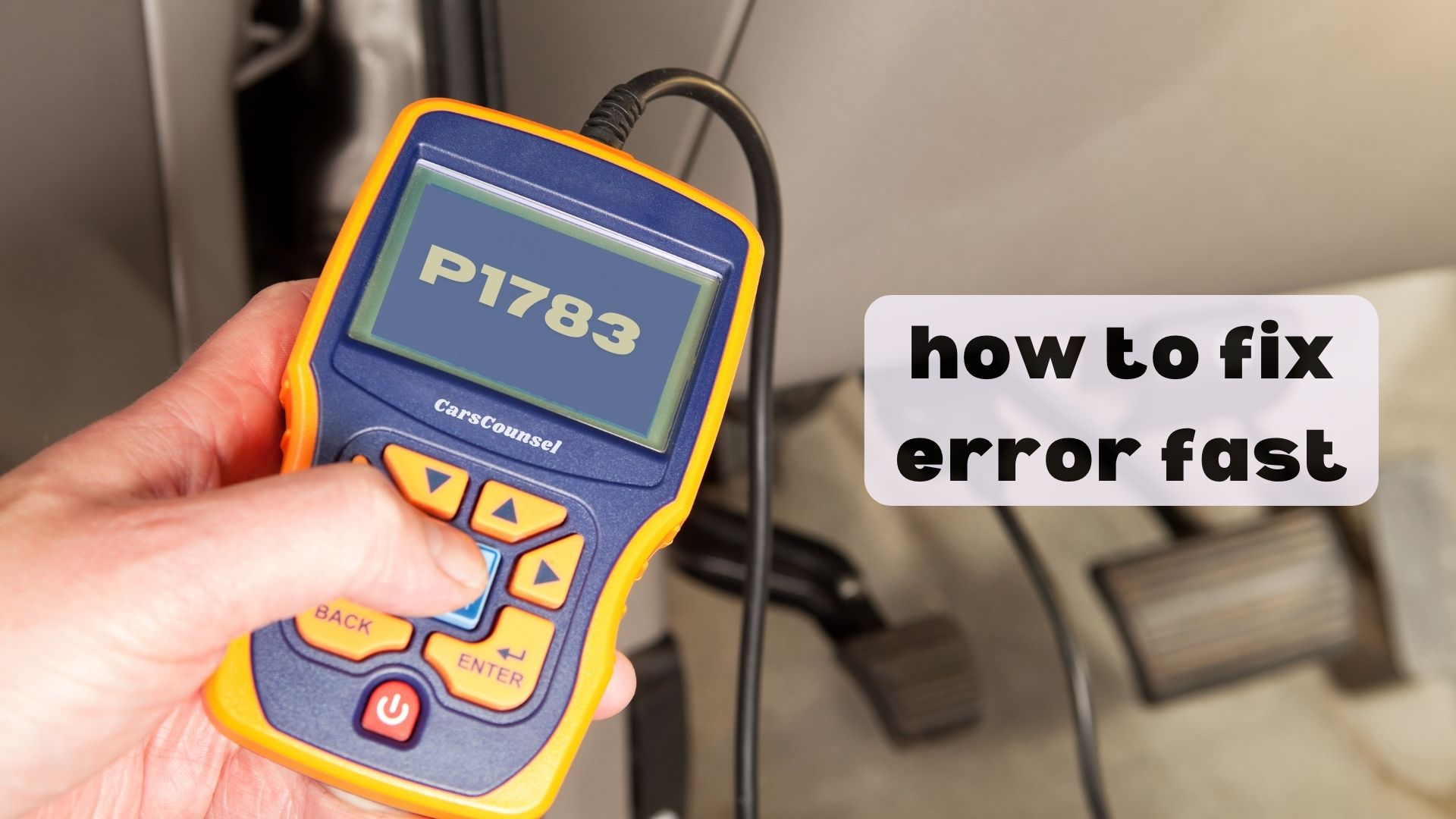
The P1783 diagnostic trouble code is a manufacturer-specific powertrain code. Its exact definition depends heavily on the vehicle make, pointing to a transmission over-temperature condition on Ford and GM models, or a transfer case switch fault on Toyota applications.
Because this code targets entirely different systems across manufacturers, the exact vehicle application must be verified before diagnosis. The code alone does not prove a specific sensor or mechanical component has failed without proper testing.
Quick Navigation
Key Takeaways
- P1783 is a manufacturer-specific code with differing definitions depending on the vehicle make.
- On Ford, GM, and Nissan applications, it typically indicates a transmission over-temperature condition or high fluid temperature input.
- On Toyota and Lexus applications, it generally points to a transfer neutral position switch circuit malfunction.
- On Chrysler, Dodge, and Jeep applications, it indicates a low/reverse pressure switch sense circuit fault.
- Diagnosis requires verifying the exact factory definition and testing the relevant temperature sensors, transfer case switches, or pressure switches.
P1783 Code Description and Implications
The P1783 code indicates that a control module has detected a specific fault within the transmission or transfer case system. Because it is a manufacturer-specific code, the exact monitored component varies significantly by brand.
Some Ford, GM, and Nissan applications: P1783 indicates a Transmission Over-Temperature Condition. The PCM or TCM detects that the transmission fluid temperature has exceeded safe operating limits, often cited as 270°F on Ford platforms.
Certain Toyota and Lexus applications: The code indicates a Transfer Neutral Position Switch Circuit Malfunction. The 4WD control module detects an electrical fault or implausible signal from the transfer case neutral switch.
Specific Chrysler, Dodge, and Jeep applications: P1783 indicates a Low/Reverse Pressure Switch Sense Circuit Fault. The TCM detects an unexpected voltage or resistance in the circuit monitoring the low/reverse clutch pressure switch.
Common Causes of the P1783 Code
Because P1783 applies to different systems across different brands, the root cause depends on the verified vehicle application.
- Ford/GM/Nissan (Over-Temperature) Causes: Actual transmission overheating due to low fluid levels, degraded fluid, a clogged transmission cooler, or heavy towing. A failed Transmission Fluid Temperature (TFT) sensor can also send false high-temperature signals.
- Toyota/Lexus (Transfer Case) Causes: A failed transfer neutral position switch, damaged wiring between the switch and the 4WD control module, or poor electrical connections at the transfer case.
- Chrysler/Dodge/Jeep (Pressure Switch) Causes: A faulty low/reverse pressure switch, damaged wiring in the transmission internal harness, or contaminated transmission fluid causing the switch to stick.
Symptoms Associated With P1783
When the control module detects a critical system fault, it alters operation or disables the affected feature.
- Ford/GM/Nissan Symptoms: The check engine light or a flashing overdrive light will illuminate. The transmission may enter a fail-safe or limp mode to protect itself from heat damage, resulting in harsh shifts or reduced power.
- Toyota/Lexus Symptoms: The 4WD system may fail to engage or disengage properly. The dashboard 4WD indicator lights may flash or remain inoperative.
- Chrysler/Dodge/Jeep Symptoms: The check engine light will illuminate. The transmission may experience delayed engagement, harsh shifts, or default to limp mode due to the inability to verify clutch pressure.
Diagnosing the P1783 Trouble Code
Accurate diagnosis begins by verifying the exact vehicle application and reviewing manufacturer-specific service information.
- For Ford/GM/Nissan applications: Verify the actual transmission fluid temperature using a scan tool and compare it to an infrared thermometer reading on the transmission pan. Check the fluid level and condition. If the fluid is cool but the scan tool reads extreme heat, test the TFT sensor circuit.
- For Toyota/Lexus applications: Inspect the transfer neutral position switch and its wiring harness. Use a multimeter to verify the switch opens and closes correctly when the transfer case is shifted, and check the circuit for opens or shorts.
- For Chrysler/Dodge/Jeep applications: Monitor the low/reverse pressure switch state using a scan tool while shifting through gears. Test the switch circuit for continuity and verify that the internal transmission wiring is intact.
Repairing the P1783 Issue
Repairs must follow the confirmed root cause identified during diagnosis.
- Ford/GM/Nissan Repairs: If the transmission is genuinely overheating, address the root cause by servicing the fluid, repairing cooler lines, or replacing a clogged transmission cooler. If the fluid is cool but the sensor reads high, replace the TFT sensor.
- Toyota/Lexus Repairs: Repair any damaged wiring in the transfer case harness. If the circuit is intact but the switch fails testing, replace the transfer neutral position switch.
- Chrysler/Dodge/Jeep Repairs: Replace the confirmed faulty low/reverse pressure switch. If the internal wiring harness is damaged, it may require transmission pan removal and harness replacement.
Cost Considerations for P1783 Repairs
Cost depends on diagnostic time, component accessibility, required parts, programming requirements, and labor.
For a fluid service or TFT sensor replacement, costs are generally moderate. For a transfer case switch or internal transmission pressure switch replacement, labor times increase due to the need to access the transfer case or drop the transmission pan.
Prevention Strategies for Future Occurrences
While electronic component failures cannot always be predicted, you can reduce the risk of mechanical and circuit faults.
- On all vehicles, maintain proper transmission fluid levels and follow the manufacturer’s severe-service maintenance schedule if you frequently tow or drive in heavy traffic to prevent genuine overheating.
- Inspect exposed transfer case and transmission wiring harnesses for signs of chafing, impact damage, or moisture intrusion during routine undercarriage service.
Troubleshooting Tips and Best Practices
Follow these practices to avoid misdiagnosis and ensure accurate repairs.
- Do not assume the transmission is actually overheating: On Ford and GM models, a failed TFT sensor can send a false high-temperature signal to the PCM. Verify the physical temperature of the transmission pan before performing major cooling system repairs.
- Check for related codes: Look for other transmission temperature, 4WD system, or pressure switch codes that might indicate a broader wiring harness issue or a shared ground fault.
- Verify your definition: When researching this trouble code, always verify whether your specific vehicle uses the over-temperature, transfer case, or pressure switch definition before ordering parts.
More OBD-II Codes
| P1762 | P1768 | P1773 | P1775 |
| P1777 | P1778 | P1788 | P1790 |
| P1800 | P1807 | P1808 | P1809 |
| P0711 | P0712 | P0713 | P0714 |
| P0700 | P0731 | P0732 | P0733 |
| P1758 | P1753 | P1745 | P1739 |
Frequently Asked Questions
Is P1783 a generic or manufacturer-specific code?
No. P1783 is a manufacturer-specific powertrain code. Its definition varies significantly by brand, indicating a transmission over-temperature fault on Ford/GM, a transfer case switch fault on Toyota, or a pressure switch fault on Chrysler.
Can I drive my vehicle with a P1783 code?
It depends on the application. If the transmission is genuinely overheating on a Ford or GM model, continuing to drive can cause severe internal damage. On Toyota models, the 4WD system may simply be disabled.
Will disconnecting the battery clear the P1783 code?
Disconnecting the battery might temporarily clear the code. However, it does not repair the underlying overheating condition, failed switch, or wiring fault, and the code will return once the modules run their self-tests.
Can low transmission fluid cause a P1783 code?
Yes. On applications where P1783 indicates a transmission over-temperature condition, low or degraded transmission fluid reduces cooling capacity, leading to genuine overheating and triggering the code.
Does P1783 affect the engine?
Generally, no. The P1783 code relates strictly to the transmission temperature, transfer case switch, or pressure switch circuits. However, limp mode conditions will restrict engine RPM and overall vehicle speed to protect the drivetrain.
What Should You Do About the P1783 Code?
When a P1783 code appears, confirm the exact factory definition for your specific vehicle make and model. Because this code targets entirely different systems depending on the manufacturer, applying the wrong diagnostic path will lead to misdiagnosis.
Follow the applicable manufacturer diagnostic procedure to test the relevant system and components. Once the root cause is confirmed, complete the necessary electrical repairs, fluid services, or component replacements before returning the vehicle to normal service.

