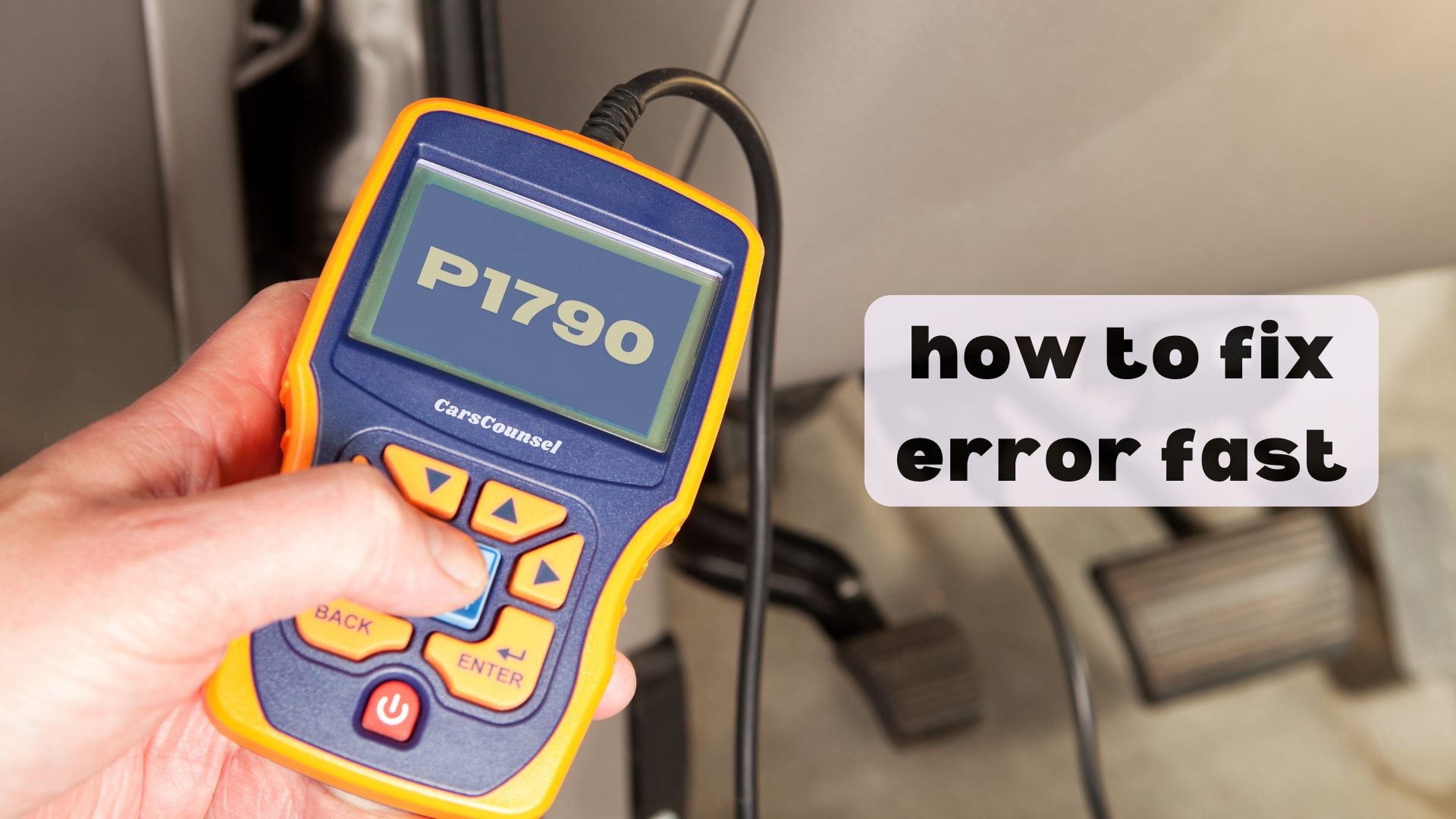
The P1790 code is a manufacturer-specific OBD-II trouble code with definitions that vary significantly by automaker. It generally points to an internal Transmission Control Module (TCM) fault or a flagged transmission error.
Because this code is manufacturer-specific, the exact diagnostic procedure depends entirely on your vehicle’s make. The code indicates a detected module or system fault, but scanning for additional transmission codes is required to identify the root cause.
Quick Navigation
Key Takeaways
- P1790 is a manufacturer-specific code, meaning its exact definition depends on the vehicle make, such as Chrysler, GM, or Honda.
- On many Chrysler applications, it acts as a flag indicating the TCM has stored a separate transmission fault code.
- On certain GM applications, it indicates an internal TCM memory or checksum error.
- Diagnosis requires scanning both the PCM and TCM for additional codes before replacing any components.
P1790 Code Description and Implications
The P1790 code is manufacturer-specific, meaning its exact definition and monitored system depend entirely on the vehicle application.
Chrysler, Dodge, and Jeep applications: P1790 typically acts as a “pass-through” or flag code. It indicates that the Powertrain Control Module (PCM) has detected that the Transmission Control Module (TCM) has stored an internal transmission fault.
Certain GM applications: P1790 often indicates an internal TCM memory fault, such as a ROM or RAM checksum error, pointing to a hardware or software failure within the module itself.
Some Honda and Acura applications: P1790 may refer to a lock-up control system fault or an internal TCM communication error affecting the torque converter clutch.
Common Causes of the P1790 Code
- On Chrysler applications, any underlying transmission fault (such as a failed solenoid, speed sensor, or pressure switch) that triggers a TCM code.
- On GM applications, an internal TCM hardware failure, corrupted software, or a loss of module power or ground causing memory corruption.
- On Honda applications, a faulty lock-up control solenoid, low or degraded transmission fluid, or a failed torque converter clutch.
- Damaged wiring, corroded connectors, or poor grounds in the communication circuits between the PCM and TCM.
Symptoms Associated With P1790
- Illuminated Check Engine Light.
- The transmission may enter a fail-safe or limp mode, restricting gear selection to prevent damage.
- Harsh shifting, delayed engagement, or failure of the torque converter clutch to lock up.
- In some cases, no immediate drivability symptoms are noticed other than the warning light, depending on the underlying TCM fault.
Diagnosing the P1790 Trouble Code
Diagnosis must begin by verifying the exact factory definition for the specific make and model. Because P1790 is manufacturer-specific, a scan tool capable of communicating with both the PCM and the TCM is necessary.
The diagnostic path generally involves:
- Scanning the TCM for additional transmission-specific fault codes, especially on Chrysler applications where P1790 is merely a flag.
- Inspecting the wiring harness and connectors at the TCM for physical damage, corrosion, or loose pins.
- Verifying the TCM power and ground circuits to ensure the module is receiving stable voltage.
- Checking for applicable Technical Service Bulletins (TSBs) regarding TCM software updates or known internal module failures.
Repairing the P1790 Issue
Repairs must follow the confirmed root cause identified during the diagnostic procedure. If additional transmission codes are found on a Chrysler application, diagnosing and repairing those specific underlying faults is necessary.
If wiring damage or connector corrosion is found, repairing the harness and securing the connections is required.
If the TCM fails internal memory tests on a GM application, or if a software update does not resolve the checksum error, replacing and programming the confirmed failed TCM is necessary.
Cost Considerations for P1790 Repairs
Repair costs for a P1790 code vary widely based on the exact vehicle application, the confirmed root cause, and local labor rates.
If the issue is limited to a wiring repair, a fluid service, or replacing a specific transmission solenoid, costs may be moderate.
Replacing and programming a TCM involves significant parts and labor expenses, as the new module must be flashed with the correct vehicle calibration and security data.
Prevention Strategies for Future Occurrences
Because P1790 relates to internal module faults or underlying transmission errors, preventing the code depends on the exact failure mechanism.
Maintaining the correct transmission fluid level and condition helps prevent solenoid and torque converter faults that can trigger secondary TCM codes.
Ensuring that the battery and charging system remain in good health prevents voltage drops that can corrupt TCM memory or cause communication errors.
Troubleshooting Tips and Best Practices
Always scan the TCM directly before assuming the P1790 code is the only problem. On many Chrysler vehicles, P1790 is simply the PCM’s way of turning on the Check Engine Light because the TCM has set a separate, more specific transmission code.
Avoid replacing the TCM without first verifying power, ground, and communication circuits. A poor ground connection can cause a module to fail its internal self-tests and set a memory error code.
Ensure that any module replacements are followed by the exact manufacturer programming and security relearn procedures.
More OBD-II Codes
| P1773 | P1775 | P1777 | P1778 |
| P1783 | P1788 | P1800 | P1807 |
| P1808 | P1809 | P1810 | P1811 |
| P0700 | P0715 | P0720 | P0730 |
| P0740 | P0750 | P0760 | P0770 |
| P0300 | P0420 | P0171 | P0174 |
Frequently Asked Questions
Is the P1790 code generic or manufacturer-specific?
No. P1790 is a manufacturer-specific code. Its exact definition varies significantly between automakers like Chrysler, GM, and Honda, requiring vehicle-specific diagnostic procedures.
Can I drive my car with a P1790 code?
Driving is not recommended. Depending on the application, the transmission may enter limp mode, experience harsh shifting, or suffer internal damage if the underlying TCM or solenoid fault is ignored.
Will clearing the code fix a P1790 fault?
No. Clearing the code will not repair an underlying transmission fault, damaged wiring, or failed TCM. If the root cause remains, the code will return immediately upon the next monitor cycle.
Does P1790 always mean the TCM is broken?
No. On many Chrysler applications, P1790 is simply a flag indicating the TCM has stored a different, more specific transmission code. The TCM itself may be perfectly fine.
Can low transmission fluid cause a P1790 code?
Yes, on some applications. Low or degraded fluid can cause solenoid performance issues or torque converter clutch faults, which the TCM detects and flags, triggering the P1790 code in the PCM.
What Should You Do About the P1790 Code?
Confirm the exact factory definition for your specific vehicle application. Because P1790 is a manufacturer-specific code, the diagnostic path will differ entirely depending on whether it acts as a TCM flag, an internal memory error, or a lock-up clutch fault.
Follow the applicable manufacturer diagnostic procedure to test the relevant system and components. Once the root cause is confirmed, complete the necessary repairs and verify the transmission operation before returning the vehicle to service.

