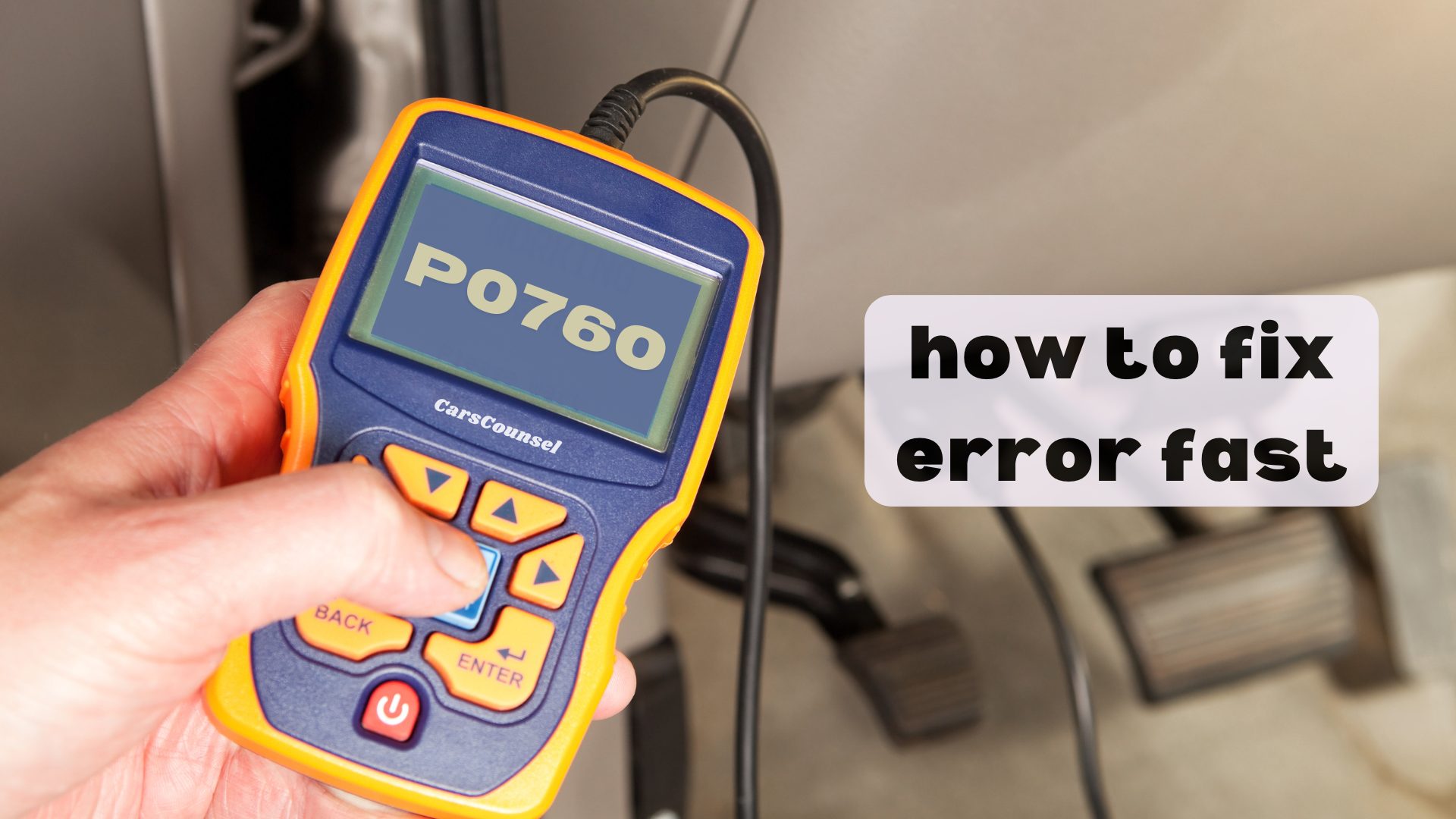
P0760 is a generic OBD-II diagnostic trouble code indicating the powertrain control module detected a malfunction involving shift solenoid “C” in the transmission.
This code identifies a detected condition in the transmission control system rather than confirming a single failed component. Targeted diagnosis is required.
Quick Navigation
Key Takeaways
- P0760 indicates the control module detected a malfunction involving shift solenoid “C”.
- Possible causes include a failed solenoid, damaged wiring, poor connections, or internal transmission hydraulic issues.
- Diagnosis requires inspecting the solenoid circuit, testing resistance, and checking transmission fluid condition.
- Repairs depend on the confirmed root cause and may involve wiring repair or solenoid replacement.
P0760 Code Description and Implications
P0760 is a generic OBD-II code indicating the powertrain control module (PCM) or transmission control module (TCM) detected a malfunction with shift solenoid “C”.
Automatic transmissions use multiple shift solenoids to direct hydraulic fluid and control gear changes.
When the control module commands shift solenoid “C” but detects an unexpected electrical response or operational failure, it logs this code.
Because P0760 is a generic code, this fundamental monitoring logic applies across various vehicles from multiple manufacturers.
However, the exact transmission architecture and solenoid location vary depending on the specific vehicle application.
When diagnosing an error code related to the transmission, verifying the exact factory wiring diagram is critical.
Common Causes of the P0760 Code
The underlying causes for a shift solenoid malfunction generally involve the solenoid itself, the wiring harness, or internal hydraulic conditions.
Failed Shift Solenoid: The internal coil of shift solenoid “C” may be open or shorted, preventing it from operating correctly.
Damaged Wiring or Connectors: Chafed wires, broken pins, or corrosion at the transmission harness connector can interrupt the electrical path.
Internal Transmission Issues: Mechanical binding, debris in the valve body, or low hydraulic pressure can prevent the solenoid from moving the valve.
Control Module Fault: An internal failure within the PCM or TCM driver circuit can prevent it from sending the correct voltage.
Symptoms Associated With P0760
The prominent symptom is the illumination of the Check Engine Light.
The vehicle may experience harsh shifts, delayed shifting, or may become stuck in a single gear.
Depending on the application, the transmission control module may command a limp mode to protect the transmission from damage.
In some cases, the driver may not notice any immediate drivability issues if the solenoid is only used in specific gear ranges.
Diagnosing the P0760 Trouble Code
Diagnosis must begin by confirming the exact factory service information and locating shift solenoid “C” for the specific vehicle application.
Inspect the wiring harness and connectors at the transmission case and the control module for physical damage or corrosion.
Use a digital multimeter to measure the internal resistance of shift solenoid “C” and compare it to the manufacturer’s specifications.
Check the control circuits for continuity and shorts to ground or voltage between the control module and the transmission connector.
If the electrical circuit tests correctly, evaluate the transmission fluid level and condition, and check for mechanical binding in the valve body.
Repairing the P0760 Issue
Repairs must follow confirmed diagnosis. Never replace the transmission or control module solely based on the presence of the code.
If the wiring harness is damaged, repair the wires and secure the harness away from hot or moving components.
If connectors are corroded, clean the terminals or replace the pigtail connector.
If electrical testing confirms shift solenoid “C” is internally failed, replace the solenoid using a component meeting the correct vehicle specification.
If debris is found in the fluid, the transmission pan may need to be dropped to clean the valve body and replace the filter.
Cost Considerations for P0760 Repairs
Repair costs vary considerably depending on the confirmed root cause and the specific vehicle application.
Repairing damaged wiring involves moderate labor costs depending on harness accessibility.
Replacing a shift solenoid involves standard parts costs, though labor can increase if the transmission pan or valve body must be removed.
Cost depends on diagnostic time, component accessibility, required parts, programming requirements, and labor.
Prevention Strategies for Future Occurrences
Preventing shift solenoid faults requires maintaining the transmission fluid according to the manufacturer’s schedule.
Replacing the transmission fluid and filter at recommended intervals helps prevent debris from accumulating in the valve body and jamming the solenoids.
Inspecting exposed wiring near the transmission case can help identify developing chafing before it causes an electrical short.
Troubleshooting Tips and Best Practices
Always check for Technical Service Bulletins related to P0760 for your specific vehicle application.
Manufacturers may release updated wiring harness pigtail kits, revised solenoid designs, or software updates for the control module.
Do not assume the entire transmission requires replacement simply because a shift solenoid code is present.
A simple chafed wire, a corroded connector, or a failed individual solenoid can produce the code without major components being defective.
More OBD-II Codes
| P0756 | P0757 | P0758 | P0755 |
| P0753 | P0752 | P0761 | P0765 |
| P0766 | P0770 | P0771 | P0773 |
| P0751 | P0740 | P0741 | P0742 |
| P0700 | P0705 | P0715 | P0720 |
| P0300 | P0420 | P0171 | P0174 |
Frequently Asked Questions
Is the P0760 code generic or manufacturer-specific?
P0760 is a generic SAE-defined OBD-II code. Its fundamental definition regarding a shift solenoid “C” malfunction applies across various manufacturers, though exact diagnostic procedures vary.
Can low transmission fluid cause a P0760 code?
Low fluid causes pressure codes, but severe fluid loss or debris from degraded fluid can mechanically jam the solenoid, potentially triggering a malfunction code.
Will disconnecting the battery clear the P0760 code?
Disconnecting the battery may temporarily clear the code, but it does not repair the underlying electrical or mechanical fault. It also erases valuable freeze frame data.
Can I drive my vehicle with a P0760 code?
Driving is not recommended. A shift solenoid malfunction can cause harsh shifts, slipping, or limp mode, which may lead to further internal transmission damage.
Does P0760 mean the entire transmission must be replaced?
Not necessarily. While internal mechanical failure is a possible cause, a failed individual solenoid, an open wire, or a corroded connector can trigger the code.
What Should You Do About the P0760 Code?
Confirm the exact factory definition and diagnostic procedure for your specific vehicle application before attempting repairs.
Do not assume the transmission or control module requires replacement based solely on the presence of the diagnostic trouble code.
Inspect the shift solenoid wiring, verify connector integrity, and measure the solenoid resistance to rule out external faults.
Follow the applicable manufacturer diagnostic workflow to isolate the relevant system and components before replacing any hardware.

