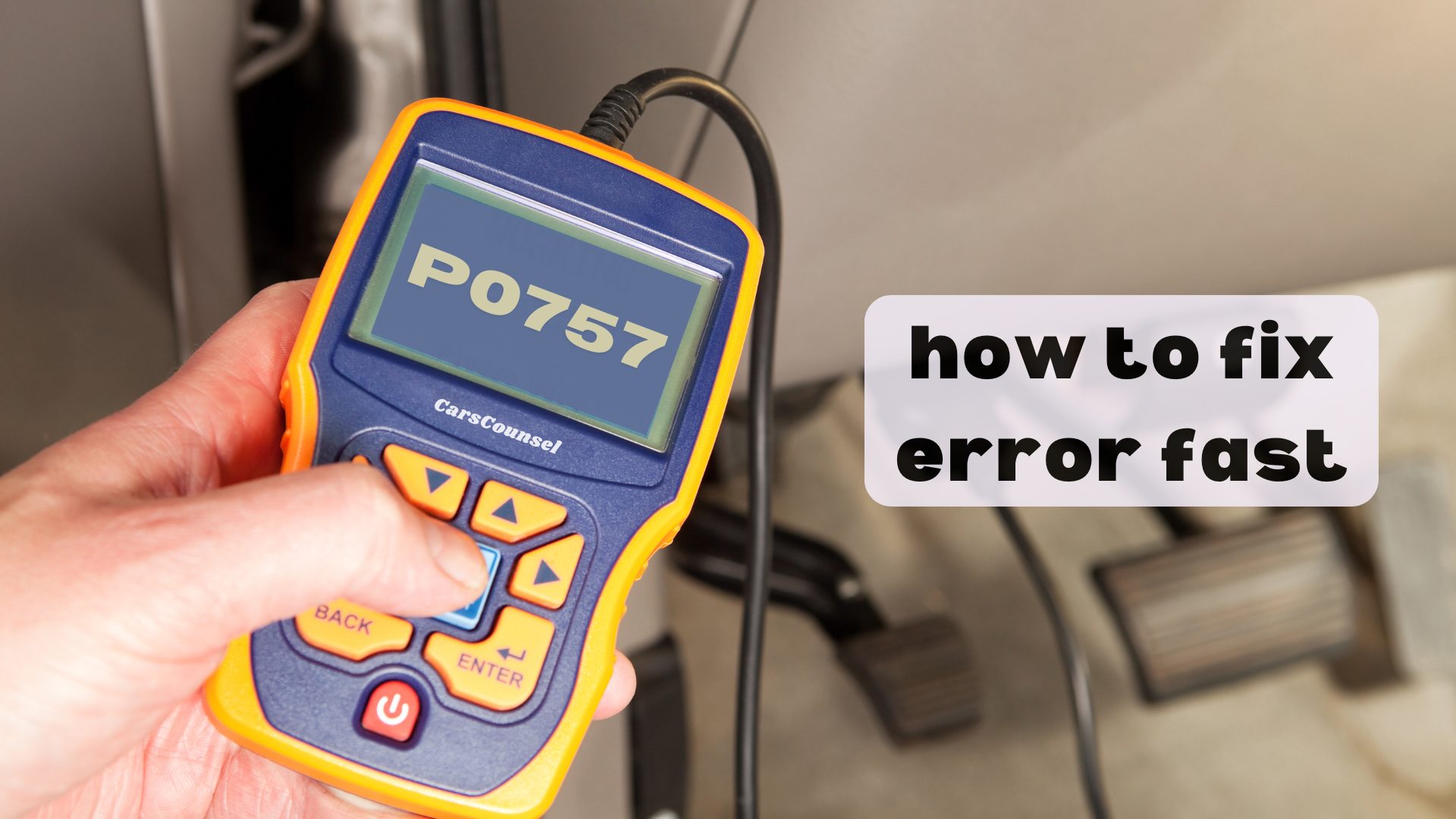
The P0757 code is a generic OBD-II diagnostic trouble code indicating “Shift Solenoid B Stuck On.” It means the powertrain control module detected that shift solenoid B is mechanically stuck in the open or on position.
This code does not automatically prove the solenoid has failed. Diagnosis requires checking transmission fluid condition, inspecting the valve body for debris, and testing the solenoid before replacing components.
Quick Navigation
Key Takeaways
- The P0757 code indicates the control module detected shift solenoid B is mechanically stuck in the on position.
- Possible causes include contaminated transmission fluid, debris in the valve body, or a mechanically failed shift solenoid.
- Diagnosis involves checking fluid condition, inspecting the valve body, and testing the solenoid’s mechanical and electrical operation.
- Repairs may involve flushing the fluid, cleaning the valve body, or replacing the confirmed failed solenoid.
P0757 Code Description and Implications
The P0757 code indicates that the powertrain control module detected shift solenoid B is mechanically stuck in the on position. This generic category of OBD-II trouble codes applies to vehicles with electronically controlled automatic transmissions.
Shift solenoids control the flow of hydraulic fluid to engage specific clutch packs and bands for gear changes. The control module commands the solenoid and monitors the resulting gear ratio.
When the module detects that the transmission is stuck in a gear ratio corresponding to solenoid B being continuously energized, even when commanded off, it stores this code.
Common Causes of the P0757 Code
Contaminated or degraded transmission fluid is a possible cause. Metal particles or clutch material suspended in the fluid can physically jam the solenoid plunger or the valve body spool valve.
Debris or sludge accumulating inside the transmission valve body can restrict the movement of the hydraulic valves actuated by shift solenoid B.
A mechanically failed shift solenoid B, where the internal plunger is physically seized in the open position, will also trigger this performance fault.
Symptoms Associated With P0757
An illuminated Check Engine Light is expected once the monitor detects the stuck solenoid condition. MIL behavior varies by application, but the light commands when the gear ratio fault is verified.
You may experience harsh shifts, delayed shifts, or the transmission becoming stuck in a single gear, often second or third gear, as a fail-safe measure.
In some applications, the transmission may enter a limp mode, restricting gear selection to protect the internal clutches from friction damage.
Diagnosing the P0757 Trouble Code
Diagnosis must begin by confirming the exact factory definition and checking for related transmission or solenoid circuit codes. Record freeze-frame data to note the vehicle speed, engine RPM, and commanded gear when the code set.
Check the transmission fluid level and condition. Fluid that is dark, smells burnt, or contains visible metallic particles indicates internal wear that may have jammed the solenoid.
If the fluid is contaminated, dropping the transmission pan to inspect for excessive debris and checking the valve body for restricted passages may be necessary.
Use a scan tool to command shift solenoid B on and off while monitoring the gear ratio. If the solenoid clicks but the gear ratio does not change, the valve body or solenoid is mechanically bound.
Repairing the P0757 Issue
Repairs must follow confirmed diagnosis. If the transmission fluid is severely degraded or contaminated with debris, a complete fluid exchange and filter replacement may be required, though severe internal damage might necessitate further transmission repair.
If inspection reveals debris jamming the valve body, removing and cleaning the valve body, or replacing the affected valve body assembly, may be necessary to restore proper hydraulic flow.
If electrical and mechanical testing confirms shift solenoid B is internally seized, replace the solenoid using a component meeting the exact vehicle specification.
Cost Considerations for P0757 Repairs
Cost depends on diagnostic time, component accessibility, required parts, programming requirements, and labor.
Dropping the transmission pan, replacing the filter, and performing a fluid exchange involves moderate labor and fluid costs.
If the valve body requires removal and cleaning, or if the shift solenoid is located deep within the transmission case requiring extensive disassembly, the labor costs will increase significantly.
Prevention Strategies for Future Occurrences
Replacing the transmission fluid and filter at the intervals specified by the vehicle manufacturer helps prevent the accumulation of clutch material and metal debris that can jam hydraulic valves.
Ensuring the transmission cooler and lines are functioning properly prevents fluid overheating, which accelerates fluid degradation and internal component wear.
Some mechanical solenoid failures occur due to normal component aging and high-mileage internal wear, and cannot be reliably prevented.
Troubleshooting Tips and Best Practices
Do not attempt to fix a P0757 code by simply replacing the shift solenoid without checking the transmission fluid condition first. Internal transmission wear generating debris is a frequent cause of mechanical binding.
Always verify the exact physical location of shift solenoid B. On some applications, the solenoids are mounted externally on the transmission case, while on others, they are located inside the pan on the valve body.
Check for technical service bulletins for your exact vehicle application, as some manufacturers release updated valve body designs or revised solenoid screens to address chronic debris jamming issues.
More OBD-II Codes
| P0751 | P0750 | P0748 | P0746 |
| P0745 | P0744 | P0758 | P0760 |
| P0761 | P0765 | P0766 | P0771 |
| P0773 | P0775 | P0776 | P0777 |
| P0780 | P0783 | P0785 | P0730 |
| P0731 | P0732 | P0733 | P0734 |
Frequently Asked Questions
Is the P0757 code generic or manufacturer-specific?
Yes, P0757 is a generic SAE OBD-II diagnostic trouble code. However, the exact transmission architecture and solenoid testing procedures vary by manufacturer and vehicle application.
Will a P0757 code cause my transmission to slip?
It can cause shifting issues. If the solenoid is stuck on, the transmission may bind, experience harsh shifts, or enter a limp mode, restricting gear selection to protect internal components.
Does a P0757 code mean my shift solenoid B is broken?
Not necessarily. While the solenoid can mechanically fail, the code is frequently caused by contaminated transmission fluid or debris in the valve body physically jamming the hydraulic valve. Proper inspection is required first.
Can dirty transmission fluid cause a P0757 code?
Yes. Metal particles or degraded clutch material suspended in dirty transmission fluid can physically jam the solenoid plunger or the valve body spool valve, triggering the stuck-on performance fault.
Can I clear the P0757 code without fixing the problem?
Clearing the code only resets the warning light. If the underlying fluid contamination, debris jam, or seized solenoid remains, the monitor will detect the gear ratio fault immediately and turn the light back on.
What Should You Do About the P0757 Code?
Confirm the exact factory definition and check for related transmission codes for your specific vehicle application. Follow the applicable manufacturer diagnostic procedure to verify whether the fault lies in the transmission fluid condition, the valve body, or the solenoid.
Once testing confirms the root cause, repair or replace the confirmed failed component in the relevant system and components, then retest the transmission operation and clear the codes.

