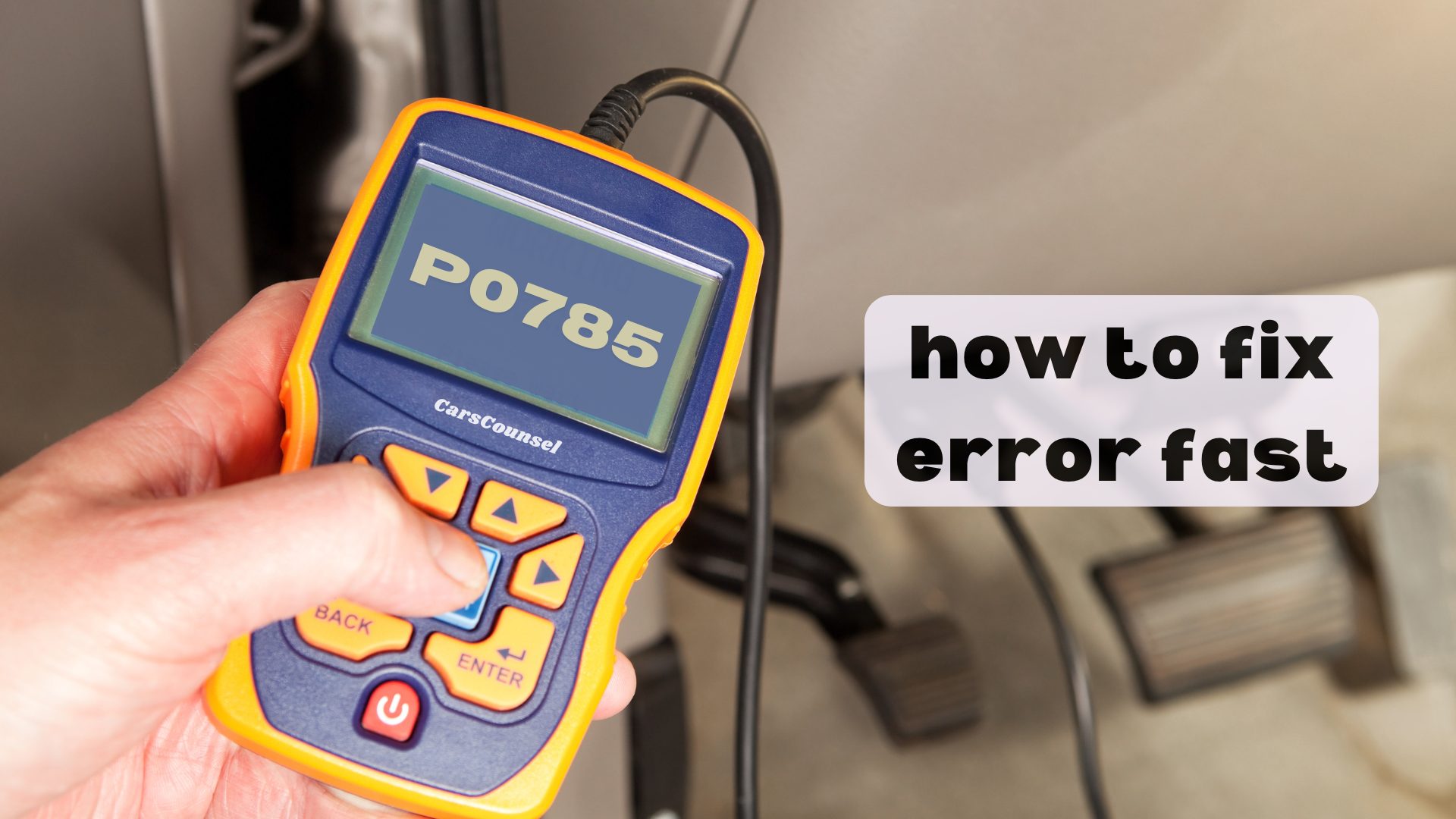
The P0785 code is a generic OBD-II diagnostic trouble code indicating “Shift/Timing Solenoid Malfunction.” It means the powertrain control module detected an electrical or performance fault in the transmission shift timing solenoid circuit.
This code does not automatically prove the solenoid has failed. Diagnosis requires checking the transmission fluid, inspecting the wiring, and testing the solenoid circuit before replacing any components.
Quick Navigation
Key Takeaways
- The P0785 code indicates the control module detected a malfunction in the shift timing solenoid circuit or its mechanical operation.
- Possible causes include low or degraded transmission fluid, damaged wiring, corroded connectors, or a failed shift timing solenoid.
- Diagnosis involves verifying fluid level and condition, inspecting the harness, and measuring the solenoid’s electrical resistance.
- Repairs may involve servicing the transmission fluid, repairing wiring, or replacing the confirmed failed shift timing solenoid.
P0785 Code Description and Implications
The P0785 code indicates that the powertrain or transmission control module detected a malfunction in the shift timing solenoid circuit. This generic OBD2 error code applies to vehicles equipped with electronically controlled automatic transmissions.
The shift timing solenoid manages the hydraulic fluid flow required to execute smooth and timely gear changes. The module controls this solenoid by varying the ground or power signal to adjust shift firmness and timing.
When the module detects that the solenoid’s electrical resistance is out of range, or if the actual shift timing does not match the commanded parameters, it stores this code and may trigger a fail-safe mode.
Common Causes of the P0785 Code
Low, dirty, or degraded transmission fluid is a primary cause. Insufficient fluid level or fluid contaminated with clutch material can prevent the solenoid from routing hydraulic pressure correctly or cause the valve to stick mechanically.
Damaged wiring, chafed insulation, or corroded connectors in the harness between the control module and the transmission will interrupt the control signal or cause an electrical fault.
An internally failed shift timing solenoid can create an open or short circuit condition, or the internal mechanical valve may become physically stuck in the bore.
Symptoms Associated With P0785
An illuminated Check Engine Light is expected once the monitor detects the circuit or performance fault. MIL behavior varies by application, but the light commands when the electrical or timing fault is verified.
You may experience harsh, delayed, or slipping gear shifts. Because the solenoid controls the hydraulic timing of the gear changes, a malfunction directly impacts shift quality and drivability.
In some applications, the transmission may enter a limp mode, locking the vehicle in a single gear to protect the internal clutches and bands from mechanical damage.
Diagnosing the P0785 Trouble Code
Diagnosis must begin by confirming the exact factory definition and checking for related transmission or solenoid codes. Record freeze-frame data to see the conditions and gear positions when the code set.
Check the transmission fluid level and condition. Fluid that is low, smells burnt, or contains excessive debris indicates internal mechanical wear or hydraulic issues that must be addressed.
Perform a thorough visual inspection of the wiring harness and connectors at the transmission case and the control module. Look for chafed wires, broken insulation, corrosion, or loose pins.
Use a multimeter to test the shift timing solenoid circuits for continuity, shorts to ground, and open circuits. Measure the internal resistance of the solenoid and compare it to the manufacturer specification.
Repairing the P0785 Issue
Repairs must follow confirmed diagnosis. If the transmission fluid is low or degraded, service the fluid and filter using the exact manufacturer-specified fluid type and correct fill procedure.
If the wiring harness is found to be broken, shorted, or corroded, repair the circuit and secure the harness to prevent future damage from heat or moving driveline components.
If electrical testing confirms the shift timing solenoid is internally open, shorted, or mechanically stuck, replace the solenoid using a component meeting the exact vehicle specification.
Cost Considerations for P0785 Repairs
Cost depends on diagnostic time, component accessibility, required parts, programming requirements, and labor.
Servicing the transmission fluid and filter involves standard maintenance parts and moderate labor expenses.
If the shift timing solenoid requires replacement, the transmission pan must typically be removed to access the valve body, which increases labor hours and overall repair costs.
Prevention Strategies for Future Occurrences
Adhering to the manufacturer’s severe or normal service intervals for transmission fluid and filter changes helps prevent fluid degradation and the accumulation of clutch debris that can jam solenoid valves.
Inspecting exposed transmission wiring harnesses and connectors during routine under-vehicle service can help identify developing insulation damage or moisture intrusion before it causes a circuit fault.
Some internal solenoid failures occur due to normal component aging and cannot be reliably prevented through standard maintenance.
Troubleshooting Tips and Best Practices
Do not attempt to fix a P0785 code by simply clearing the code and driving the vehicle. If the underlying hydraulic or electrical fault remains, the incorrect shift timing will quickly cause severe internal transmission damage.
Always verify the exact transmission fluid specification. Using the incorrect fluid type can alter hydraulic viscosity and friction characteristics, causing shift timing faults even if the solenoid is electrically functional.
Check for technical service bulletins for your exact vehicle application, as some manufacturers release updated valve body assemblies or revised solenoid designs to address chronic shift timing issues.
More OBD-II Codes
| P0773 | P0775 | P0776 | P0777 |
| P0778 | P0780 | P0783 | P0792 |
| P0793 | P0850 | P1700 | P1701 |
| P1702 | P1703 | P1704 | P1705 |
| P0750 | P0751 | P0753 | P0755 |
| P0760 | P0761 | P0765 | P0766 |
Frequently Asked Questions
Is the P0785 code generic or manufacturer-specific?
Yes, P0785 is a generic SAE OBD-II diagnostic trouble code. However, the exact transmission architecture and solenoid testing procedures vary by manufacturer and vehicle application.
Will a P0785 code cause my transmission to slip?
It can. The shift timing solenoid controls hydraulic fluid routing for gear changes. A malfunction can cause delayed, harsh, or slipping shifts, potentially damaging internal clutches.
Does a P0785 code mean I need a new transmission?
Not necessarily. While internal mechanical damage is possible, the code is frequently caused by low fluid, damaged wiring, or a failed solenoid. Proper electrical and hydraulic testing is required first.
Can dirty transmission fluid cause a P0785 code?
Yes. Contaminated fluid or debris from worn clutches can physically jam the shift timing solenoid valve, preventing it from moving and triggering the malfunction code.
Can I clear the P0785 code without fixing the problem?
Clearing the code only resets the warning light. If the underlying hydraulic or electrical fault remains, the monitor will detect the incorrect shift timing immediately and turn the light back on.
What Should You Do About the P0785 Code?
Confirm the exact factory definition and check for related transmission codes for your specific vehicle application. Follow the applicable manufacturer diagnostic procedure to verify whether the fault lies in the fluid condition, wiring, or the shift timing solenoid itself.
Once testing confirms the root cause, repair or replace the confirmed failed component in the relevant system, then retest the transmission operation to ensure shift timing and hydraulic pressure are correct.

