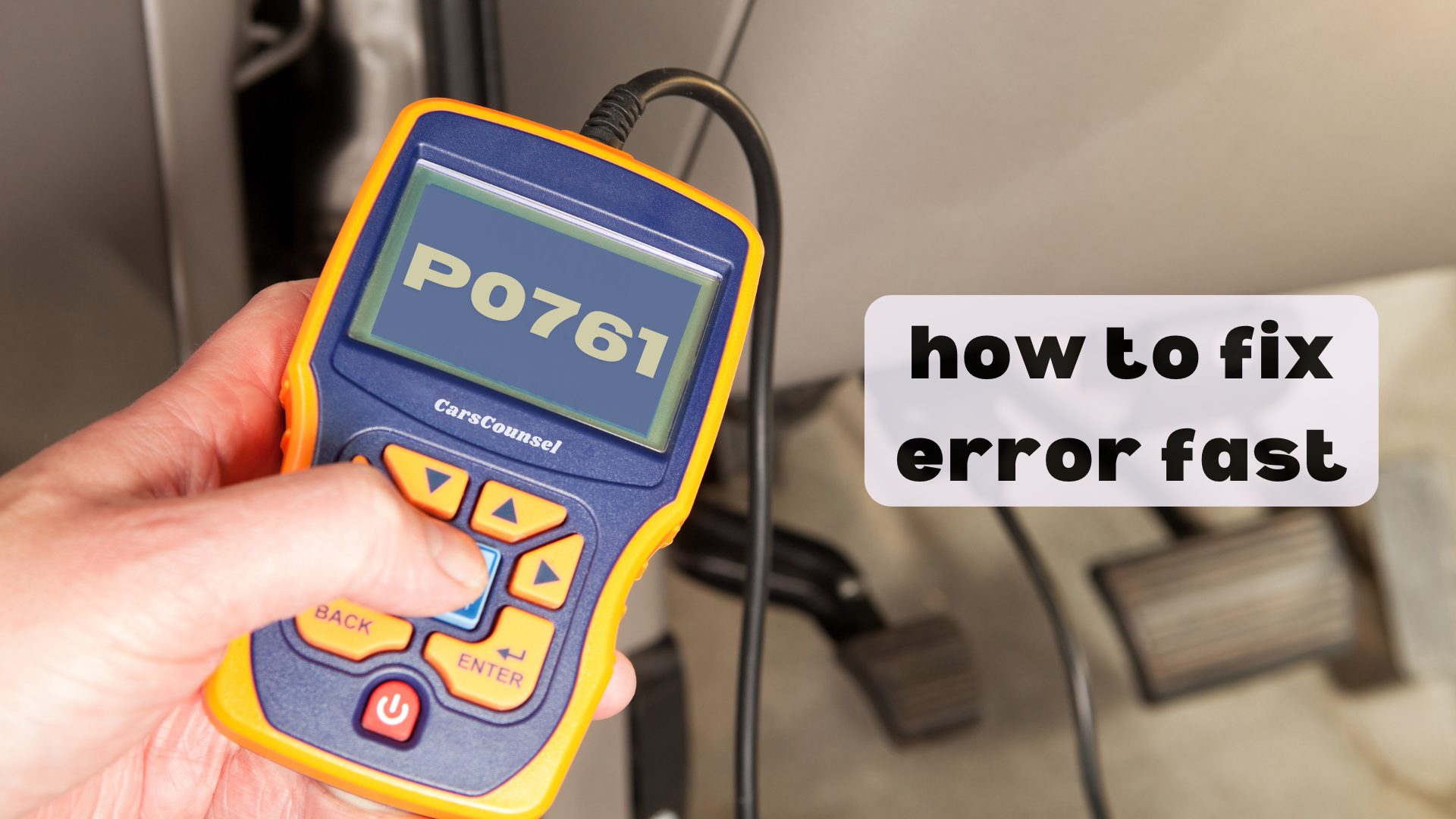
The P0761 code is a generic OBD-II powertrain error code indicating “Shift Solenoid C Performance or Stuck Off.” It applies to automatic transmissions across various manufacturers, meaning the powertrain control module detected an irregularity in the solenoid’s hydraulic operation.
This code identifies a detected performance condition, not necessarily a failed solenoid. Exact diagnostic steps depend on your specific vehicle application, as testing procedures and hydraulic circuit designs vary by manufacturer and transmission model.
Quick Navigation
Key Takeaways
- P0761 indicates a performance or stuck-off condition in shift solenoid C, not an automatic electrical failure.
- Low, degraded, or contaminated transmission fluid frequently restricts the hydraulic passages feeding the solenoid.
- Diagnosis requires verifying the exact factory service procedure for your specific transmission application.
- Wiring issues, blocked internal fluid channels, or mechanical transmission damage may also trigger this code.
P0761 Code Description and Implications
The P0761 code is a generic OBD-II powertrain code defined as “Shift Solenoid C Performance or Stuck Off.” It indicates that the powertrain control module detected an unexpected hydraulic or mechanical response when attempting to actuate shift solenoid C.
Because this is a generic code, the exact physical location and function of shift solenoid C vary significantly between different transmission models. In some applications, it controls a specific clutch pack or band, while in others, it manages torque converter lockup or line pressure.
A performance or stuck-off condition means the solenoid may be receiving the correct electrical signal, but the expected hydraulic pressure change is not occurring. This distinguishes P0761 from electrical circuit codes, which monitor voltage or resistance directly.
Common Causes of the P0761 Code
Possible causes for a P0761 code depend on the specific transmission design and fluid circuit architecture.
Fluid Condition and Level: Low transmission fluid or fluid degraded by heat and friction can prevent adequate hydraulic pressure from reaching the solenoid. Debris or clutch material suspended in the fluid may physically block the solenoid filter or internal passages.
Internal Mechanical Blockage: The solenoid valve itself may be mechanically stuck in the off position due to varnish buildup or metallic debris. Alternatively, the hydraulic passages feeding the solenoid may be restricted.
Wiring and Connectors: While P0761 is a performance code, high resistance in the control circuit or a poor ground connection can prevent the solenoid from generating sufficient magnetic force to shift the valve fully.
Control Module Issues: In some applications, a faulty transmission control module or powertrain control module may fail to send the correct duty cycle signal, though this is less common than hydraulic or mechanical faults.
Symptoms Associated With P0761
When the P0761 code is stored, the vehicle may exhibit several drivability symptoms, though exact behavior depends on the transmission’s fail-safe strategy.
Erratic or Harsh Shifting: The transmission may shift abruptly, delay shifts, or flare between gears as the control module attempts to compensate for the unexpected hydraulic pressure.
Limp Mode Activation: Many modern transmissions will default to a fail-safe or limp mode, locking the vehicle in a single gear to prevent internal mechanical damage.
Check Engine Light: The malfunction indicator lamp typically illuminates when the code is confirmed. Some applications may also illuminate a specific transmission warning light.
Torque Converter Issues: If solenoid C controls the torque converter clutch, you may experience shuddering at highway speeds or reduced fuel economy due to the clutch failing to lock up.
Diagnosing the P0761 Trouble Code
Diagnosis must begin by confirming the exact factory definition and service procedure for your specific vehicle application.
Verify Fluid Level and Condition: Check the transmission fluid level according to the manufacturer’s procedure. Inspect the fluid for a burnt odor, dark discoloration, or visible metallic debris, which indicates internal mechanical wear.
Inspect Wiring and Connectors: Visually inspect the transmission harness and connectors for damage, corrosion, or chafing. Measure the resistance of the shift solenoid C circuit and compare the reading to the exact manufacturer specification for your vehicle.
Active Testing: If your scan tool supports bidirectional controls, command shift solenoid C on and off while monitoring transmission data parameters or listening for an audible click, if accessible.
Hydraulic Pressure Testing: If electrical tests pass, a professional technician may need to connect a mechanical transmission pressure gauge to verify whether the solenoid is successfully modulating line pressure.
Repairing the P0761 Issue
Repairs must follow confirmed diagnosis and address the root cause of the hydraulic or mechanical restriction.
Fluid Service: If the fluid is dirty but no internal damage is suspected, a transmission fluid and filter service may clear restricted passages and restore proper solenoid operation.
Solenoid Replacement: If testing confirms the solenoid is mechanically stuck or electrically out of specification, replace the shift solenoid C assembly. This often requires dropping the transmission pan or removing the valve body.
Wiring Repair: Repair or replace any damaged wiring harnesses or corroded connectors identified during the electrical inspection.
Internal Transmission Repair: If metallic debris is found in the pan or hydraulic pressure remains low after solenoid replacement, internal mechanical failure has likely occurred, requiring transmission rebuild or replacement.
Cost Considerations for P0761 Repairs
Repair costs for a P0761 code vary widely based on the underlying cause, vehicle accessibility, and labor rates.
A standard transmission fluid and filter service typically ranges from $150 to $300. If the shift solenoid itself requires replacement, parts and labor generally range from $250 to $600, depending on whether the valve body must be removed.
Wiring repairs are often less expensive if the damage is external. However, if diagnosis reveals severe internal mechanical damage requiring a transmission rebuild or replacement, costs can exceed several thousand dollars.
Prevention Strategies for Future Occurrences
While some mechanical failures cannot be reliably prevented, maintaining proper hydraulic conditions reduces the risk of solenoid performance codes.
Follow Fluid Service Intervals: Adhere strictly to the manufacturer’s recommended transmission fluid and filter replacement schedule, especially if the vehicle is used for towing or heavy loads.
Address Leaks Promptly: Repair any external transmission fluid leaks immediately to prevent low fluid levels, which starve the hydraulic system and cause solenoid cavitation or overheating.
Avoid Overheating: Ensure the transmission cooling system is functioning correctly, as excessive heat rapidly degrades fluid viscosity and accelerates varnish buildup inside solenoid valves.
Troubleshooting Tips and Best Practices
Check for Technical Service Bulletins: Before replacing major components, verify whether the manufacturer has issued a TSB or software update for your specific vehicle application regarding transmission shift solenoid calibration.
Do Not Ignore Electrical Checks: Even though P0761 is a performance code, high circuit resistance can mimic a mechanical failure. Always verify the control circuit integrity before condemning the solenoid.
Evaluate Related Codes: Check for accompanying codes like P0700 or other solenoid circuit codes. Multiple solenoid codes simultaneously often point to a shared power supply, ground issue, or low fluid level rather than multiple failed solenoids.
More OBD-II Codes
| P0755 | P0756 | P0757 | P0758 |
| P0760 | P0753 | P0765 | P0766 |
| P0770 | P0771 | P0773 | P0775 |
| P0700 | P0740 | P0715 | P0745 |
| P0720 | P0730 | P0750 | P0751 |
| P0300 | P0420 | P0171 | P0442 |
Frequently Asked Questions
Is P0761 an electrical or mechanical code?
P0761 is primarily a mechanical or hydraulic performance code. It indicates the solenoid is not achieving the expected physical result, unlike circuit codes that monitor electrical continuity or resistance.
Can low transmission fluid cause P0761?
Yes. Low transmission fluid prevents adequate hydraulic pressure from reaching the solenoid, causing a performance or stuck-off condition. Always verify the fluid level before replacing internal components.
Is it safe to drive with a P0761 code?
Driving is not recommended. Erratic shifting or limp mode can compromise vehicle control, and continued operation with restricted hydraulic flow may cause severe internal transmission damage.
Will disconnecting the battery clear the P0761 code?
Disconnecting the battery may temporarily reset the module, but it does not repair the underlying hydraulic or mechanical fault. The code will return once the monitor runs again.
Does P0761 mean the transmission must be replaced?
No. P0761 often points to a restricted fluid filter, degraded fluid, or a single faulty solenoid on the valve body. Complete transmission replacement is only required if severe internal mechanical damage is confirmed.
What Should You Do About the P0761 Code?
Confirm the exact factory definition for your specific vehicle application, then follow the applicable manufacturer diagnostic procedure. Because P0761 indicates a hydraulic or mechanical performance issue, accurate diagnosis requires evaluating both the relevant electrical circuits and the physical transmission fluid system.
Address any confirmed fluid level or condition issues first. If the fluid system is intact, proceed with targeted testing of the relevant system and components to identify the root cause before authorizing major repairs.

