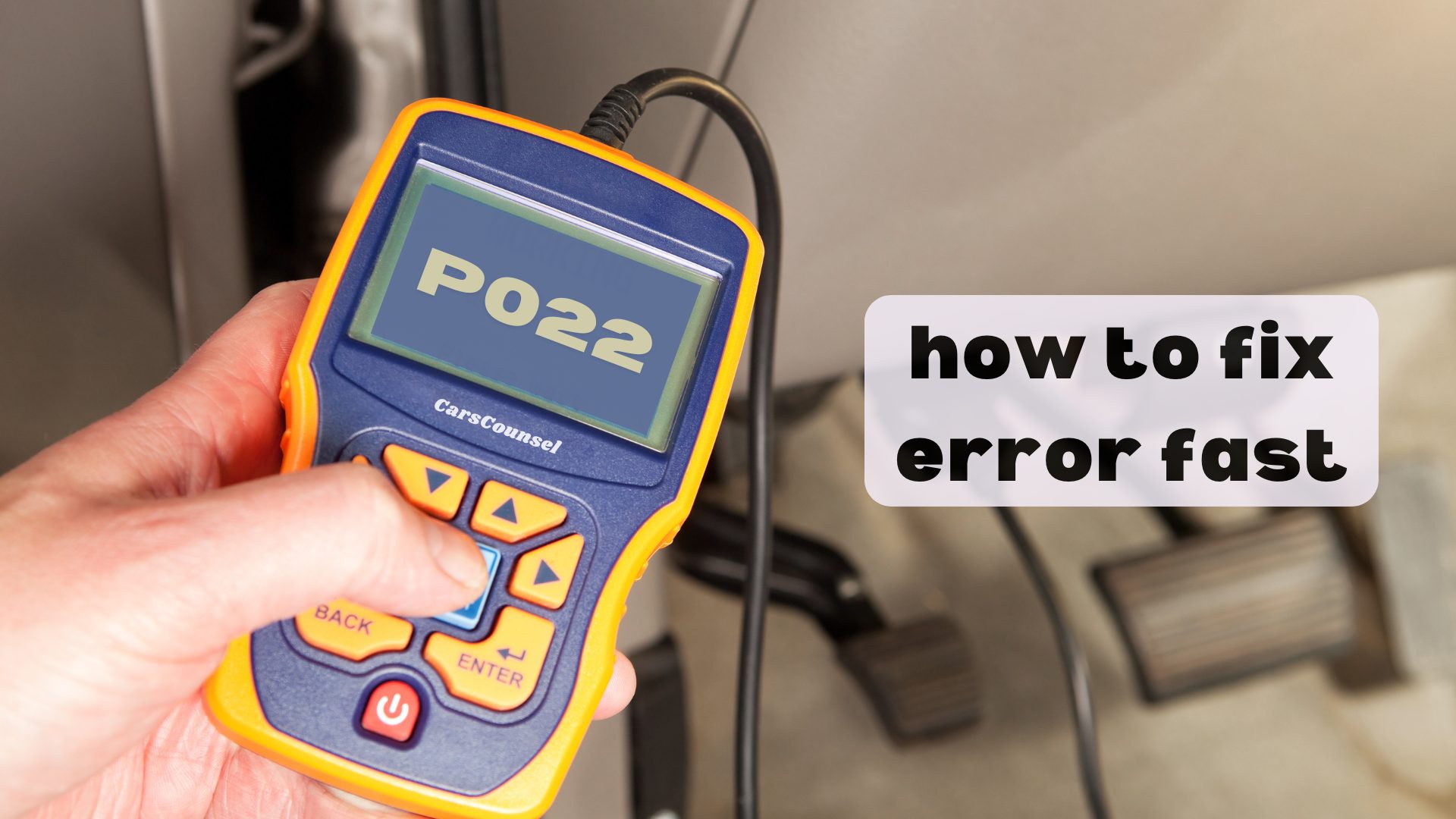
The P0222 code is a generic OBD-II powertrain code indicating that the powertrain control module detected a low voltage signal from the throttle or accelerator pedal position sensor “B” circuit.
Because this code applies to various vehicles, the exact sensor location and diagnostic procedure depend on your specific make and model. The code identifies a circuit condition, not necessarily a failed sensor.
Quick Navigation
Key Takeaways
- The P0222 code indicates a low voltage condition on the “B” circuit of the throttle or pedal position sensor.
- Possible causes include damaged wiring, poor connector contact, a failed sensor, or rarely, a module issue.
- Diagnosis requires verifying the exact sensor type and testing the reference, signal, and ground circuits.
- Replacing the sensor without testing the wiring first may not resolve the underlying electrical fault.
P0222 Code Description and Implications
Generic OBD-II applications: P0222 stands for “Throttle/Pedal Position Sensor/Switch ‘B’ Circuit Low.” The powertrain control module monitors redundant sensor signals to verify throttle position.
Electronic throttle control systems: These systems typically use two or more sensors. Sensor “B” provides a secondary or inverse signal to cross-check Sensor “A” for safety.
Circuit condition: A “Circuit Low” designation means the PCM detected a signal voltage below the normal expected range. This usually points to a short to ground, an open reference circuit, or an internal sensor fault.
Common Causes of the P0222 Code
Electrical faults in the sensor harness are frequent culprits. Wiring can chafe against engine components, or connectors may suffer from moisture intrusion and corrosion.
A failed throttle body position sensor or accelerator pedal position sensor can also pull the signal circuit low internally.
Less commonly, a poor ground connection at the sensor or the PCM can disrupt the return path, causing a low voltage reading.
In rare cases, a software glitch or an internal failure within the powertrain control module itself may incorrectly flag the circuit.
Symptoms Associated With P0222
The most immediate symptom is the illumination of the Check Engine Light or a specific electronic throttle control warning indicator.
Many vehicles will enter a fail-safe or limp mode, severely limiting engine RPM and vehicle speed to prevent unintended acceleration.
Drivers may experience hesitation, stalling, or a complete lack of throttle response when pressing the accelerator pedal.
Because the system relies on redundant signals, a mismatch between Sensor “A” and Sensor “B” often triggers these protective drivability restrictions.
Diagnosing the P0222 Trouble Code
Begin by confirming the exact vehicle application to determine whether the “B” sensor is located on the throttle body or the accelerator pedal assembly.
Use a scan tool to read the error code and view live data for both throttle position sensors. Compare the readings to see if Sensor “B” is stuck at zero volts or fails to track Sensor “A”.
Visually inspect the wiring harness and connectors for physical damage, corrosion, or loose pins. Repair any obvious issues before proceeding.
Using a digital multimeter, test the 5-volt reference, the signal return, and the ground circuits according to the manufacturer’s specific wiring diagram.
If the wiring and reference voltages are correct but the signal remains low, the sensor itself is likely faulty.
Repairing the P0222 Issue
If visual inspection reveals chafed wires or corroded terminals, repair the harness and clear the codes to verify the fix.
When electrical testing confirms the sensor is internally shorted or failing to generate a signal, replace the faulty throttle position sensor or pedal assembly.
Some vehicles require a throttle position relearn or calibration procedure using a bidirectional scan tool after replacing the component.
If all wiring and the sensor test perfectly, consult the manufacturer’s diagnostic flowchart to evaluate the powertrain control module.
Cost Considerations for P0222 Repairs
Repair costs depend heavily on the root cause and the vehicle’s specific design. Wiring repairs are generally the least expensive option if the damage is easily accessible.
Replacing an accelerator pedal position sensor or a standalone throttle position sensor involves moderate parts and labor costs.
If the sensor is integrated into the throttle body assembly, the entire throttle body may need replacement, which increases the parts expense.
Module replacement or professional harness reconstruction will typically involve the highest labor and programming costs.
Prevention Strategies for Future Occurrences
Keep the area around the accelerator pedal and throttle body free of excessive moisture and debris to protect electrical connectors.
Ensure that floor mats are properly secured so they do not interfere with the pedal assembly or chafe the pedal position sensor wiring.
During routine service, visually inspect the engine bay wiring harness for signs of rubbing against sharp brackets or hot exhaust components.
Troubleshooting Tips and Best Practices
Always check for related codes, such as P0122 or P2122, which can help isolate whether the fault is isolated to Sensor “B” or affects the entire system.
Never attempt to clear the code by disconnecting the battery as a primary repair strategy, as this erases valuable freeze-frame data needed for diagnosis.
When back-probing connectors to measure voltage, use proper T-pins to avoid spreading the terminal pins and creating future connection issues.
Verify whether your specific vehicle has an active technical service bulletin addressing known wiring harness chafing points for the throttle circuit.
More OBD-II Codes
| P0220 | P0215 | P0206 | P0205 |
| P0204 | P0203 | P0223 | P0261 |
| P0262 | P0264 | P0265 | P0267 |
| P0121 | P0122 | P0123 | P2101 |
| P2102 | P2103 | P0504 | P0700 |
| P0705 | P0335 | P0340 | P0101 |
Frequently Asked Questions
Is it safe to drive with a P0222 code?
Driving is not recommended. The vehicle may enter limp mode, severely limiting power and acceleration, which can be dangerous in traffic or emergency situations.
Can a bad battery cause a P0222 code?
While severe voltage drops can cause module anomalies, P0222 specifically targets the sensor signal circuit. A bad battery usually triggers system voltage codes first.
Will disconnecting the battery clear the P0222 code?
Disconnecting the battery may temporarily turn off the light, but it does not fix the underlying electrical fault. The code will return once the monitor runs again.
Does P0222 always mean the throttle body must be replaced?
No. The fault could be in the wiring harness, a connector, or an accelerator pedal sensor. Testing is required before replacing the throttle body.
Can aftermarket modifications trigger P0222?
Yes. Aftermarket electronic throttle controllers, pedal tuners, or improper splicing into the sensor harness can disrupt the signal and trigger circuit low codes.
What Should You Do About the P0222 Code?
Confirm the exact factory definition and sensor location for your specific vehicle application. Follow the manufacturer’s diagnostic procedure to test the reference, signal, and ground circuits. Repair or replace the confirmed failed component, then clear the codes and verify the repair through a test drive.

