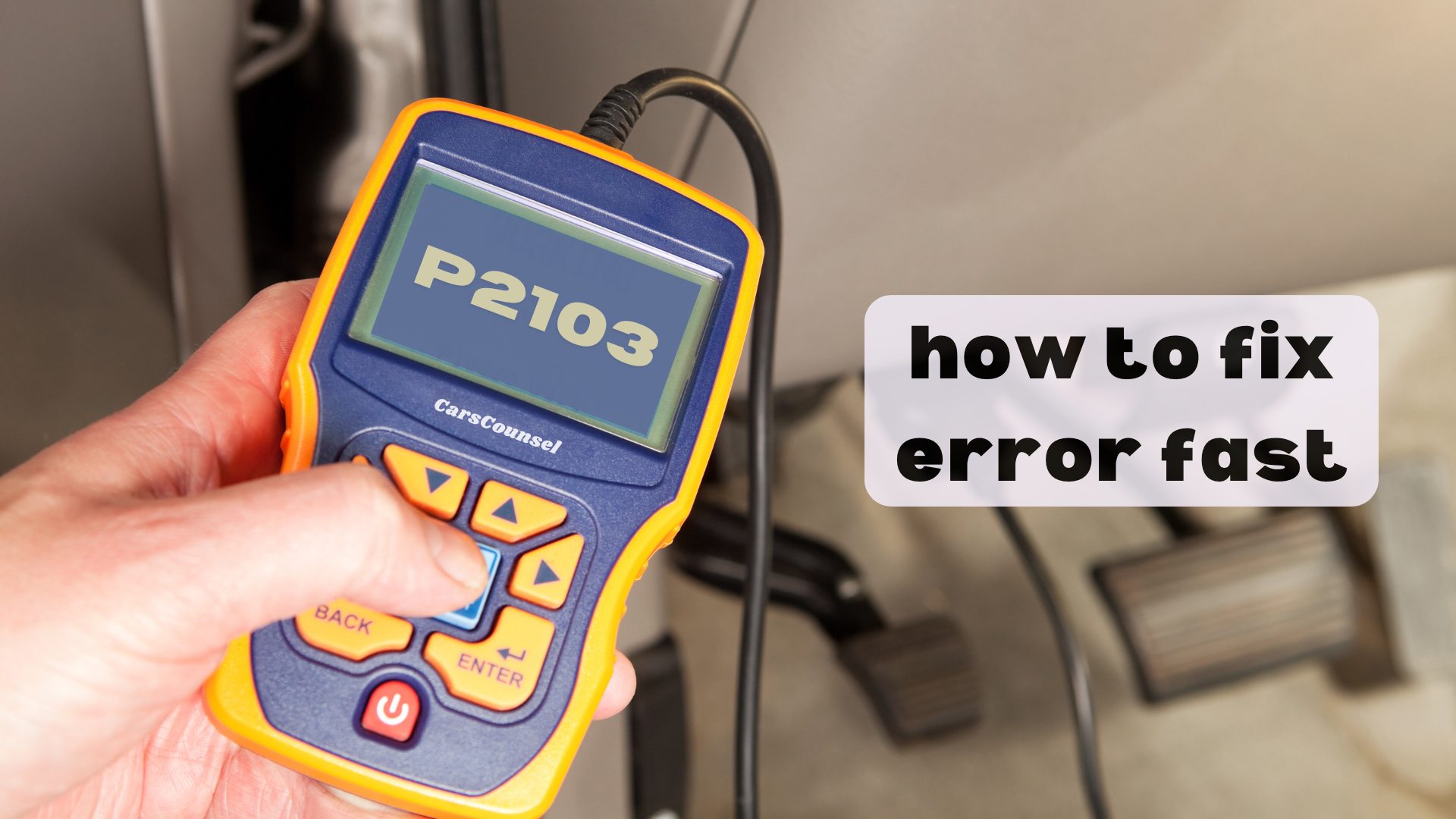
The P2103 code is a generic OBD-II OBD2 issue indicating a high voltage condition in the throttle actuator control motor circuit. This system manages the electronic throttle plate.
Because this is a generic code, the exact diagnostic procedure varies by vehicle application. The code signals a detected electrical fault, but testing is required to identify the root cause before replacing any components.
Quick Navigation
Key Takeaways
- P2103 is a generic OBD-II code indicating a circuit high fault in the throttle actuator control motor circuit.
- The code signals a high voltage condition detected by the control module, typically indicating a short to power or an open circuit.
- Possible causes include damaged wiring, corroded connectors, a failed internal throttle actuator motor, or a PCM fault.
- Diagnosis requires inspecting the throttle control circuit and measuring resistance before replacing the throttle body assembly.
P2103 Code Description and Implications
The P2103 code indicates that the Powertrain Control Module (PCM) has detected a high voltage condition in the control circuit for the throttle actuator motor.
Modern vehicles use an electronic throttle body where the PCM commands a small electric motor to open and close the throttle plate based on accelerator pedal input.
When the module monitors the control circuit and sees voltage higher than expected, it indicates a short to voltage, an open circuit, or high resistance, triggering this generic code.
Common Causes of the P2103 Code
- Damaged, chafed, or shorted wiring in the throttle actuator control circuits.
- Corroded, loose, or moisture-intruded connectors at the electronic throttle body or PCM.
- An internally open or failed throttle actuator motor within the throttle body assembly.
- In rare cases, an internal fault within the PCM.
Symptoms Associated With P2103
- Illuminated Check Engine Light and electronic throttle control warning indicator.
- Severe reduction in engine power or activation of a fail-safe limp mode.
- Inability to accelerate or maintain highway speeds.
- Engine stalling or refusal to start on some applications.
Diagnosing the P2103 Trouble Code
Diagnosis begins by verifying the exact electronic throttle system layout for the vehicle. Using a scan tool capable of viewing live throttle position data is necessary.
The diagnostic path generally involves:
- Inspecting the wiring harness and connector at the electronic throttle body for physical damage, heat exposure, or corrosion.
- Testing the control circuits for a short to voltage or an open circuit using a multimeter.
- Measuring the internal resistance of the throttle actuator motor windings and comparing it to the manufacturer’s specification.
Repairing the P2103 Issue
Repairs must follow the confirmed root cause identified during the diagnostic procedure. If wiring damage or connector corrosion is found, repairing the harness and securing the connections is necessary.
If the throttle actuator motor fails electrical resistance tests or live data confirms an open circuit with intact wiring, replacing the confirmed failed electronic throttle body assembly is required.
Throttle body replacement typically requires a PCM relearn or adaptation procedure using a bidirectional scan tool to ensure proper operation.
Cost Considerations for P2103 Repairs
Repair costs for a P2103 code vary based on the exact vehicle application, the confirmed root cause, and local labor rates.
If the issue is limited to a wiring repair, costs may be minimal. Replacing an electronic throttle body assembly involves moderate to high parts expenses, plus labor for installation.
Prevention Strategies for Future Occurrences
Because P2103 relates to the electronic throttle control circuit, preventing the code depends on the exact failure mechanism.
Keeping connector seals intact and ensuring wiring harnesses are properly secured away from hot exhaust components and moving parts can help prevent heat damage and chafing.
Keeping the throttle body clean of heavy carbon deposits can help prevent the mechanical binding that sometimes overworks and damages the internal actuator motor.
Troubleshooting Tips and Best Practices
Do not attempt to force the throttle plate open by hand while the connector is plugged in, as this can damage the internal gears or cause the PCM to log additional faults.
Avoid replacing the throttle body without first inspecting the wiring and checking for open circuits. A chafed wire will cause a circuit high code even if the internal motor functions perfectly.
More OBD-II Codes
| P2101 | P2100 | P2099 | P2098 |
| P2097 | P2096 | P2104 | P1516 |
| P1519 | P1520 | P0121 | P0220 |
| P0122 | P0222 | P0171 | P0300 |
| P0420 | P0430 | P0174 | P0011 |
| P0014 | P0700 | P1525 | P1529 |
Frequently Asked Questions
Is the P2103 code generic or manufacturer-specific?
Yes. P2103 is a generic OBD-II code used across multiple manufacturers. However, the exact diagnostic procedure and throttle system layout depend on the specific vehicle application.
Can I drive my car with a P2103 code?
Driving is not recommended. The PCM will typically command a severe limp mode, drastically limiting engine power and RPM to prevent unintended acceleration and protect the engine.
Will clearing the code fix a P2103 fault?
No. Clearing the code will not repair a short to voltage, damaged wire, or failed motor. Because P2103 is a hard electrical fault, the code will return immediately.
Can a dirty throttle body cause a P2103 code?
Heavy carbon buildup can mechanically bind the throttle plate, causing performance codes. However, P2103 specifically indicates an electrical circuit high fault, pointing to wiring or motor issues.
Does P2103 always mean the throttle body is broken?
No. The code indicates a detected circuit high condition. The root cause could be a shorted wire, a corroded connector, or an open circuit, requiring diagnosis first.
What Should You Do About the P2103 Code?
Confirm the exact factory definition and wiring diagram for your specific vehicle application. Because P2103 is a generic code, the pinout for the throttle actuator motor will vary between different platforms.
Follow the applicable manufacturer diagnostic procedure to test the relevant system and components. Once the root cause is confirmed, complete the necessary repairs and verify the throttle operation before returning the vehicle to service.

