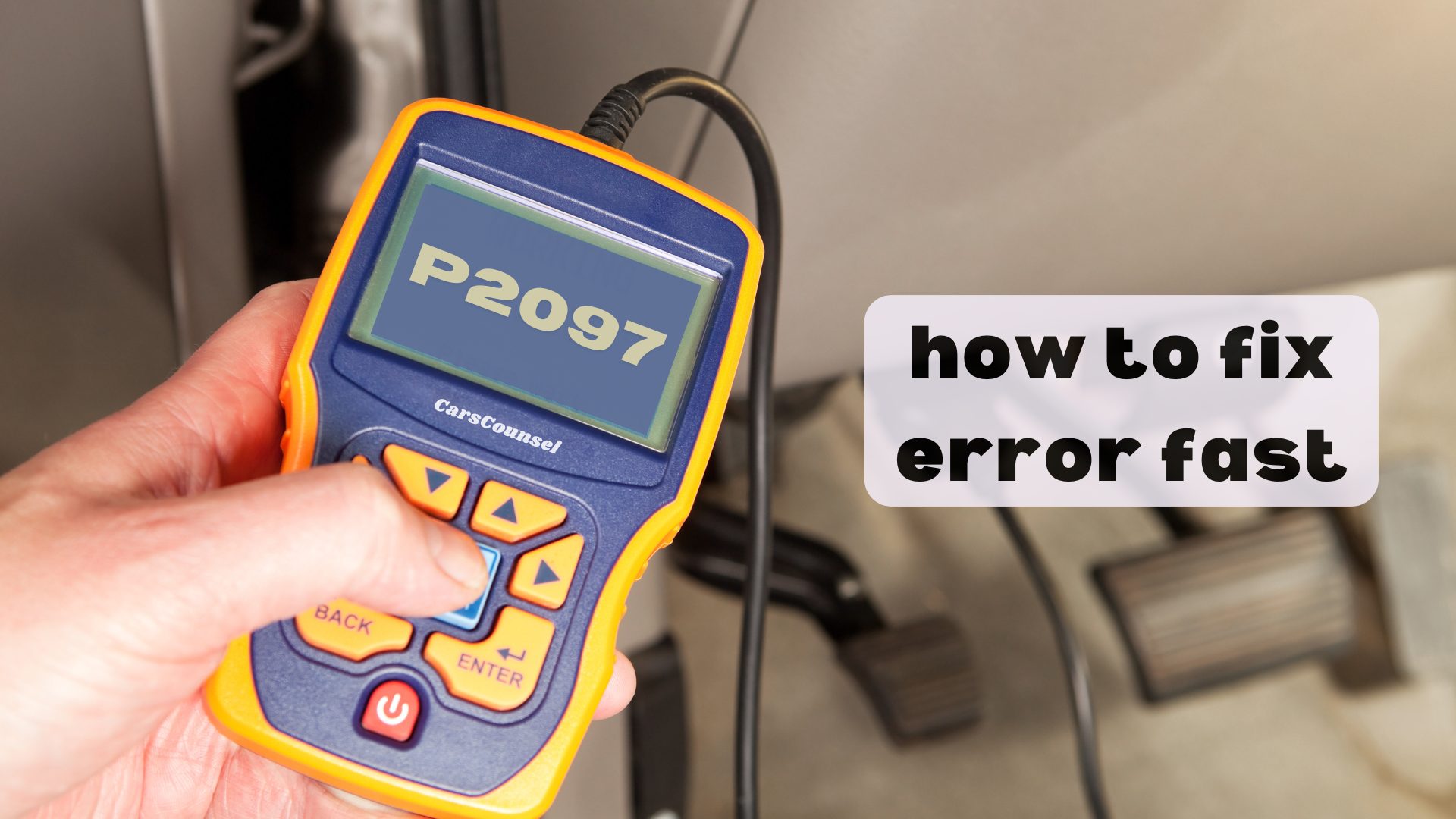
The P2097 code is a generic OBD-II diagnostic trouble code indicating “Post Catalyst Fuel Trim System Too Rich Bank 1.” It means the engine control module has detected that the air-fuel mixture is excessively rich after the exhaust gases pass through the catalytic converter on engine bank 1.
Because this code monitors post-catalyst fuel trim logic, the exact diagnostic path depends on your specific vehicle application. The code itself only identifies a detected rich condition, so further testing is required to determine whether an oxygen sensor, fuel delivery component, or mechanical issue is the root cause.
Quick Navigation
Key Takeaways
- P2097 indicates the downstream oxygen sensor on Bank 1 has detected a consistently rich exhaust condition.
- Diagnostic testing must verify whether the rich condition is real or if the downstream sensor is providing false data.
- Possible causes include leaking fuel injectors, exhaust leaks upstream of the sensor, or faulty sensor wiring.
- Ignoring a verified rich condition can eventually lead to catalytic converter damage over time.
P2097 Code Description and Implications
P2097 stands for Post Catalyst Fuel Trim System Too Rich Bank 1. The engine control module uses downstream oxygen sensors to monitor the efficiency of the catalytic converter and make minor fuel trim adjustments.
When the downstream Bank 1 sensor consistently detects an exhaust mixture with too little oxygen, the post-catalyst fuel trim reaches its maximum lean compensation limit. At this point, the module stores the P2097 code.
Bank 1 refers to the side of the engine that contains cylinder number one. On inline engines, there is only one bank, making the bank designation straightforward.
This code does not automatically mean the downstream oxygen sensor has failed. It indicates a detected rich condition that requires verification through live data and physical inspection.
Common Causes of the P2097 Code
Several different system faults can cause the engine control module to set a post-catalyst rich condition code.
A leaking or stuck-open fuel injector on Bank 1 can introduce excess fuel into the exhaust stream. This physical rich condition will be detected by the downstream sensor.
Exhaust leaks upstream of the downstream oxygen sensor can sometimes alter the gas readings, though they more frequently cause lean codes. However, specific leak locations may disrupt sensor feedback.
Wiring issues, such as a short to ground on the downstream oxygen sensor signal circuit, can force the sensor voltage to read artificially rich. Connector corrosion or damaged harness insulation are possible culprits.
In some applications, a failing upstream air-fuel ratio sensor or mass airflow sensor may cause the engine to run genuinely rich, eventually triggering the post-catalyst monitor as well.
Symptoms Associated With P2097
The most immediate symptom is an illuminated Check Engine Light. Depending on the underlying fault, the vehicle may exhibit other drivability concerns.
Drivers might notice reduced fuel economy if the engine is genuinely running rich. In some cases, a rich exhaust can produce a noticeable fuel smell from the tailpipe.
If an upstream fuel control issue is causing the post-catalyst code, the engine may idle roughly, hesitate during acceleration, or misfire.
On some vehicles, the code may set without any obvious drivability symptoms, leaving the warning light as the only indicator of the fault.
Diagnosing the P2097 Trouble Code
Diagnosis must begin by retrieving all stored OBD2 Codes and freeze-frame data using a diagnostic scan tool.
Use a scan tool capable of displaying live data to monitor the downstream Bank 1 oxygen sensor voltage or equivalence ratio. Compare this reading with the upstream sensor and the Bank 2 downstream sensor if equipped.
If the downstream sensor is stuck at a high voltage or consistently reads rich while the upstream sensors show normal fuel trims, the downstream sensor or its wiring circuit may be faulty.
If the upstream long-term and short-term fuel trims are also significantly negative, the engine is likely running genuinely rich. Inspect fuel injectors for leaks and verify fuel pressure regulation.
Perform a thorough visual inspection of the exhaust manifold and piping near the Bank 1 downstream sensor to rule out physical exhaust leaks or sensor contamination.
Repairing the P2097 Issue
Repairs must follow the results of your diagnostic testing. Do not replace parts based solely on the presence of the code.
If live data and circuit testing confirm the downstream oxygen sensor is providing false data, replace the sensor with a component meeting the exact vehicle specification.
If a fuel injector is confirmed to be leaking or failing an electrical balance test, replace the faulty injector and clear the fuel trim adaptions.
Repair or replace any damaged wiring, corroded connectors, or compromised sensor harnesses found during the electrical diagnosis.
After completing the repair, clear the diagnostic codes and operate the vehicle through a complete drive cycle to verify that the monitor runs and the code does not return.
Cost Considerations for P2097 Repairs
The cost to resolve a P2097 code depends entirely on the confirmed root cause and the accessibility of the components involved.
Replacing a downstream oxygen sensor is straightforward on many vehicles, though labor times vary based on sensor location and exhaust clearance.
Fuel injector replacement costs depend heavily on the engine configuration, as some engines require significant intake manifold removal to access the injector rail.
Electrical repairs involving wiring harness restoration cost less in parts but require precise diagnostic labor time to isolate the exact circuit fault.
Prevention Strategies for Future Occurrences
While some electrical failures cannot be predicted, maintaining the fuel and exhaust systems can help prevent conditions that trigger post-catalyst fuel trim codes.
Using high-quality fuel and replacing the fuel filter at recommended intervals helps prevent injector clogging or sticking, which can lead to uneven fuel delivery.
Addressing upstream engine misfires or rich-running conditions immediately prevents unburned fuel from contaminating the catalytic converter and fouling the downstream oxygen sensors.
Inspecting exposed exhaust components and sensor wiring for heat damage or physical contact with the chassis can help identify developing vulnerabilities before they cause a hard fault.
Troubleshooting Tips and Best Practices
Always verify the exact application of the code before beginning diagnosis. Some manufacturers use post-catalyst fuel trim logic differently than the generic SAE definition implies.
When evaluating oxygen sensor data, ensure the exhaust system is fully up to operating temperature. Cold exhaust gases can cause misleading sensor readings during the initial warm-up phase.
Check for applicable technical service bulletins. On certain verified applications, manufacturers have released software updates to revise the post-catalyst fuel trim monitoring thresholds.
Avoid simply clearing the code to pass an emissions test. If the underlying rich condition is not repaired, the monitor will eventually fail again and may cause secondary damage to the catalytic converter.
More OBD-II Codes
| P2096 | P2088 | P2080 | P2078 |
| P2076 | P2074 | P2098 | P2099 |
| P2100 | P2101 | P2102 | P2103 |
| P0172 | P0420 | P0430 | P0171 |
| P0300 | P0440 | P0455 | P0456 |
| P0174 | P0135 | P0136 | P0141 |
Frequently Asked Questions
Is P2097 a generic or manufacturer-specific code?
P2097 is a generic OBD-II code. Its standardized definition relates to the post-catalyst fuel trim system running too rich on engine bank 1 across various vehicle applications.
Can an exhaust leak cause a P2097 code?
While exhaust leaks draw in outside air and cause lean codes, a leak located in a specific area near the downstream sensor can sometimes disrupt gas sampling and trigger a rich trim fault.
Will P2097 damage my catalytic converter?
If the engine is genuinely running rich, excess unburned fuel can enter the exhaust system. Over time, this condition can overheat and damage the catalytic converter on bank 1.
Should I replace both upstream and downstream oxygen sensors?
No. Replacement should only follow targeted diagnostic testing. Replacing sensors without confirming which one is providing false data or failing to control fuel trims is unnecessary.
Can a dirty mass airflow sensor trigger P2097?
Yes. A contaminated mass airflow sensor can miscalculate incoming air, causing the engine control module to inject too much fuel, which the downstream sensor eventually detects as a rich condition.
What Should You Do About the P2097 Code?
Confirm the exact factory definition for your specific vehicle application before beginning any repairs. The code indicates a detected post-catalyst rich condition, but it does not identify the exact failed component.
Follow the applicable manufacturer diagnostic procedure to evaluate the relevant fuel delivery components, exhaust system, and oxygen sensor circuits. Once the root cause is verified, repair or replace the confirmed failed parts and retest the system.

