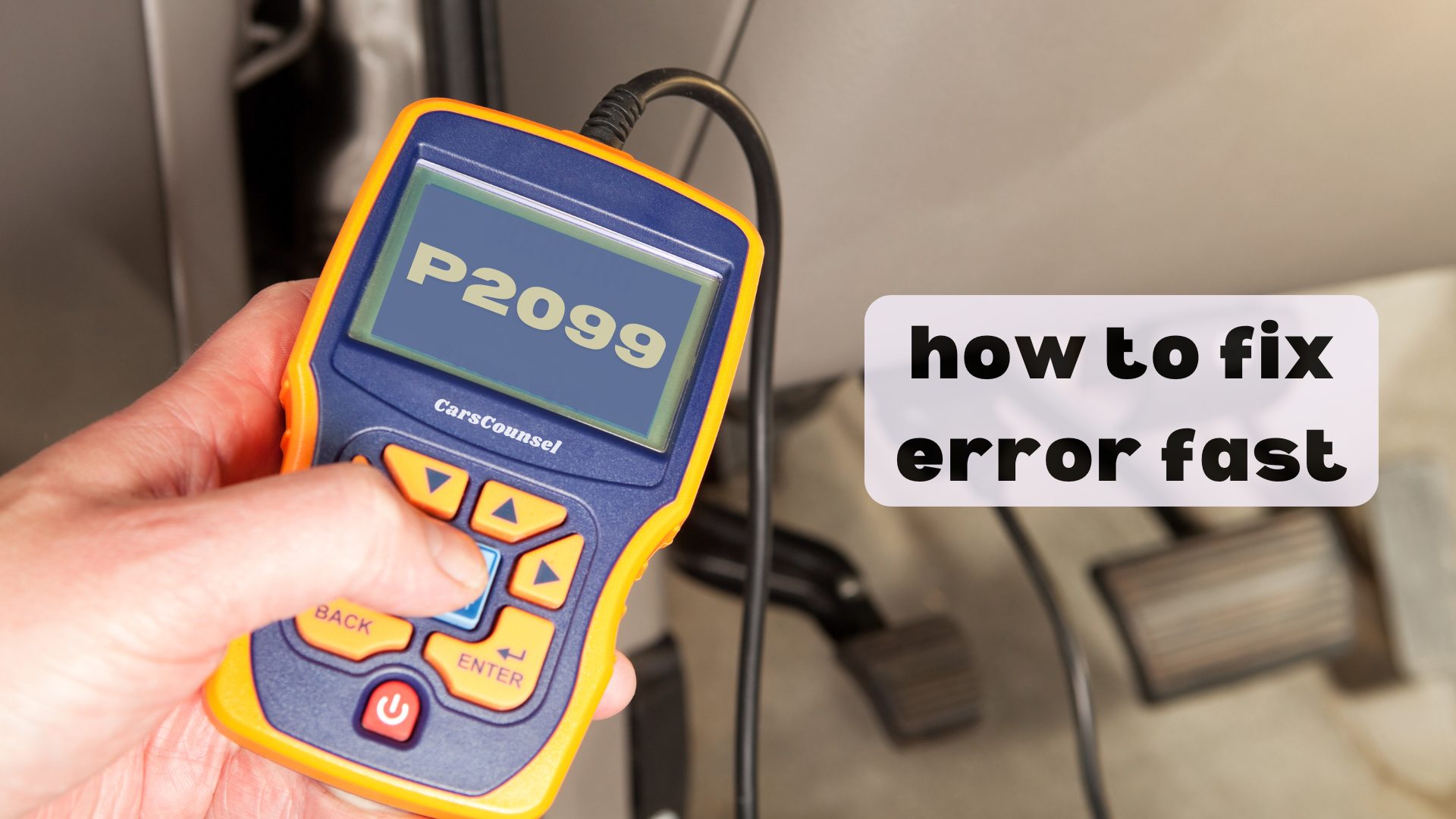
The P2099 code is a generic diagnostic trouble code indicating “Post Catalyst Fuel Trim System Too Rich Bank 2.” It is one of many OBD2 Codes where the powertrain control module detects an excessively rich exhaust condition.
This code does not automatically prove a single component has failed. The exact diagnostic path depends on verifying whether the fault originates from the downstream oxygen sensor, an exhaust leak, or an underlying engine fueling issue.
Quick Navigation
Key Takeaways
- The P2099 code indicates the powertrain control module detected a rich exhaust condition monitored by the Bank 2 downstream oxygen sensor.
- Possible causes include a faulty downstream oxygen sensor, exhaust leaks, leaking fuel injectors, or underlying engine fueling faults.
- Diagnosis requires inspecting the exhaust system for leaks and analyzing live data from both upstream and downstream oxygen sensors.
- Repairs may involve replacing the oxygen sensor, sealing exhaust leaks, or correcting the root cause of the rich fuel condition.
P2099 Code Description and Implications
The P2099 code indicates that the post-catalyst fuel trim system on Bank 2 has reached its rich adjustment limit. Bank 2 refers to the engine bank that does not contain cylinder number one.
Modern vehicles use downstream oxygen sensors to monitor catalytic converter efficiency and make fine fuel trim adjustments. When the downstream sensor on Bank 2 consistently reads a rich exhaust mixture, the powertrain control module stores this generic diagnostic trouble code.
Because this monitors the exhaust after the catalytic converter, a rich reading could stem from the engine genuinely running rich, an exhaust leak drawing in ambient air and confusing the sensor, or a failed downstream oxygen sensor.
Common Causes of the P2099 Code
A failing or contaminated Bank 2 downstream oxygen sensor is a possible cause. If the sensor element is fouled or its internal circuit fails, it may send a false rich signal to the powertrain control module.
Exhaust leaks located before or near the downstream oxygen sensor can introduce false air into the exhaust stream. This alters the oxygen content and can cause the sensor and fuel trim logic to react incorrectly, triggering the code.
Underlying engine fueling issues can also cause a genuinely rich exhaust condition. Leaking fuel injectors, a stuck fuel pressure regulator, or a faulty mass airflow sensor on Bank 2 may deliver too much fuel to the cylinders.
Wiring damage, corroded connectors, or poor grounds in the downstream oxygen sensor circuit can also disrupt the signal voltage, causing the module to misinterpret the exhaust gas content.
Symptoms Associated With P2099
An illuminated Check Engine Light is the primary indicator. MIL behavior varies by application, but the light commands once the monitor detects the post-catalyst fuel trim deviation over consecutive drive cycles.
Drivers may not notice any immediate drivability symptoms if the engine is running normally and the fault is isolated to a failing downstream sensor or a minor exhaust leak.
If the engine is genuinely running rich, you might observe decreased fuel economy, a rich exhaust smell, or rough idling. In severe cases, prolonged rich conditions can lead to catalytic converter damage over time.
Diagnosing the P2099 Trouble Code
Diagnosis must begin by confirming the exact factory definition and checking for related codes. If upstream fuel trim codes or misfire codes are present, address those underlying engine issues first.
Perform a thorough visual and physical inspection of the Bank 2 exhaust system. Look for soot marks, ticking noises, or visible damage that indicates an exhaust leak near the downstream oxygen sensor.
Use a scan tool to monitor live data from the Bank 2 upstream and downstream oxygen sensors. Compare the downstream sensor voltage or equivalence ratio against the upstream sensor and manufacturer specifications.
If the downstream sensor is stuck rich but the upstream sensor shows normal fuel trims, suspect a sensor fault or wiring issue. If both sensors indicate a rich condition, diagnose the engine fuel delivery and air metering systems.
Repairing the P2099 Issue
Repairs must follow confirmed diagnosis. If an exhaust leak is found near the sensor, repair or replace the affected exhaust gaskets, pipes, or manifold components to restore proper exhaust flow.
If live data and electrical testing confirm a failed Bank 2 downstream oxygen sensor, replace the sensor using a component that meets the exact vehicle specification. Clear the codes and verify the repair.
If the engine is confirmed to be running rich, address the root cause. This may involve cleaning or replacing leaking fuel injectors, replacing a faulty mass airflow sensor, or repairing fuel pressure regulation issues.
Cost Considerations for P2099 Repairs
Cost depends on diagnostic time, component accessibility, required parts, programming requirements, and labor. Replacing an accessible downstream oxygen sensor or sealing a minor exhaust leak involves moderate parts and labor expenses.
If the root cause involves internal engine fueling components like leaking injectors or requires extensive exhaust system replacement, the diagnostic and repair costs will increase accordingly.
Prevention Strategies for Future Occurrences
Addressing engine performance issues, such as misfires or rich running conditions, promptly can help prevent unburned fuel from contaminating the downstream oxygen sensors and catalytic converters.
Inspecting the exhaust system for early signs of corrosion or loose connections during routine maintenance may help prevent exhaust leaks that confuse post-catalyst sensors.
Some sensor failures occur due to normal aging and contamination, which cannot always be reliably prevented through standard maintenance.
Troubleshooting Tips and Best Practices
Do not automatically replace the Bank 2 downstream oxygen sensor without verifying the exhaust system integrity. An exhaust leak is a known culprit that will quickly ruin a new sensor if left unaddressed.
When evaluating live data, ensure the engine is fully warmed up and operating in closed-loop fuel control. The post-catalyst fuel trim monitor requires specific operating conditions to run and set the code.
Check for applicable technical service bulletins for your exact vehicle application. Some manufacturers release software updates that adjust the sensitivity of the post-catalyst fuel trim monitors to prevent false rich codes.
More OBD-II Codes
| P2098 | P2097 | P2096 | P2088 |
| P2078 | P2076 | P2100 | P2101 |
| P2102 | P2103 | P2104 | P2200 |
| P0172 | P0174 | P0420 | P0430 |
| P0135 | P0141 | P0300 | P0101 |
| P0440 | P0455 | P0456 | P0171 |
Frequently Asked Questions
Is the P2099 code generic or manufacturer-specific?
The P2099 code is a generic SAE OBD-II diagnostic trouble code. However, the exact diagnostic steps, sensor types, and fuel trim thresholds vary by manufacturer and specific engine application.
Can an exhaust leak cause a P2099 code?
Yes. An exhaust leak located before or near the Bank 2 downstream oxygen sensor can introduce false air into the exhaust stream. This alters the oxygen reading and can cause the post-catalyst fuel trim monitor to detect a fault.
Will a P2099 code damage my catalytic converter?
If the code is caused by a genuinely rich engine condition, prolonged exposure to excess unburned fuel can overheat and damage the catalytic converter. If the fault is only a bad sensor or exhaust leak, the converter is safe.
Can I clear the P2099 code without fixing the problem?
Clearing the code only resets the warning light and erases freeze-frame data. It does not repair the underlying fault. The powertrain control module will simply detect the condition again and turn the Check Engine Light back on.
Does a P2099 code mean I need a new oxygen sensor?
Not necessarily. While a failed downstream oxygen sensor is a possible cause, the code can also result from exhaust leaks, wiring damage, or an engine running rich. Proper testing is required to confirm the sensor is actually faulty.
What Should You Do About the P2099 Code?
Confirm the exact factory definition and check for related engine codes for your specific vehicle application. Follow the applicable manufacturer diagnostic procedure to verify whether the fault lies in the exhaust system, sensor circuit, or underlying fuel delivery.
Once testing confirms the root cause, repair or replace the confirmed failed component, then retest the system to ensure the post-catalyst fuel trim monitor completes successfully.

