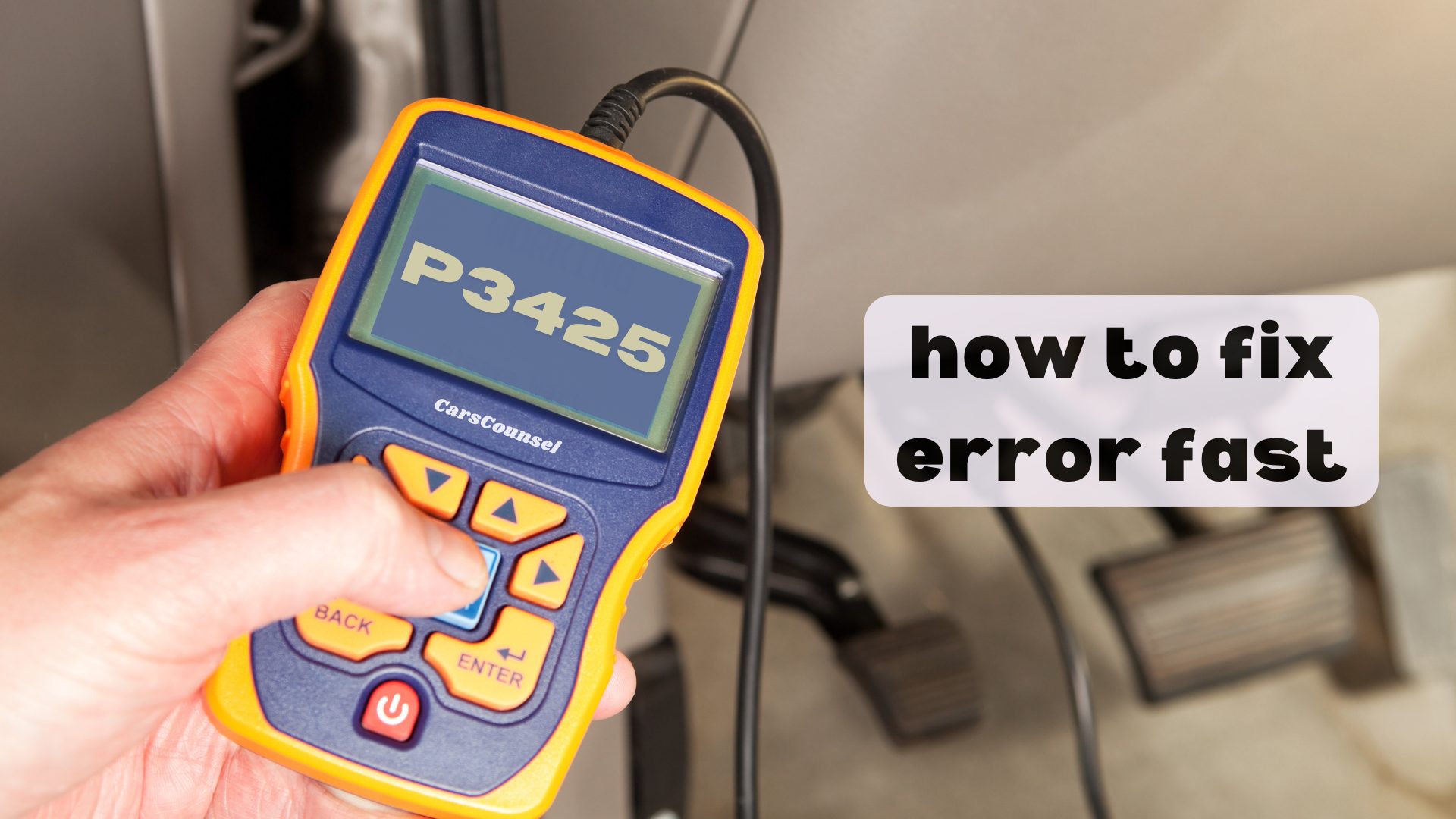
P3425 is a generic OBD-II powertrain code standardized as “Cylinder 4 Deactivation/Intake Valve Control Circuit/Open.” It applies to vehicles equipped with cylinder deactivation systems, though exact component architecture varies by manufacturer.
This code identifies a detected open-circuit condition and does not automatically prove a specific part has failed. The exact application must be verified before beginning any electrical or mechanical diagnosis.
Quick Navigation
Key Takeaways
- P3425 indicates an open circuit in the cylinder 4 deactivation or intake valve control system.
- Possible causes include damaged wiring, corroded connectors, or a failed deactivation solenoid.
- Diagnosis requires verifying engine oil levels and testing the specific control circuit for continuity.
- Repairs depend on confirmed electrical or mechanical faults, not trial-and-error part replacement.
P3425 Code Description and Implications
P3425 is a generic OBD-II powertrain code standardized by SAE J2012 as “Cylinder 4 Deactivation/Intake Valve Control Circuit/Open.”
It applies to vehicles equipped with cylinder deactivation technology, such as GM’s Active Fuel Management (AFM), Chrysler’s Multi-Displacement System (MDS), and Honda’s Variable Cylinder Management (VCM).
The powertrain control module (PCM) monitors the electrical circuit controlling the deactivation solenoid or intake valve mechanism for cylinder 4.
When the PCM detects an open circuit, an abnormal voltage drop, or a loss of continuity in this specific control path, it stores P3425.
This code identifies a detected electrical fault condition in the control circuit; it does not automatically prove that the deactivation solenoid itself has failed internally.
Common Causes of the P3425 Code
Because P3425 specifically indicates an open circuit condition, the root cause usually involves an interruption in the electrical path.
Possible causes include damaged, broken, or severely corroded wiring in the cylinder 4 deactivation solenoid control circuit.
A disconnected, loose, or corroded electrical connector at the solenoid or the PCM can interrupt the circuit.
An internally open or failed cylinder deactivation solenoid valve for cylinder 4 may also trigger this code.
In some applications, restricted oil passages can prevent the mechanical solenoid from operating, though this more commonly triggers performance codes rather than a strict circuit-open code.
A failed PCM or internal control module fault is possible but less common than wiring or solenoid issues.
Symptoms Associated With P3425
The most consistent symptom is an illuminated Check Engine Light.
Depending on the manufacturer and system architecture, the vehicle may disable the cylinder deactivation system entirely, forcing the engine to run on all cylinders.
Drivers might notice a slight decrease in fuel economy if the engine can no longer enter its fuel-saving deactivation mode.
In some applications, the engine may idle roughly or exhibit a minor misfire if the intake valve mechanism for cylinder 4 is physically stuck.
Many vehicles will exhibit no noticeable drivability symptoms other than the warning light.
Diagnosing the P3425 Trouble Code
Diagnosis must begin by confirming the exact factory definition and technical service bulletins for the specific make, model, and engine.
Retrieve the code and record any freeze-frame data or related OBD2 issue using a scan tool.
Verify the engine oil level and condition, as cylinder deactivation systems rely heavily on precise oil pressure to actuate mechanical components.
Visually inspect the wiring harness and electrical connector at the cylinder 4 deactivation solenoid for physical damage, chafing, or corrosion.
Measure the electrical resistance of the cylinder 4 deactivation solenoid and compare the reading to the exact manufacturer specification.
Check the control circuit for continuity between the PCM and the solenoid connector to confirm the open circuit location.
If the wiring and solenoid test within specifications, further diagnosis of the PCM driver circuit may be required according to the OEM diagnostic flowchart.
Repairing the P3425 Issue
Repairs must follow the confirmed root cause identified during electrical testing.
If wiring damage or a broken trace is found, repair or replace the affected harness section and clear the code.
If the electrical connector is corroded or damaged, repair the terminals or replace the connector pigtail.
If the cylinder 4 deactivation solenoid fails the manufacturer’s resistance or mechanical test, replace the solenoid with a component meeting the correct vehicle specification.
If oil passages are restricted, an oil change and filter replacement using the exact manufacturer-recommended viscosity may be necessary.
If the PCM is confirmed as the source of the open circuit, follow the applicable module replacement and programming procedure.
Always clear the codes and perform a test drive to verify the repair and ensure the monitor completes successfully.
Cost Considerations for P3425 Repairs
Repair costs for P3425 vary significantly based on the underlying fault, vehicle accessibility, and local labor rates.
Wiring repairs or connector replacements are typically the least expensive fixes, often requiring only minor labor and basic materials.
Replacing a cylinder deactivation solenoid involves moderate parts and labor costs, though accessibility depends heavily on the engine layout.
If the repair requires removing the intake manifold or valve cover to reach the solenoid, labor time increases substantially.
Diagnosis time, component accessibility, required parts, and programming requirements all influence the final expense.
Prevention Strategies for Future Occurrences
Maintaining the correct engine oil level and using the exact manufacturer-specified oil viscosity is critical for cylinder deactivation systems.
Dirty or degraded oil can lead to sludge buildup, which may restrict the small oil passages feeding the deactivation solenoids.
Adhering to the severe or standard maintenance schedule for oil and filter changes helps keep these hydraulic circuits clear.
Inspecting exposed engine wiring and connector seals during routine service can help identify developing damage or moisture intrusion before it causes an open circuit.
Troubleshooting Tips and Best Practices
Always verify the exact cylinder numbering and deactivation solenoid location for the specific engine; cylinder 4 is not always in the same physical position across different manufacturers.
Do not assume a circuit-open code automatically requires replacing the solenoid; an open wire or a bad ground will produce the exact same electrical signature.
Check for applicable technical service bulletins or software updates, as some manufacturers release PCM recalibrations to address false circuit-open codes.
If multiple cylinder deactivation codes are present simultaneously, inspect the main power supply, shared grounds, or the primary oil pressure control solenoid before testing individual circuits.
More OBD-II Codes
| P3401 | P3400 | P3300 | P3000 |
| P3441 | P3449 | P3497 | P0300 |
| P0301 | P0304 | P0010 | P0011 |
| P0014 | P0017 | P0171 | P0174 |
| P0420 | P0430 | P0442 | P0455 |
| P0121 | P0113 | P0131 | P0135 |
Frequently Asked Questions
Is P3425 a generic or manufacturer-specific code?
P3425 is a generic OBD-II code standardized by SAE. It carries the same basic definition across manufacturers, though exact diagnostic procedures and component locations vary by vehicle application.
Can low engine oil cause a P3425 code?
Yes. Cylinder deactivation systems rely on precise oil pressure. While low oil typically causes performance codes, severe pressure loss or restricted passages can prevent solenoid operation, potentially contributing to circuit-related faults.
Will P3425 clear itself if the oil is changed?
Not automatically. If an open circuit triggered the code, an oil change will not repair broken wiring or a failed solenoid. The root electrical or mechanical fault must be confirmed and repaired before the monitor can pass.
Is it safe to drive with the P3425 code active?
The vehicle is usually safe to drive to a repair facility, as the system typically defaults to running on all cylinders. However, prolonged driving with a stuck intake valve or severe mechanical fault could cause engine damage.
Does P3425 mean cylinder 4 has a bad spark plug?
No. P3425 specifically identifies an open circuit in the deactivation or intake valve control system for cylinder 4. It does not indicate an ignition system failure, though misfire codes may appear alongside it.
What Should You Do About the P3425 Code?
Confirm the exact factory definition and technical service bulletins for your specific vehicle application.
Follow the applicable manufacturer diagnostic procedure to test the cylinder 4 deactivation solenoid circuit, wiring harness, and relevant mechanical components.
Repair or replace the confirmed failed component, then retest the system to ensure the code does not return.


Comments are closed.