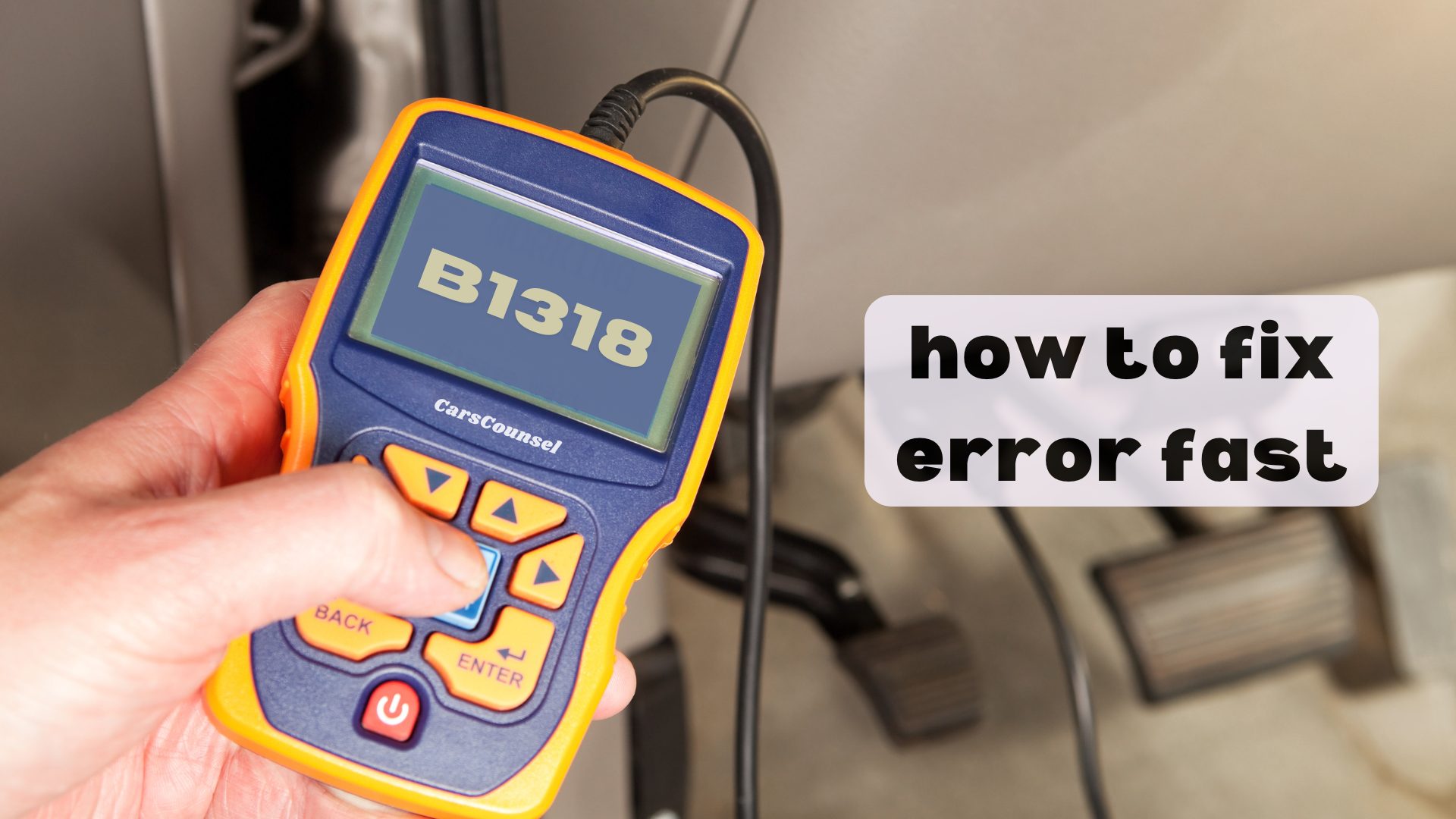
The B1318 code is a manufacturer-specific body diagnostic trouble code indicating a low battery or system voltage condition. It means a control module detected that the electrical system voltage dropped below the expected threshold.
This code does not automatically prove the battery or alternator has failed. Diagnosis requires testing the charging system, inspecting the wiring, and verifying module power circuits before replacing components.
Quick Navigation
Key Takeaways
- The B1318 code indicates a control module detected system voltage dropping below the expected threshold.
- Possible causes include a failing battery, alternator issues, poor ground connections, or parasitic draws.
- Diagnosis involves testing battery health, checking alternator output, and inspecting module power and ground circuits.
- Repairs may involve replacing the battery, repairing wiring, or addressing the charging system.
B1318 Code Description and Implications
The B1318 code indicates that a control module detected a low battery or system voltage condition. This manufacturer-specific category of diagnostic trouble codes applies to various vehicle makes.
The control module continuously monitors its supply voltage to ensure proper operation. When the module detects that the system voltage drops below a calibrated threshold, it stores this code.
Some Ford, Mazda, and Jaguar applications: The Restraints Control Module or Powertrain Control Module sets this code when system voltage drops below a specific threshold, often during cranking.
Certain GM and Chrysler applications: Similar body or chassis modules may store this code when module supply voltage falls outside the normal operating range while the engine is running.
Common Causes of the B1318 Code
A degraded or failing vehicle battery is a possible cause. An internally shorted or sulfated battery may not maintain adequate voltage under load, triggering the low voltage fault.
A failing alternator or voltage regulator can result in insufficient charging system output, causing system voltage to drop while the engine is running and setting the code.
Poor electrical connections, corroded battery terminals, or high-resistance ground circuits can cause a significant voltage drop between the battery and the control module, mimicking a low battery condition.
Symptoms Associated With B1318
An illuminated Check Engine Light, Airbag Light, or Battery warning light may appear, depending on which module detected the low voltage and the specific application’s MIL behavior.
You may experience slow engine cranking, dimming headlights, or intermittent electrical glitches as the system voltage fluctuates or drops below normal operating parameters.
In some applications, the vehicle may enter a fail-safe or limp mode, disabling non-essential electrical features to conserve power and protect sensitive electronic modules.
Diagnosing the B1318 Trouble Code
Diagnosis must begin by confirming the exact factory definition and checking for related charging system codes. Record freeze-frame data to note the voltage reading and engine state when the code set.
Perform a visual inspection of the battery terminals, main ground straps, and alternator connections for corrosion, looseness, or physical damage that could cause high circuit resistance.
Test the battery’s state of charge and health using a dedicated battery tester. Verify the alternator output voltage and current capacity under load to ensure the charging system is functioning correctly.
If the battery and alternator test correctly, perform a voltage drop test on the main power and ground circuits feeding the specific module that stored the code.
Repairing the B1318 Issue
Repairs must follow confirmed diagnosis. If the battery fails the load or conductance test, replace it with a component meeting the exact vehicle specification and register it if required.
If the alternator output is below the manufacturer’s specification, replace the alternator or voltage regulator assembly to restore proper charging system performance.
If voltage drop testing reveals high resistance in the battery cables or ground straps, clean the connections or replace the damaged cables to restore proper circuit continuity.
Cost Considerations for B1318 Repairs
Cost depends on diagnostic time, component accessibility, required parts, programming requirements, and labor.
Replacing a standard battery or cleaning corroded terminals involves minimal to moderate parts and labor expenses.
If the alternator requires replacement, or if extensive wiring repair is needed to resolve a voltage drop, the parts and labor costs will increase.
Prevention Strategies for Future Occurrences
Keeping battery terminals and main ground connections clean and tightly secured helps prevent high-resistance connections that cause localized voltage drops and trigger low voltage codes.
Testing the battery and charging system during routine maintenance intervals can help identify a degrading battery or weak alternator before it causes a system voltage fault.
Some electrical component aging and battery degradation occur naturally over time and cannot be entirely prevented.
Troubleshooting Tips and Best Practices
Do not attempt to fix a B1318 code by simply replacing the control module that stored the code without verifying the vehicle’s charging system and battery health first. Low system voltage is a frequent cause of false module faults.
Always verify the exact voltage threshold for your application. Some modules set this code if voltage drops below a specific level during cranking, while others monitor running voltage.
Check for technical service bulletins for your exact vehicle application, as some manufacturers release updated battery monitoring software or revised grounding procedures to address chronic low voltage codes.
More OBD-II Codes
| B1202 | B1203 | B1208 | B1209 |
| B1233 | B1234 | B1325 | B1342 |
| B1352 | B2947 | B2948 | B2957 |
| B2958 | B2960 | B3031 | B3033 |
| C1095 | C1111 | P0562 | P0563 |
| P0620 | P0621 | P0622 | P0625 |
Frequently Asked Questions
Is the B1318 code generic or manufacturer-specific?
No. B1318 is a manufacturer-specific body code. Its exact definition and monitoring criteria depend on the vehicle application, though it frequently relates to low system voltage.
Will a B1318 code cause my vehicle to stall?
It can. If the system voltage drops significantly while driving, the engine control module may lose power or reset, causing the engine to stall or electrical systems to shut down.
Does a B1318 code mean my battery is dead?
Not necessarily. While a failing battery is a possible cause, the code can also be triggered by a weak alternator, corroded battery terminals, or a high-resistance ground circuit. Proper electrical testing is required first.
Can a bad alternator cause a B1318 code?
Yes. If the alternator fails to maintain adequate charging system output while the engine is running, the system voltage will drop, prompting the control module to store a low voltage code.
Can I clear the B1318 code without fixing the problem?
Clearing the code only resets the warning light. If the underlying battery, alternator, or wiring issue remains, the monitor will detect the low voltage condition again and turn the light back on.
What Should You Do About the B1318 Code?
Confirm the exact factory definition and check for related charging system codes for your specific vehicle application. Follow the applicable manufacturer diagnostic procedure to verify whether the fault lies in the battery, the alternator, or the module power circuits.
Once testing confirms the root cause, repair or replace the confirmed failed component in the relevant system and components, then retest the electrical system and clear the codes.

