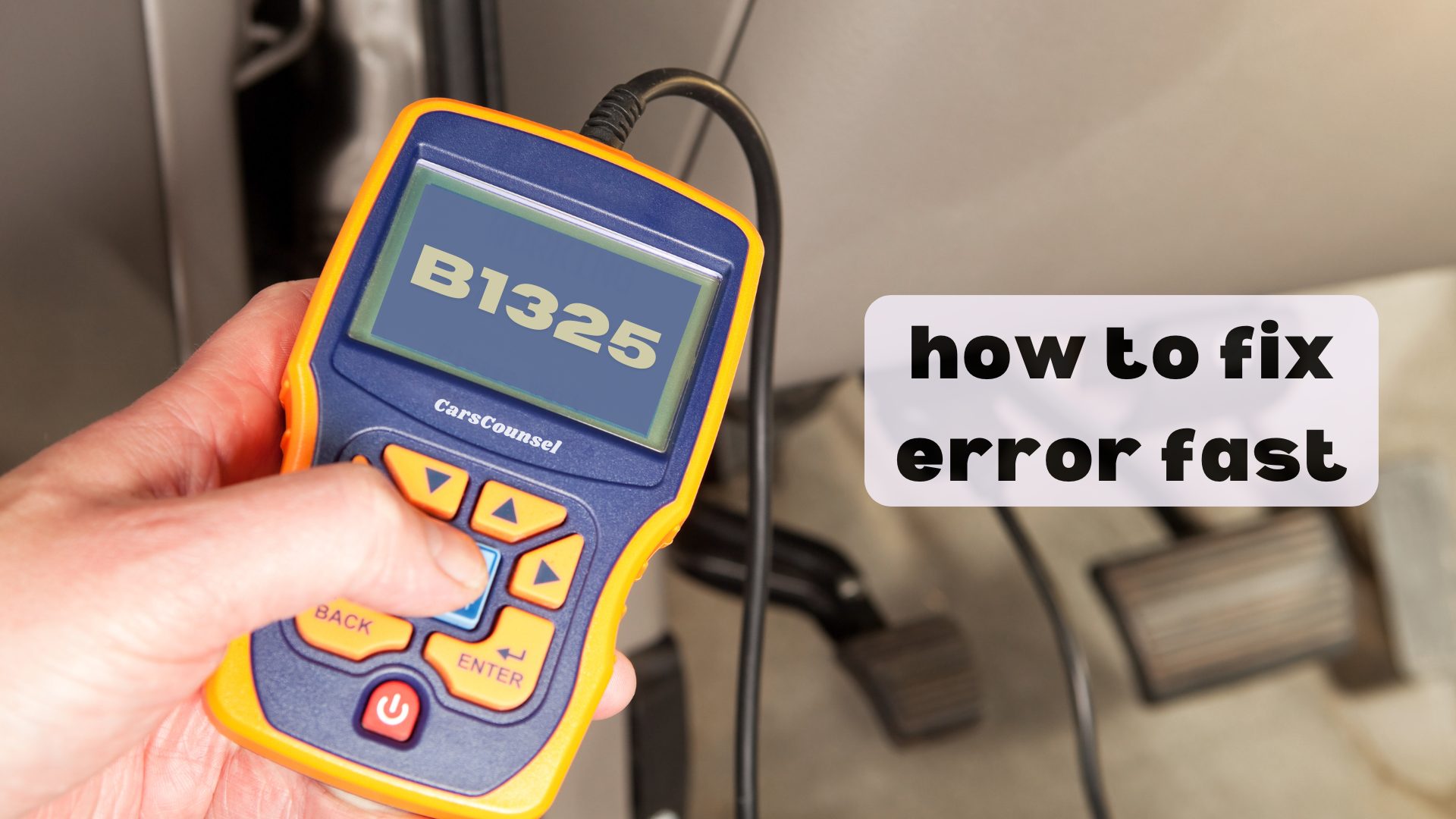
B1325 is a manufacturer-specific Body code indicating a fault detected by a control module. Its exact definition depends entirely on the vehicle application, ranging from a system voltage issue to an HVAC sensor fault.
Because definitions vary widely, the exact application must be verified before diagnosis. The code identifies a detected condition and does not automatically confirm a single failed component.
Quick Navigation
Key Takeaways
- B1325 is a manufacturer-specific code with definitions varying by vehicle make and model.
- On certain GM applications, it indicates a control module power circuit voltage issue.
- On some other applications, it points to an HVAC in-cabin or ambient temperature sensor circuit fault.
- Diagnosis requires confirming the exact factory definition and testing the specific monitored circuit.
B1325 Code Description and Implications
B1325 is a manufacturer-specific code, meaning its exact definition depends on the vehicle application.
Certain GM applications (Chevrolet, GMC, Cadillac, Buick): B1325 indicates a control module power circuit voltage issue, such as system voltage dropping below the acceptable threshold.
Some Ford or specific HVAC applications: B1325 may point to a fault in the HVAC in-cabin temperature sensor circuit.
Other verified applications: The code can sometimes relate to the ambient air temperature sensor circuit.
When diagnosing an error code related to body or HVAC systems, verifying the exact factory service information is critical.
Common Causes of the B1325 Code
The underlying causes depend entirely on which system the code monitors on your specific vehicle.
System Voltage Applications: A weak battery, a failing alternator, poor ground connections, or damaged wiring supplying power to the control module.
Temperature Sensor Applications: A failed in-cabin or ambient temperature sensor, an open or short in the sensor reference, signal, or ground circuits, or a faulty HVAC control module.
Symptoms Associated With B1325
Symptoms vary significantly based on the affected system and the vehicle application.
On system voltage applications, you may experience intermittent no-start conditions, erratic module behavior, or multiple electrical warning lights on the dashboard.
On HVAC sensor applications, the climate control system may struggle to maintain a steady cabin temperature, or the temperature display may show incorrect readings.
MIL behavior varies by application. Some vehicles may illuminate a specific module warning indicator, while others may store the DTC without commanding a dashboard light.
Diagnosing the B1325 Trouble Code
Diagnosis must begin by confirming the exact factory definition for your specific make, model, and engine.
For system voltage applications, check the battery state of charge, test the alternator output, and inspect the module power and ground circuits for voltage drops.
For temperature sensor applications, compare the scan tool sensor readings to the actual ambient or cabin temperature, and test the sensor reference, signal, and ground circuits.
Repairing the B1325 Issue
Repairs must follow confirmed diagnosis based on the specific monitored system.
If the battery or alternator is confirmed faulty on a voltage application, replace the component and clear the module history codes.
If a temperature sensor fails testing, replace the sensor using a component meeting the correct vehicle specification.
If wiring damage is found in any of these circuits, repair the harness and secure it away from heat and moving components.
Cost Considerations for B1325 Repairs
Repair costs vary considerably depending on the confirmed root cause and the specific vehicle application.
Replacing a temperature sensor involves standard parts costs and minimal labor.
Diagnosing and repairing a system voltage issue may involve battery or alternator replacement, which carries higher parts and labor costs.
Cost depends on diagnostic time, component accessibility, required parts, programming requirements, and labor.
Prevention Strategies for Future Occurrences
Preventing these faults requires maintaining the vehicle’s primary electrical and climate control systems.
Keeping the battery terminals clean and securely fastened helps maintain stable voltage for sensitive body control modules.
Inspecting exposed wiring near the HVAC air intake or under the hood can help identify developing chafing before it causes a sensor circuit fault.
Troubleshooting Tips and Best Practices
Always check for Technical Service Bulletins related to B1325 for your specific vehicle application.
Manufacturers may release updated sensor part numbers, revised wiring harness pigtails, or software updates for the control modules.
Do not assume a specific sensor or module requires replacement simply because its name appears in a generic code description.
Verify the exact factory wiring diagram and pinout before performing electrical tests to avoid misdiagnosing a shared circuit.
More OBD-II Codes
| B1318 | B1234 | B1233 | B1209 |
| B1208 | B1203 | B1342 | B1352 |
| B2947 | B2948 | B2957 | B2958 |
| B1202 | B3033 | B3031 | B2960 |
| C0045 | C0035 | C0040 | C0057 |
| C1100 | C1102 | B0527 | B0525 |
Frequently Asked Questions
Is the B1325 code generic or manufacturer-specific?
No. B1325 is a manufacturer-specific Body code. Its exact definition depends entirely on the vehicle application, such as a system voltage or HVAC sensor fault.
Can a bad battery cause a B1325 code?
Yes. On applications where B1325 monitors control module power circuits, a weak battery or failing alternator can cause voltage drops that trigger the code.
Will disconnecting the battery clear the B1325 code?
Disconnecting the battery may temporarily clear the code, but it does not repair the underlying electrical or sensor fault. It also erases valuable freeze frame data.
Can I drive my vehicle with a B1325 code?
Driving depends on the affected system. A system voltage fault may cause intermittent no-start conditions, while an HVAC sensor fault typically only affects cabin comfort.
Does B1325 mean the HVAC control module must be replaced?
Not necessarily. While a module failure is possible, a failed temperature sensor, a weak battery, or damaged wiring are much more common causes.
What Should You Do About the B1325 Code?
Confirm the exact factory definition and diagnostic procedure for your specific vehicle application before attempting repairs.
Do not assume a specific sensor or module requires replacement based solely on the presence of the diagnostic trouble code.
Inspect the relevant system components, verify connector integrity, and test the applicable circuits to rule out external faults.
Follow the applicable manufacturer diagnostic workflow to isolate the relevant system and components before replacing any hardware.

