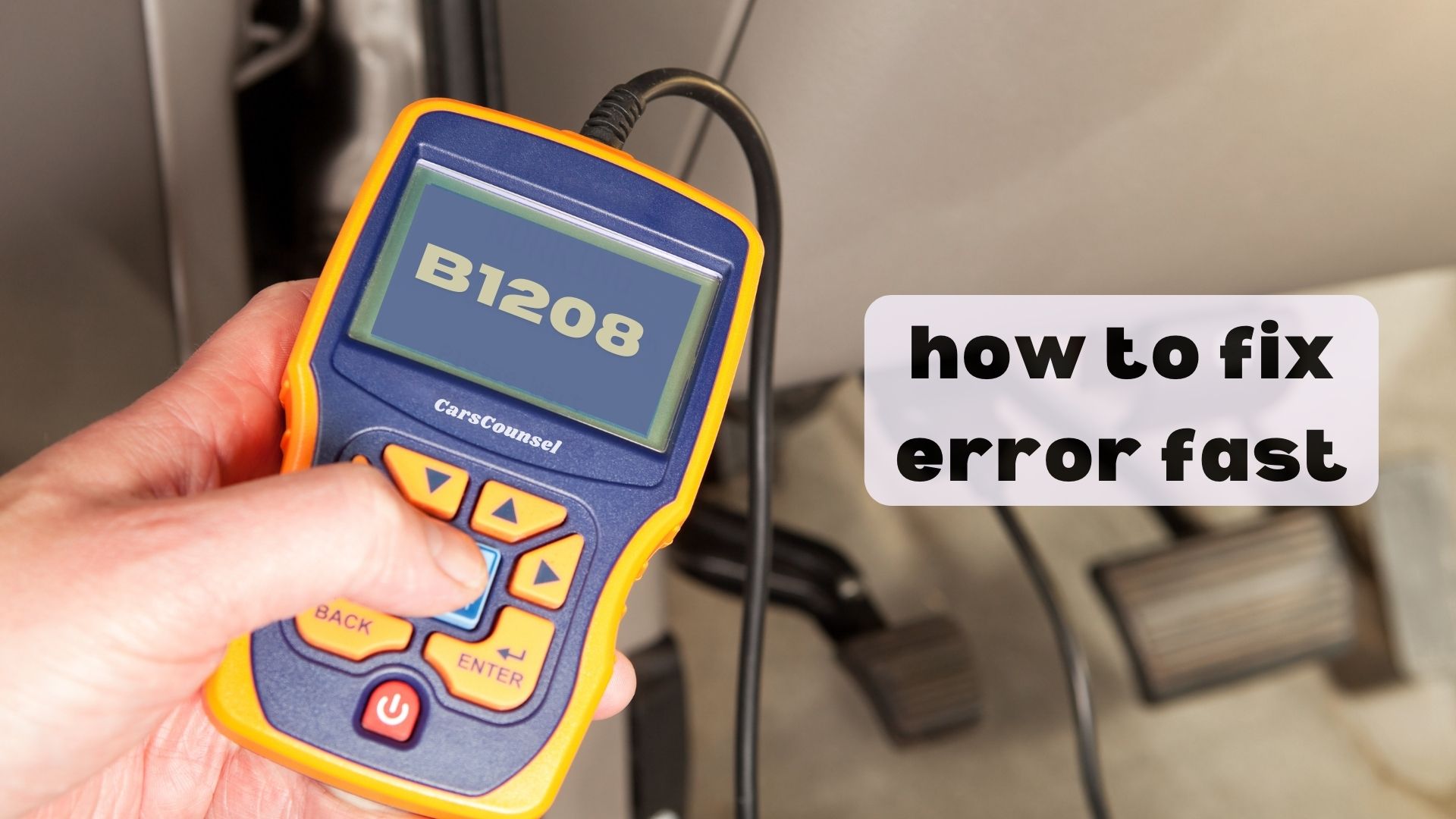
The B1208 trouble code is a manufacturer-specific body code, meaning its exact definition depends entirely on the vehicle make and model.
Because it is not a generic SAE code, the diagnostic path varies significantly. The code identifies a detected electrical condition, and testing is required to identify the root cause.
Quick Navigation
Key Takeaways
- B1208 is a manufacturer-specific body code with different meanings depending on the vehicle brand.
- On Chrysler, Dodge, and Ram vehicles, it typically indicates an Anti-Theft Indicator circuit short or open.
- On Ford and Mercury vehicles, it often points to an Electronic Instrument Cluster (EIC) switch circuit short to ground.
- Proper diagnosis requires verifying the exact factory definition and testing the relevant wiring and module circuits.
- Repairs range from fixing damaged wiring harnesses to replacing the instrument cluster or Body Control Module (BCM).
B1208 Code Description and Implications
The B1208 code is a manufacturer-specific body definition. Because it is not a generic code, its exact meaning depends entirely on the vehicle application.
Chrysler, Dodge, Jeep, and Ram applications: On these vehicles, B1208 (often seen with sub-codes like B1208-11 or B1208-15) indicates a fault in the Anti-Theft Indicator circuit. The Body Control Module monitors the security indicator lamp circuit and sets this error code if it detects a short to ground, short to battery, or an open circuit.
Ford, Lincoln, and Mercury applications: On these platforms, B1208 typically indicates an Electronic Instrument Cluster (EIC) Switch-1 Assembly Circuit Short to Ground. The code sets when the instrument cluster detects an abnormal voltage drop on the switch bank circuit.
Common Causes of the B1208 Code
Electrical faults and component failures are the primary triggers for this body code, though the specific causes vary by manufacturer.
For Chrysler/Dodge/Ram anti-theft systems: The issue may stem from a short to ground or an open in the wiring harness between the BCM and the instrument cluster. Other causes include a faulty security indicator LED, a poor electrical connection at the cluster, or an internal BCM fault.
For Ford/Mercury EIC switches: The short to ground is typically caused by damaged wiring behind the instrument cluster, a failed switch assembly on the dashboard, or a poor ground connection for the cluster itself.
Symptoms Associated With B1208
Symptoms vary drastically based on which system has detected the fault.
Chrysler/Dodge/Ram applications: The primary symptom is an inoperative or erratically flashing anti-theft security light on the dashboard. In some cases, the vehicle may experience immobilizer issues, preventing the engine from starting.
Ford/Mercury applications: You may experience unresponsive dashboard switches, such as the trip computer or fuel reset buttons. The instrument cluster illumination or gauge behavior may also act erratically.
Diagnosing the B1208 Trouble Code
Accurate diagnosis requires confirming the exact factory definition for your specific make and model before proceeding.
Chrysler/Dodge/Ram diagnosis: Use a scan tool to read the specific sub-code (e.g., B1208-11 for short to ground). Inspect the wiring harness between the BCM and the instrument cluster for chafing or broken wires. Verify the resistance and continuity of the anti-theft indicator circuit and check for proper voltage output from the BCM.
Ford/Mercury diagnosis: Access the instrument cluster self-test mode or use a scan tool to monitor the EIC switch status. Inspect the wiring behind the dashboard cluster for pinched wires or shorts to ground. Test the switch assembly for internal shorts and verify the cluster ground connections.
Repairing the B1208 Issue
Repairs must address the specific root cause identified during testing for your vehicle’s system.
Wiring repairs: If a short to ground or open circuit is found, repair the affected wires using solder and heat-shrink tubing. Ensure the harness is routed away from sharp metal edges or moving steering column components.
Component replacement: If the wiring is intact but the circuit remains shorted, the instrument cluster switch assembly, security indicator lamp, or the cluster itself may require replacement.
Module diagnosis: If all wiring and components test correctly, the Body Control Module or instrument cluster may have an internal fault requiring replacement and programming.
Cost Considerations for B1208 Repairs
Repair costs depend heavily on the underlying fault and the vehicle’s design.
A simple wiring repair behind the dashboard requires moderate labor time to remove trim panels and access the harness.
If the instrument cluster or BCM requires replacement and programming, the overall cost will increase significantly due to the price of the module and the need for specialized immobilizer or configuration equipment.
Prevention Strategies for Future Occurrences
While internal module failures cannot always be predicted, you can protect the external circuits from common damage.
Dashboard wiring: Ensure the wiring harness behind the instrument cluster is properly secured. Repeated removal of dashboard trim or aggressive steering column adjustment can cause loose wires to chafe against metal brackets.
Moisture protection: Keep interior connector seals intact during window cleaning or interior detailing. Moisture intrusion into dashboard connectors can lead to corrosion that disrupts switch and indicator circuits.
Troubleshooting Tips and Best Practices
Do not assume a control module is faulty just because a B1208 code is present. A pinched wire behind the dashboard will produce the exact same short-to-ground reading as a failed internal switch.
Always check for Technical Service Bulletins (TSBs) for your specific vehicle. Manufacturers frequently release software updates or revised wiring harnesses to address chronic dashboard circuit faults.
When working on instrument cluster circuits, disconnect the battery before removing the cluster to prevent accidental shorts to the airbag system or CAN bus network wires located in the same dashboard area.
More OBD-II Codes
| B0285 | B0286 | B0525 | B0527 |
| B1202 | B1203 | B1209 | B1233 |
| B1234 | B1318 | B1325 | B1342 |
| B2947 | B2948 | B2957 | B2958 |
| U1017 | U1000 | U0140 | U0155 |
| C1611 | C1612 | C1613 | C1616 |
Frequently Asked Questions
Is B1208 a generic or manufacturer-specific code?
No. B1208 is a manufacturer-specific body code. Its definition varies significantly by brand, commonly indicating an anti-theft indicator fault on Chrysler vehicles or an instrument cluster switch fault on Ford vehicles.
Can a B1208 code prevent my car from starting?
On Chrysler, Dodge, and Ram applications, a fault in the anti-theft indicator circuit can sometimes interfere with the immobilizer system, leading to a no-start condition.
Will disconnecting the battery clear the B1208 code?
Disconnecting the battery may temporarily erase the code, but it will not repair a physical wiring fault or failed switch. The code will return once the monitor runs again.
Is it safe to drive with a B1208 code?
If the code relates to a dashboard switch or indicator light, the vehicle is generally safe to drive. However, if it triggers an immobilizer fault, the engine may stall or fail to restart.
Does B1208 always mean the instrument cluster is bad?
No. The code identifies a detected circuit condition. This is frequently caused by damaged wiring, a poor ground, or a failed switch assembly. The cluster should only be replaced after testing confirms internal failure.
What Should You Do About the B1208 Code?
Confirm the exact factory definition for your vehicle, then follow the applicable manufacturer diagnostic procedure. Because B1208 is manufacturer-specific, the diagnostic path for an anti-theft indicator circuit differs from an instrument cluster switch fault.
Inspect the relevant system and components, including dashboard wiring, switch assemblies, and module connections. Repair any confirmed wiring faults, or replace the relevant system components only after electrical testing verifies the failure.

