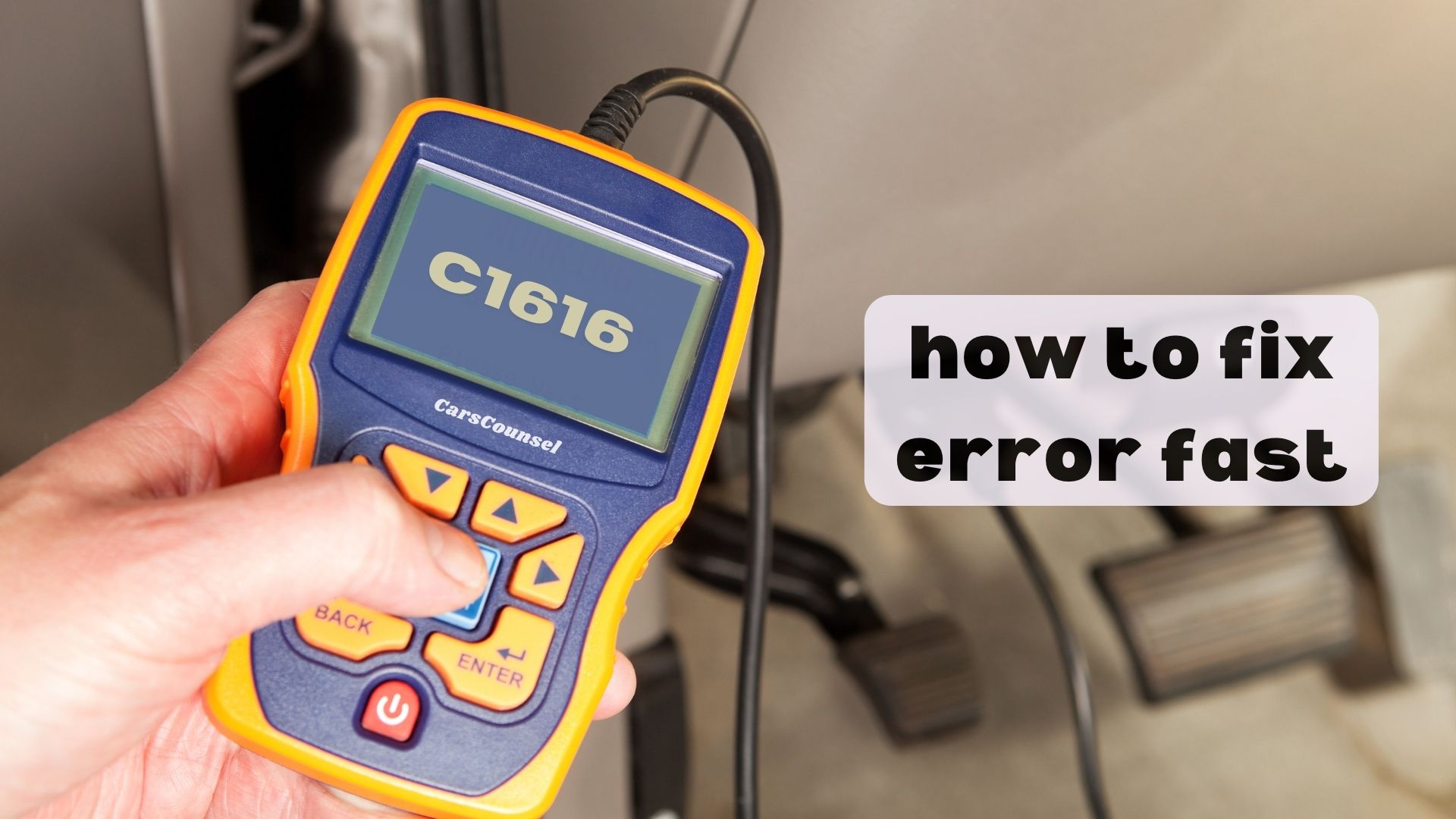
C1616 is a manufacturer-specific chassis diagnostic trouble code, meaning its exact definition depends on the vehicle application. On certain Mitsubishi models, it indicates a Cranking Signal System (Stuck ON) condition.
Because this code identifies a specific network or signal fault, it does not automatically prove a control module has failed. Accurate diagnosis requires verifying the exact factory definition and testing the relevant communication circuits.
Quick Navigation
Key Takeaways
- C1616 is a manufacturer-specific chassis code that commonly indicates a cranking signal system fault on Mitsubishi applications.
- Possible causes include wiring issues, a faulty ignition switch, a failed ETACS ECU, or an AWC ECU malfunction.
- Symptoms typically include intermittent starting issues, illuminated warning lights, and potential all-wheel-drive system disablement.
- Diagnosis involves checking the CAN bus lines, inspecting the cranking signal circuit, and verifying module communication.
- Repairs require fixing the confirmed electrical fault, which may involve wiring repairs or module replacement.
C1616 Code Description and Implications
C1616 is a manufacturer-specific chassis code. On verified Mitsubishi applications, such as the Outlander and Lancer Evolution, it indicates a Cranking Signal System (Stuck ON) condition.
The All Wheel Control (AWC) ECU receives the ignition switch signal from the Electronically Controlled System (ETACS) ECU via CAN communication.
If the AWC ECU detects that the cranking signal remains active or stuck ON while the vehicle is being driven, it sets this error code.
On certain Hyundai and Kia applications, C1616 may indicate a different chassis or CAN bus communication fault.
Common Causes of the C1616 Code
Possible causes on Mitsubishi applications include a faulty ignition switch that fails to send the correct signal state to the ETACS ECU.
An open or shorted wiring harness between the ignition switch, ETACS ECU, or AWC ECU can disrupt the cranking signal communication.
Poor electrical connections or corrosion at the module connectors can also cause intermittent signal faults.
In some cases, an internal failure of the ETACS ECU or the AWC ECU may cause the signal to stick ON.
If the code refers to a CAN bus fault on a Hyundai or Kia application, the causes would involve network wiring or module communication issues.
Symptoms Associated With C1616
Symptoms on Mitsubishi vehicles typically include intermittent starting issues or the engine failing to crank when the ignition key is turned.
You may also see the Anti-Lock Brake System (ABS) warning light or the Check Engine Light illuminate on the instrument cluster.
The All-Wheel Control system may disable itself or enter a fail-safe mode, altering the vehicle’s drivetrain behavior.
On other applications, symptoms will depend on the specific chassis system affected by the network fault.
Diagnosing the C1616 Trouble Code
Diagnosis must begin by confirming the exact factory definition of C1616 for your specific vehicle make, model, and year.
On Mitsubishi applications, use an advanced scan tool to check the CAN bus lines for communication errors before testing individual components.
Verify the cranking signal data stream while operating the ignition switch to see if the signal correctly transitions between OFF and ON states.
Visually inspect the wiring harness and connectors at the ignition switch, ETACS ECU, and AWC ECU for physical damage or corrosion.
If the wiring and switch test correctly, further module diagnosis may be required to identify a failed ETACS or AWC ECU.
Repairing the C1616 Issue
If testing confirms damaged wiring or a short in the cranking signal circuit, repair or replace the affected wiring sections.
If the ignition switch fails the electrical tests, replace the switch assembly with a component meeting the correct vehicle specification.
If the ETACS ECU or AWC ECU is confirmed as the fault, follow the applicable module service or replacement procedure, which may require specialized programming.
After completing the repair, clear the diagnostic trouble codes and verify the signal operates correctly during a test drive.
Cost Considerations for C1616 Repairs
Cost depends on diagnostic time, component accessibility, required parts, programming requirements, and labor.
Wiring repairs and ignition switch replacements involve standard parts costs and moderate labor.
Replacing and programming an ETACS or AWC ECU involves higher parts costs and requires specialized dealer or professional equipment.
Prevention Strategies for Future Occurrences
Inspect exposed wiring harnesses near the steering column and under-dash areas for signs of physical damage, chafing, or interference with the steering shaft.
Ensure that all module connectors remain clean and properly seated to prevent intermittent communication faults in the cranking signal circuit.
Troubleshooting Tips and Best Practices
Do not assume a C1616 code universally means the starter motor or battery is faulty. This code specifically flags a communication or signal logic fault between control modules.
Do not ignore CAN bus warnings. A network communication fault can prevent multiple chassis and drivetrain systems from operating correctly.
Always verify the exact definition for your vehicle before ordering replacement modules, as C1616 means different things on Mitsubishi versus Hyundai/Kia platforms.
More OBD-II Codes
| C1613 | C1612 | C1611 | C1604 |
| C1503 | C1283 | C1282 | C1260 |
| C1259 | C1237 | C1235 | C1211 |
| C1210 | C1205 | C1204 | C1203 |
| C1116 | C1109 | C1102 | C1100 |
| C1095 | C0329 | C0276 | C0057 |
Frequently Asked Questions
Is C1616 a generic OBD-II code?
No. C1616 is a manufacturer-specific chassis code. Its exact definition varies by make, commonly indicating a cranking signal fault on Mitsubishi or a CAN bus fault on Hyundai/Kia.
Can I drive with a C1616 code?
It is not recommended. On Mitsubishi applications, this code can disable the All-Wheel Control system and cause intermittent starting issues, which may leave you stranded or affect vehicle safety.
Will a bad battery cause a C1616 code?
While low system voltage can cause network communication errors, C1616 specifically flags a cranking signal logic fault or CAN bus issue, not just a weak battery. Verify the battery and alternator first.
Does C1616 mean my starter motor is bad?
No. C1616 monitors the communication signal between control modules regarding the ignition switch position. It does not indicate a mechanical failure of the starter motor itself.
Can I clear the C1616 code without fixing the issue?
Clearing the code is not a repair. Because the fault involves module communication or a stuck signal, the code will likely return immediately once the ignition is cycled or the vehicle is driven.
What Should You Do About the C1616 Code?
Confirm the exact factory definition for your vehicle, then follow the applicable manufacturer diagnostic procedure. Inspect the relevant system and components for electrical faults, and repair or replace the confirmed failed parts to restore proper operation.

