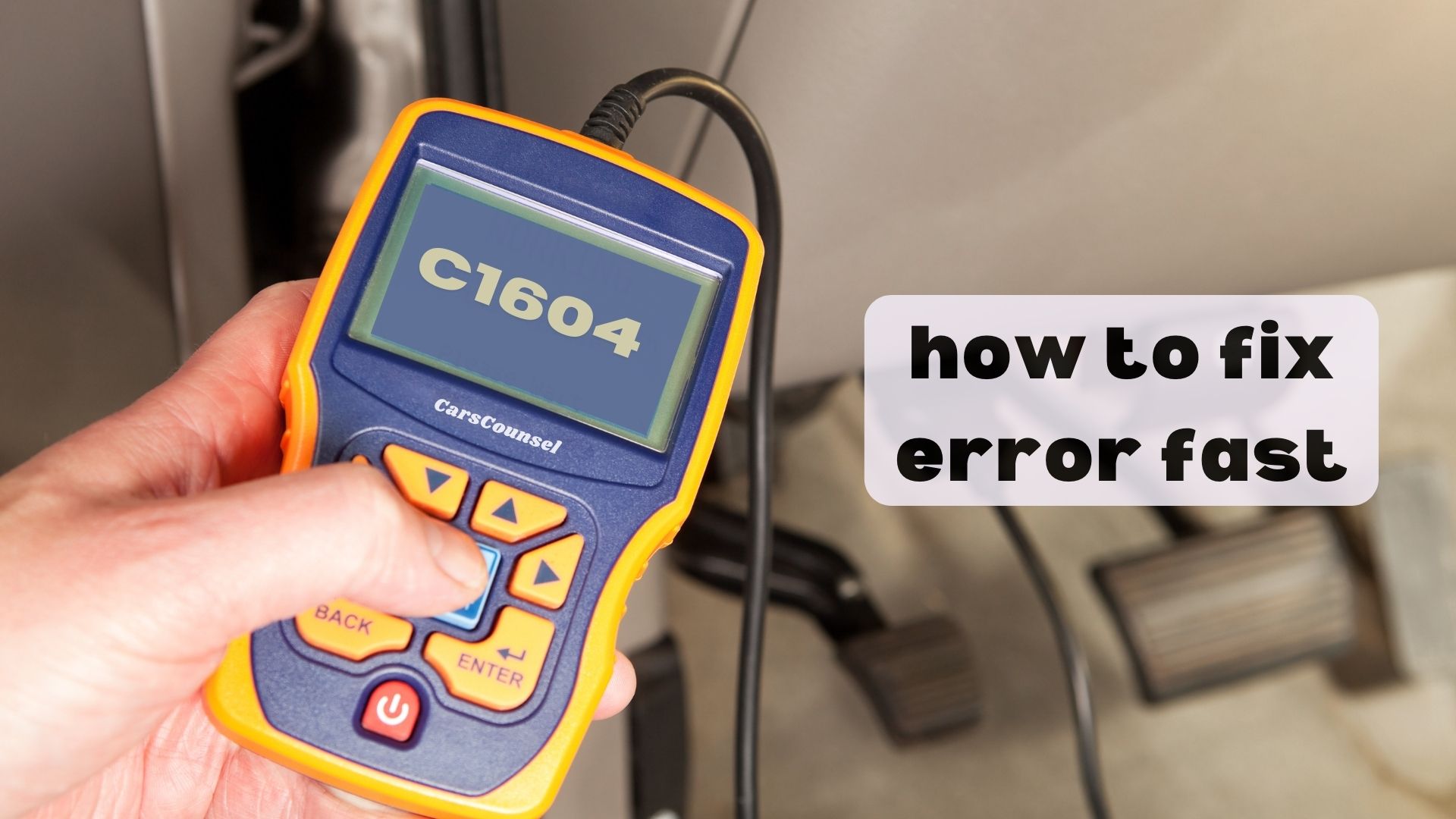
C1604 is a manufacturer-specific chassis code, meaning its exact definition depends on the vehicle application. On some applications, it indicates an EPS torque sensor fault, while on others, it flags an internal ECU hardware error.
Because this code identifies a specific module or sensor fault, it does not automatically prove a component has failed. Accurate diagnosis requires verifying the exact factory definition and testing the relevant circuits.
Quick Navigation
Key Takeaways
- C1604 is a manufacturer-specific chassis code that commonly indicates an EPS torque sensor fault or an internal ECU hardware error.
- Possible causes include a failed torque sensor, damaged wiring, or an internal failure of the EPS or ABS control module.
- Symptoms typically include heavy steering, loss of power assist, and illuminated EPS or ABS warning lights.
- Diagnosis involves verifying the exact factory definition, inspecting the relevant wiring, and testing module live data.
- Repairs require fixing the confirmed electrical fault, which may involve sensor replacement or module service.
C1604 Code Description and Implications
C1604 is a manufacturer-specific chassis code.
On verified Hyundai and Kia applications, it typically indicates an ECU Hardware Error within the Electric Power Steering (EPS) or Anti-lock Brake System (ABS) control module.
On certain Nissan, Infiniti, and Ford applications, it indicates an Electric Power Steering Torque Sensor circuit fault or calibration failure.
When this code sets, the affected control module has detected an internal processing error or an out-of-range signal from the steering column sensor.
Common Causes of the C1604 Code
Possible causes on Nissan, Infiniti, and Ford applications include a faulty steering column torque sensor or poor electrical connections in the sensor circuit.
Damaged, chafed, or corroded wiring between the torque sensor and the EPS control module can also disrupt the signal.
On Hyundai and Kia applications, the cause is often an internal hardware failure within the EPS or ABS control module itself.
Unstable power supply or excessive voltage surges to the control module can also trigger internal hardware error codes.
Symptoms Associated With C1604
Symptoms vary by application but generally involve the steering or braking systems.
If the code relates to the EPS system, you may experience heavy steering, a complete loss of power assist, or steering wheel vibrations.
The EPS warning light or an ABS and Traction Control warning light will typically illuminate on the instrument cluster.
In some cases, the vehicle may disable related stability control features until the fault is resolved.
Diagnosing the C1604 Trouble Code
Diagnosis must begin by confirming the exact factory definition of C1604 for your specific vehicle make, model, and year.
Use a scan tool capable of accessing the EPS or ABS modules to read live data and verify the torque sensor signal or module status.
Visually inspect the wiring harness and connectors at the steering column and control modules for physical damage or corrosion.
If the wiring and sensor test correctly on torque-sensor applications, or if the module reports an internal hardware fault, further module diagnosis is required.
Repairing the C1604 Issue
If testing confirms damaged wiring or poor connections in the torque sensor circuit, repair or replace the affected wiring sections.
If the torque sensor fails the electrical tests, replace the sensor assembly with a component meeting the correct vehicle specification.
If the EPS or ABS control module is confirmed to have an internal hardware failure, follow the applicable module service or replacement procedure.
After completing the repair, clear the diagnostic trouble codes and verify the system operates correctly during a test drive.
Cost Considerations for C1604 Repairs
Cost depends on diagnostic time, component accessibility, required parts, programming requirements, and labor.
Wiring repairs and sensor replacements involve standard parts costs and moderate labor.
Replacing and programming an EPS or ABS control module involves higher parts costs and requires specialized dealer or professional equipment.
Prevention Strategies for Future Occurrences
Inspect exposed wiring harnesses near the steering column and under-dash areas for signs of physical damage, chafing, or interference with the steering shaft.
Ensure that all module connectors remain clean and properly seated to prevent intermittent communication faults or moisture intrusion.
Maintain a healthy vehicle battery and charging system, as voltage spikes can damage sensitive control module hardware.
Troubleshooting Tips and Best Practices
Do not assume a C1604 code universally means the torque sensor is faulty. Always verify the exact definition for your vehicle.
Do not ignore a loss of power steering assist. While the vehicle remains mechanically steerable, the effort required to turn the wheel increases significantly.
Always check the battery and alternator output before condemning an EPS or ABS module, as low system voltage can cause false internal hardware codes.
More OBD-II Codes
| C1203 | C1204 | C1205 | C1210 |
| C1211 | C1235 | C1611 | C1612 |
| C1613 | C1616 | C1116 | C1109 |
| B0525 | B0527 | B2947 | B0285 |
| P0500 | P0501 | P0502 | P0504 |
| P0505 | P0506 | P0520 | P0521 |
Frequently Asked Questions
Is C1604 a generic OBD-II code?
No. C1604 is a manufacturer-specific chassis code. Its exact definition varies by make, commonly indicating an EPS torque sensor fault or an internal ECU hardware error.
Can I drive with a C1604 code?
It is not recommended. If the code disables the power steering assist, the steering wheel will become very heavy, making the vehicle difficult to control, especially at low speeds.
Will a bad battery cause a C1604 code?
Yes. Low system voltage or voltage spikes from a failing alternator can cause sensitive EPS or ABS control modules to set internal hardware error codes. Verify the charging system first.
Does C1604 mean my steering rack is bad?
Not necessarily. While the torque sensor is often integrated into the steering rack on some applications, the code specifically flags an electrical signal or internal module fault, not a mechanical rack failure.
Can I clear the C1604 code without fixing the issue?
Clearing the code is not a repair. Because the fault involves an internal module hardware error or a hard sensor circuit fault, the code will likely return immediately upon the next key cycle.
What Should You Do About the C1604 Code?
Confirm the exact factory definition for your vehicle, then follow the applicable manufacturer diagnostic procedure. Inspect the relevant system and components for electrical faults, and repair or replace the confirmed failed parts to restore proper operation.

