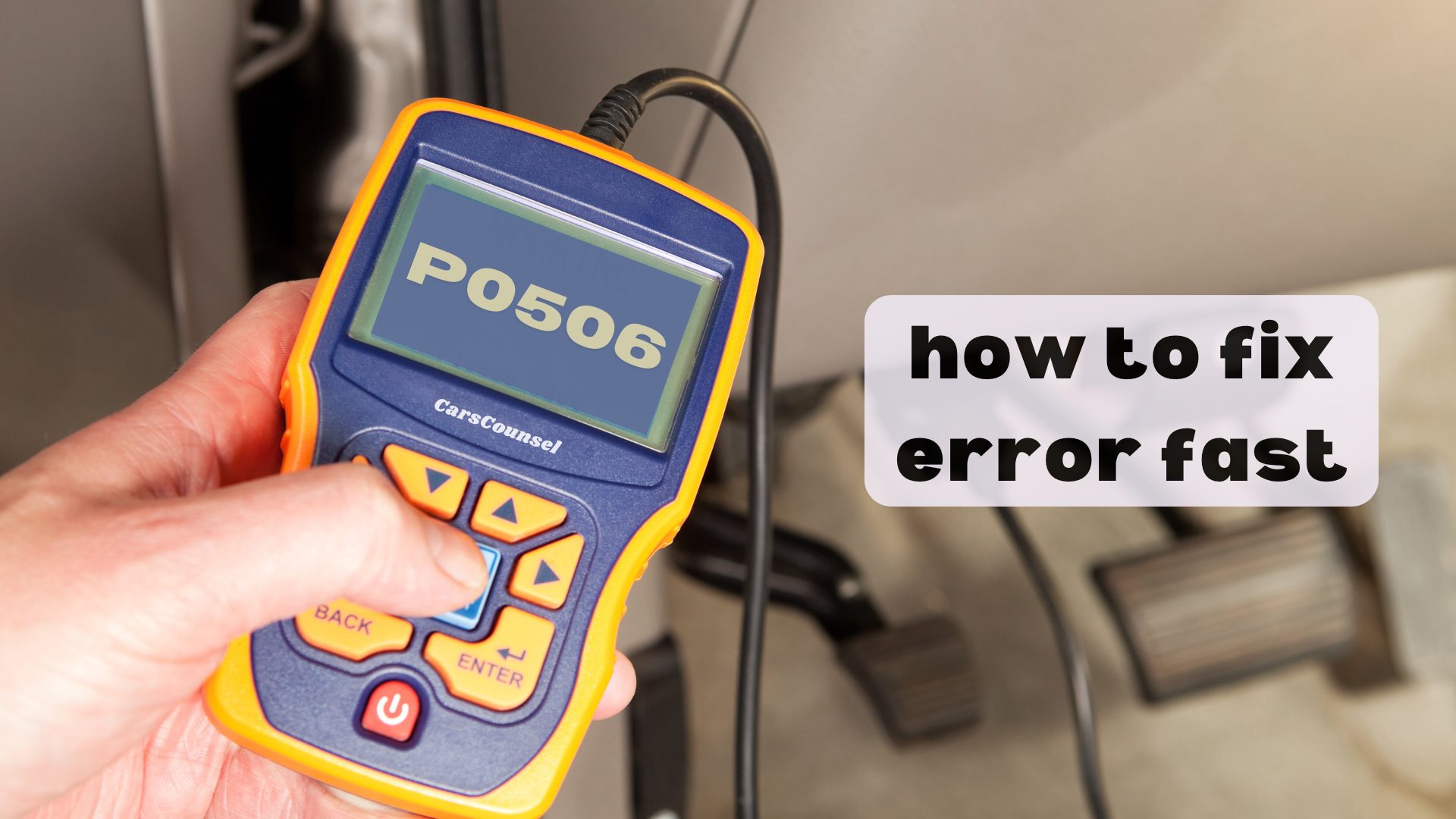
The P0506 code is a generic OBD-II powertrain code indicating an “Idle Control System RPM Lower Than Expected” condition. The powertrain control module detects that the actual engine idle speed is below the calibrated target threshold.
This code identifies a performance condition and does not automatically prove a specific sensor or valve has failed. Proper diagnosis requires inspecting the air intake system, testing electrical circuits, and verifying live data before replacing components.
Quick Navigation
Key Takeaways
- P0506 indicates the control module detected an engine idle speed lower than the expected target RPM.
- The code flags an airflow or idle control performance condition, not an automatic confirmation of a failed component.
- Carbon buildup restricting the throttle body bore is a primary mechanical cause to verify first.
- Diagnosis requires checking for intake restrictions, testing the idle air control circuit, and reviewing live sensor data.
P0506 Code Description and Implications
The P0506 code stands for “Idle Control System RPM Lower Than Expected.” The powertrain control module (PCM) continuously monitors engine speed during idle conditions.
To maintain a stable idle, the PCM adjusts airflow using an electronic throttle body or a dedicated idle air control (IAC) valve.
If the actual engine RPM drops below the manufacturer’s calibrated target threshold for a specified duration, the module stores the P0506 code.
Common Causes of the P0506 Code
Several mechanical and electrical conditions can cause the engine to idle below the target RPM.
- Carbon buildup: Heavy carbon accumulation inside the throttle body bore can restrict the minimum airflow required to maintain idle.
- Faulty idle air control valve: On applications with a dedicated IAC valve, the pintle may be mechanically stuck closed or electrically failed.
- Intake restrictions: A severely clogged air filter or collapsed intake duct can starve the engine of air at idle.
- Sensor issues: A faulty mass airflow (MAF) sensor or engine coolant temperature (ECT) sensor can provide incorrect data, causing the PCM to miscalculate idle air requirements.
- PCV system faults: A malfunctioning positive crankcase ventilation system can alter crankcase pressure and disrupt idle airflow.
Symptoms Associated With P0506
Because P0506 relates to idle airflow management, symptoms directly affect low-speed drivability.
- Illuminated Check Engine Light: The MIL activates once the module confirms the low idle condition.
- Rough or low idle: The engine may shake, vibrate, or idle noticeably lower than normal when stopped.
- Stalling: The engine may stall when coming to a stop or when the air conditioning compressor engages.
- Hesitation: The vehicle may hesitate or stumble when accelerating from a stop.
Diagnosing the P0506 Trouble Code
Accurate diagnosis requires verifying airflow mechanics and comparing live sensor data.
- Inspect the intake system: Check the air filter and intake ducting for severe restrictions, collapses, or debris.
- Inspect the throttle body: Visually check the throttle plate and bore for heavy carbon buildup that restricts the idle air gap.
- Check for vacuum leaks: While vacuum leaks typically cause high idle, severe leaks or PCV faults can cause erratic or low idle on some applications.
- Review live data: Use a scan tool to monitor MAF, ECT, and idle air control duty cycle or throttle angle data to identify sensor discrepancies.
- Test the IAC circuit: If equipped, test the IAC valve resistance and verify the control circuit wiring.
Repairing the P0506 Issue
Repairs must address the specific root cause identified during diagnosis.
- Throttle body service: Clean the throttle body bore and throttle plate to restore the proper idle air gap.
- IAC valve replacement: If electrical or mechanical tests confirm the IAC valve has failed, replace the component.
- Sensor replacement: Replace a confirmed faulty MAF or ECT sensor that is providing skewed data to the PCM.
- Intake repair: Replace a collapsed intake hose or severely restricted air filter.
Cost Considerations for P0506 Repairs
Repair costs for a P0506 code vary based on the underlying cause and the vehicle’s design.
- Throttle body cleaning: Low cost, primarily involving labor and cleaning supplies.
- Air filter replacement: Minimal cost for the part and simple installation.
- IAC valve or sensor replacement: Moderate cost, depending on part pricing and component accessibility.
- PCM diagnosis: If the module itself is suspected, diagnostic time will increase before authorizing module replacement.
Prevention Strategies for Future Occurrences
Maintaining the air intake and crankcase ventilation systems reduces the likelihood of idle control faults.
- Use quality fuel and additives: Periodic use of fuel system cleaners can help minimize carbon buildup on the throttle plate.
- Replace the air filter: Follow manufacturer intervals for engine air filter replacement to prevent severe intake restrictions.
- Maintain the PCV system: Replace the PCV valve and hoses as recommended to ensure proper crankcase ventilation and stable idle airflow.
Troubleshooting Tips and Best Practices
When addressing a P0506 code, avoid common diagnostic shortcuts that lead to unnecessary parts replacement.
- Never ignore stalling: A vehicle that stalls at stop signs or traffic lights poses a significant safety hazard and requires immediate attention.
- Check for Technical Service Bulletins (TSBs): Some manufacturers issue updated PCM software calibrations to address false low idle codes on specific applications.
- Review related faults: If multiple fuel trim or airflow codes are present, review other OBD2 Codes to identify a shared sensor or intake issue.
- Avoid uncalibrated throttle resets: On electronic throttle systems, cleaning the throttle body may require a specific idle relearn procedure using a scan tool.
More OBD-II Codes
| P0505 | P0504 | P0502 | P0501 |
| P0500 | P0480 | P0511 | P0520 |
| P0521 | P0522 | P0523 | P0524 |
| P0101 | P0111 | P0171 | P0174 |
| P0300 | P0420 | P0430 | P0440 |
| P0455 | P0456 | P0700 | P0715 |
Frequently Asked Questions
Is P0506 a generic or manufacturer-specific code?
Yes, P0506 is a generic OBD-II code. Its definition regarding the idle control system RPM being lower than expected is standardized across all vehicle manufacturers, though diagnostic steps vary.
Can I drive my car with a P0506 code?
Driving is not recommended if the engine is stalling at stops or idling roughly. A stalling engine poses a safety hazard, especially in traffic, and requires immediate diagnosis.
Will cleaning the throttle body fix the P0506 code?
Cleaning the throttle body often resolves the issue if carbon buildup was restricting the minimum idle air gap. If the IAC valve or a sensor has failed, cleaning alone will not fix the code.
Does P0506 mean my idle air control valve is broken?
Not necessarily. While a failed IAC valve is a possible cause, the code frequently points to simple carbon buildup, a restricted air filter, or a faulty sensor. Proper testing is required before replacement.
Can a vacuum leak cause the P0506 code?
Vacuum leaks typically cause a high idle. However, severe unmetered air leaks or PCV system faults can confuse the mass airflow sensor, potentially causing erratic or low idle conditions on some applications.
What Should You Do About the P0506 Code?
When the P0506 code appears, your first step should be to inspect the air intake system and throttle body for restrictions or carbon buildup. Do not ignore stalling or rough idle symptoms, as these create unsafe driving conditions.
Confirm the exact factory definition and diagnostic procedure for your specific vehicle application. Have a qualified technician verify live sensor data and test the idle control circuits before authorizing component replacements.

