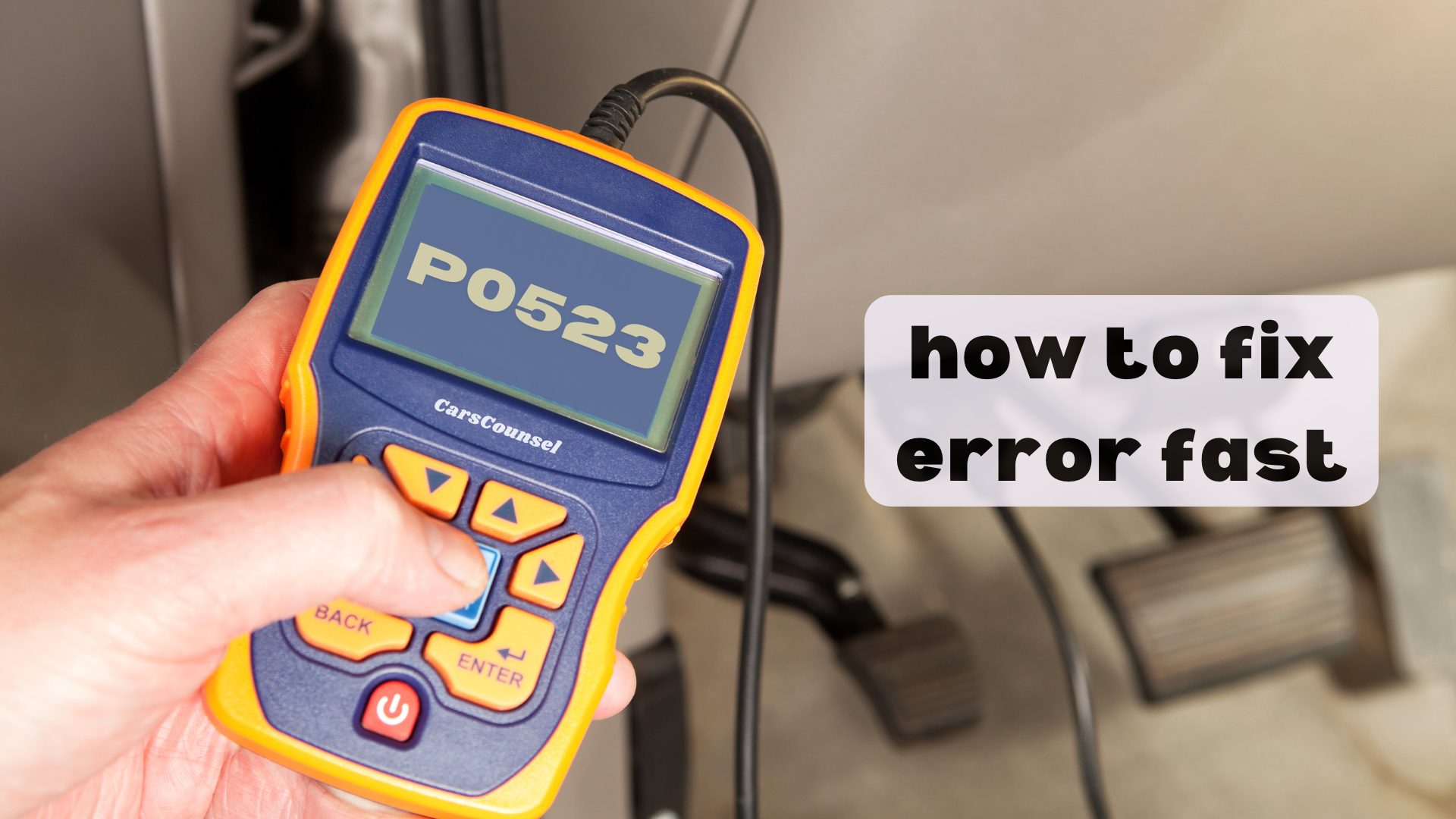
The P0523 code is a generic OBD-II code indicating an “Engine Oil Pressure Sensor/Switch ‘A’ Circuit High” condition among various OBD2 Codes. It means the powertrain control module detected an abnormally high voltage signal from the sensor circuit.
This code does not automatically mean the engine has dangerously high mechanical oil pressure. It indicates an electrical fault, such as an open circuit, a short to voltage, or a failed sensor.
Quick Navigation
Key Takeaways
- P0523 indicates the oil pressure sensor signal voltage is above the normal expected range.
- This is an electrical circuit fault, not necessarily a mechanical engine oil pressure problem.
- Possible causes include a failed sensor, an open signal wire, or a short to a voltage source.
- Diagnosis requires comparing scan tool data with a mechanical oil pressure gauge to verify actual engine pressure.
P0523 Code Description and Implications
The P0523 code stands for “Engine Oil Pressure Sensor/Switch ‘A’ Circuit High.” The powertrain control module (PCM) monitors the voltage signal from the oil pressure sensor to determine engine oil pressure.
Typical 3-wire oil pressure sensors use a 5-volt reference. As oil pressure increases, the signal voltage typically increases. If the PCM detects a signal voltage that exceeds the maximum threshold, it sets this code.
Because this is a generic code, the exact voltage thresholds and pinouts vary by manufacturer and engine design.
Common Causes of the P0523 Code
Multiple conditions can trigger a circuit high fault. The underlying cause must be confirmed through testing rather than assuming a single component has failed.
- Faulty oil pressure sensor: Internal failure causing the sensor to output maximum voltage regardless of actual pressure.
- Open signal circuit: A broken wire between the sensor and the PCM prevents the signal from returning, causing the PCM to read the pulled-up 5-volt reference.
- Short to voltage: The signal wire is rubbing against another wire carrying 12 volts or a 5-volt reference.
- Poor electrical connection: Corrosion or bent pins at the sensor connector or PCM connector.
- Faulty PCM: Rare, but an internal processor fault could cause incorrect voltage reading.
Symptoms Associated With P0523
When the primary oil pressure sensor circuit fails, the vehicle may exhibit several drivability or instrumentation issues. Symptoms depend on how the vehicle uses the sensor data.
- Illuminated Check Engine Light: The MIL will turn on once the circuit fault is detected and confirmed over consecutive drive cycles.
- High gauge reading: The dashboard oil pressure gauge may peg to the maximum if it is driven by the PCM data bus.
- Limp mode: Some applications may limit engine power or RPM to protect the engine based on the faulty sensor data.
- No mechanical symptoms: The engine may run perfectly normally if the actual mechanical oil pressure is within specifications.
Diagnosing the P0523 Trouble Code
Proper diagnosis begins by verifying actual mechanical oil pressure before performing electrical tests on the sensor circuit.
- Verify mechanical pressure: Connect a mechanical oil pressure gauge to the engine to confirm actual oil pressure is within specifications.
- Inspect wiring and connectors: Check the sensor harness for chafing, burns, or broken wires near hot exhaust components.
- Check sensor voltage: With the key on, measure the reference voltage and ground at the sensor connector.
- Test the signal circuit: Measure the signal wire voltage. If it reads near 5V with the sensor disconnected, the wiring is likely intact.
Repairing the P0523 Issue
Repairs must follow confirmed diagnostic testing. The exact repair path depends on whether the fault is in the wiring, the sensor, or the module.
- Wiring repair: Repair or replace any damaged wiring, corroded pins, or loose connectors in the sensor circuit.
- Sensor replacement: Replace the oil pressure sensor if it fails electrical testing or outputs incorrect data compared to a mechanical gauge.
- PCM service: Update or replace the PCM only if all wiring and the sensor are confirmed good, and manufacturer procedures direct it.
Cost Considerations for P0523 Repairs
Repair costs vary significantly based on the root cause, vehicle make, and labor accessibility.
- Sensor replacement: Costs vary by accessibility; some sensors are easily reachable, while others require removing intake components.
- Wiring repair: Costs depend on the time required to trace and repair damaged harnesses hidden behind engine covers.
- PCM replacement: Involves high parts costs and requires specialized labor for module programming and immobilizer pairing.
Prevention Strategies for Future Occurrences
While electrical faults cannot always be prevented, maintaining the engine bay can reduce the risk of circuit failures.
- Inspect engine wiring: Keep wiring harnesses secured away from hot exhaust components, sharp edges, and moving accessory belts.
- Address oil leaks: Oil soaking into electrical connectors can degrade weather seals and cause intermittent circuit faults.
Troubleshooting Tips and Best Practices
- Do not ignore mechanical verification: Always verify actual oil pressure with a mechanical gauge to prevent catastrophic engine damage.
- Check for related codes: Codes like P0520 or P0522 indicate other oil pressure sensor circuit faults that may share a common wiring issue.
- Avoid Teflon tape on threads: If the sensor uses tapered pipe threads, excess tape can block the oil port and cause erratic readings.
- Use exact specifications: Always refer to the factory service manual for the correct pinout diagrams and voltage thresholds for your specific vehicle.
More OBD-II Codes
| P0520 | P0506 | P0505 | P0500 |
| P0456 | P0455 | P0524 | P0526 |
| P0528 | P0532 | P0540 | P0542 |
| P0521 | P0522 | P0511 | P0513 |
| P0533 | P0300 | P0171 | P0420 |
| P0430 | P0440 | P0174 | P0135 |
Frequently Asked Questions
Is it safe to drive with a P0523 code?
It depends. The code indicates an electrical fault, but you must verify actual mechanical oil pressure with a manual gauge before driving. If mechanical pressure is normal, the car may be driven to a shop.
Can a bad oil pressure sensor cause engine damage?
No, the sensor only monitors pressure; it does not create it. However, if the sensor fails and hides a real low-pressure condition, or if you ignore the code without checking mechanical pressure, severe engine damage can occur.
Will an oil change fix a P0523 code?
No. P0523 is an electrical circuit code indicating high voltage. While maintaining proper oil level and viscosity is important, dirty oil will not cause a circuit high electrical fault.
How much does it cost to fix a P0523 code?
Costs vary based on the root cause. Replacing an easily accessible oil pressure sensor is relatively inexpensive, while diagnosing and repairing a damaged wiring harness or replacing a PCM costs significantly more.
Can aftermarket modifications trigger P0523?
Yes. Aftermarket gauges, tuning devices, or improper splicing into the engine wiring harness can disrupt the 5-volt reference or signal circuit, causing the PCM to detect a circuit high fault.
What Should You Do About the P0523 Code?
Confirm the exact factory definition and diagnostic procedure for your specific vehicle application. Begin by verifying actual mechanical oil pressure with a manual gauge, then test the sensor’s electrical circuits.
Do not replace the PCM or engine components without verified diagnostic evidence. Follow the manufacturer’s pinpoint tests to isolate the electrical fault before authorizing repairs.

