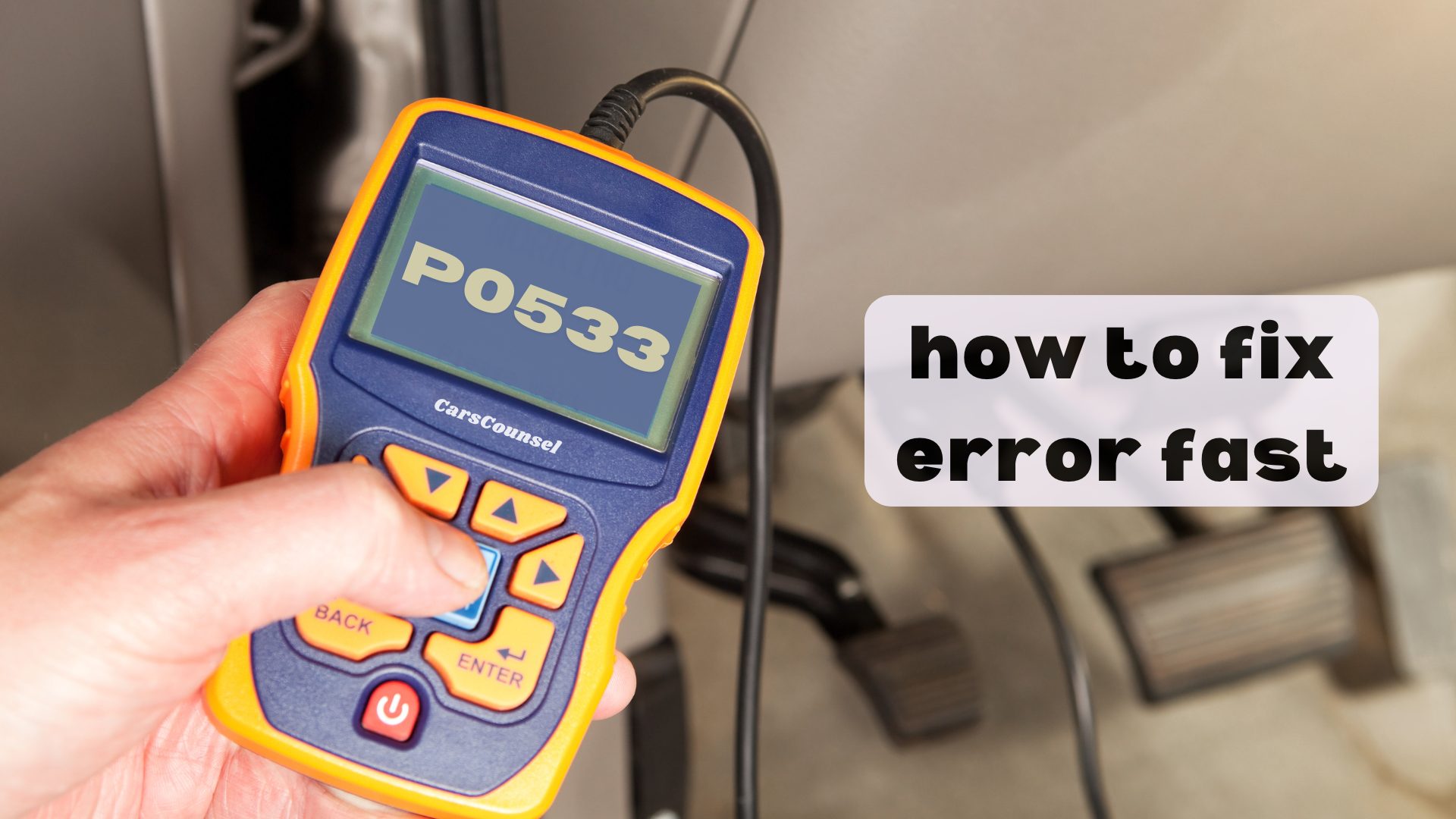
The P0533 code is a generic OBD-II diagnostic trouble code indicating “A/C Refrigerant Pressure Sensor Circuit High Input.” It means the powertrain control module detected an abnormally high voltage signal from the A/C pressure sensor.
This code does not automatically prove the sensor has failed. Diagnosis requires checking actual A/C system pressures, inspecting the wiring, and testing the sensor circuit before replacing components.
Quick Navigation
Key Takeaways
- The P0533 code indicates the control module detected a high voltage condition in the A/C refrigerant pressure sensor circuit.
- Possible causes include a failed pressure sensor, an open or shorted signal circuit, or an actually overcharged A/C system.
- Diagnosis involves comparing live scan tool data with mechanical A/C manifold gauge readings and testing the sensor wiring.
- Repairs may involve repairing wiring, replacing the confirmed failed sensor, or correcting the A/C refrigerant charge level.
P0533 Code Description and Implications
The P0533 code indicates that the powertrain control module detected a high voltage condition in the A/C refrigerant pressure sensor circuit. This generic category of trouble codes applies to most OBD-II equipped vehicles with automatic climate control.
The control module monitors the A/C pressure sensor to protect the compressor from damage and to adjust engine idle speed when the A/C clutch engages. The sensor typically operates on a 5-volt reference circuit.
When the module detects that the signal voltage exceeds the maximum expected threshold, indicating an open circuit, a short to voltage, or dangerously high actual pressure, it stores this code.
Common Causes of the P0533 Code
A failed A/C refrigerant pressure sensor is a possible cause. An internal sensor fault can cause it to send a maximized voltage signal to the control module regardless of actual system pressure.
Damaged wiring, an open signal circuit, or a short to voltage in the sensor harness will cause the module to read maximum voltage, triggering the circuit high fault.
An actually overcharged A/C system, a restricted condenser, or a failed condenser cooling fan can cause genuine extreme high pressure, which the sensor accurately reports to the module.
Symptoms Associated With P0533
An illuminated Check Engine Light is expected once the monitor detects the high voltage circuit fault. MIL behavior varies by application, but the light commands when the electrical or pressure fault is verified.
You will likely experience a complete loss of air conditioning. The control module disables the A/C compressor clutch to protect the system when it detects an invalid or dangerously high pressure reading.
In some applications, the engine cooling fans may run continuously at high speed as a fail-safe response to the perceived high A/C head pressure.
Diagnosing the P0533 Trouble Code
Diagnosis must begin by confirming the exact factory definition and checking for related A/C or sensor reference voltage codes. Record freeze-frame data to note the sensor voltage and ambient temperatures when the code set.
Connect an A/C manifold gauge set to check the actual mechanical refrigerant pressure. Compare the physical gauge reading to the pressure displayed by the scan tool live data.
If the gauge shows normal pressure but the scan tool shows maximum voltage or pressure, the fault is electrical. Test the 5-volt reference, ground, and signal circuits for opens or shorts.
If the mechanical gauge confirms extremely high pressure, diagnose the A/C system for overcharging, condenser restrictions, or cooling fan failures before condemning the sensor.
Repairing the P0533 Issue
Repairs must follow confirmed diagnosis. If the wiring harness is found to be open or shorted to voltage, repair the circuit and secure the harness away from sharp edges or hot exhaust components.
If electrical testing confirms the A/C pressure sensor is internally shorted or providing a false high signal despite correct reference and ground circuits, replace the sensor.
If the A/C system is confirmed to be overcharged or restricted, recover the refrigerant, repair the physical restriction or fan issue, and recharge the system to the exact manufacturer specification.
Cost Considerations for P0533 Repairs
Cost depends on diagnostic time, component accessibility, required parts, programming requirements, and labor.
Replacing an A/C pressure sensor that is mounted on a standard service port involves minimal labor and inexpensive parts, though some refrigerant may need to be recovered depending on the valve design.
If the root cause is an overcharged system or a failed condenser fan, the cost will involve A/C service equipment time, refrigerant, or the replacement of the cooling fan assembly.
Prevention Strategies for Future Occurrences
Ensuring that A/C system servicing is performed using proper manifold gauges and automated recovery/recharge equipment helps prevent accidental overcharging that can trigger high-pressure faults.
Keeping the front of the vehicle, including the A/C condenser, clean of debris ensures adequate airflow and prevents extreme head pressures during hot weather operation.
Some electrical sensor failures occur due to normal component aging and exposure to under-hood heat and moisture, and cannot be reliably prevented.
Troubleshooting Tips and Best Practices
Do not attempt to fix a P0533 code by simply replacing the pressure sensor without verifying actual A/C system pressures first. Genuine high pressure from an overcharge will destroy the compressor if ignored.
Always verify the exact location of the A/C pressure sensor. It is typically located on the high-pressure liquid line between the compressor and the condenser, or on the accumulator.
Check for technical service bulletins for your exact vehicle application, as some manufacturers release updated sensor designs or revised PCM calibrations to address chronic false high-pressure readings.
More OBD-II Codes
| P0521 | P0522 | P0523 | P0524 |
| P0526 | P0528 | P0532 | P0542 |
| P0544 | P0546 | P0551 | P0556 |
| P0560 | P0641 | P0643 | P0651 |
| P0657 | P0117 | P0118 | P0122 |
| P0123 | P0131 | P0132 | P0137 |
Frequently Asked Questions
Is the P0533 code generic or manufacturer-specific?
Yes, P0533 is a generic SAE OBD-II diagnostic trouble code. However, the exact A/C system architecture and testing procedures vary by manufacturer and vehicle application.
Will a P0533 code cause my engine to stall?
It typically will not cause stalling. However, the control module will disable the A/C compressor to protect the engine and system, and the cooling fans may run continuously at high speed.
Does a P0533 code mean my A/C pressure sensor is broken?
Not necessarily. While the sensor can fail, the code is also caused by an open signal wire, a short to voltage, or an actually overcharged A/C system. Proper electrical and mechanical testing is required first.
Can an overcharged A/C system cause a P0533 code?
Yes. If the system has too much refrigerant or a restricted condenser, the actual physical pressure will exceed the normal range, causing the sensor to accurately report a high-pressure condition.
Can I clear the P0533 code without fixing the problem?
Clearing the code only resets the warning light. If the underlying wiring fault, failed sensor, or overcharged system remains, the monitor will detect the high voltage condition immediately and disable the A/C again.
What Should You Do About the P0533 Code?
Confirm the exact factory definition and check for related A/C or sensor circuit codes for your specific vehicle application. Follow the applicable manufacturer diagnostic procedure to verify whether the fault lies in the sensor wiring, the sensor itself, or the physical A/C system pressure.
Once testing confirms the root cause, repair or replace the confirmed failed component in the relevant system and components, then retest the A/C operation and clear the codes.

