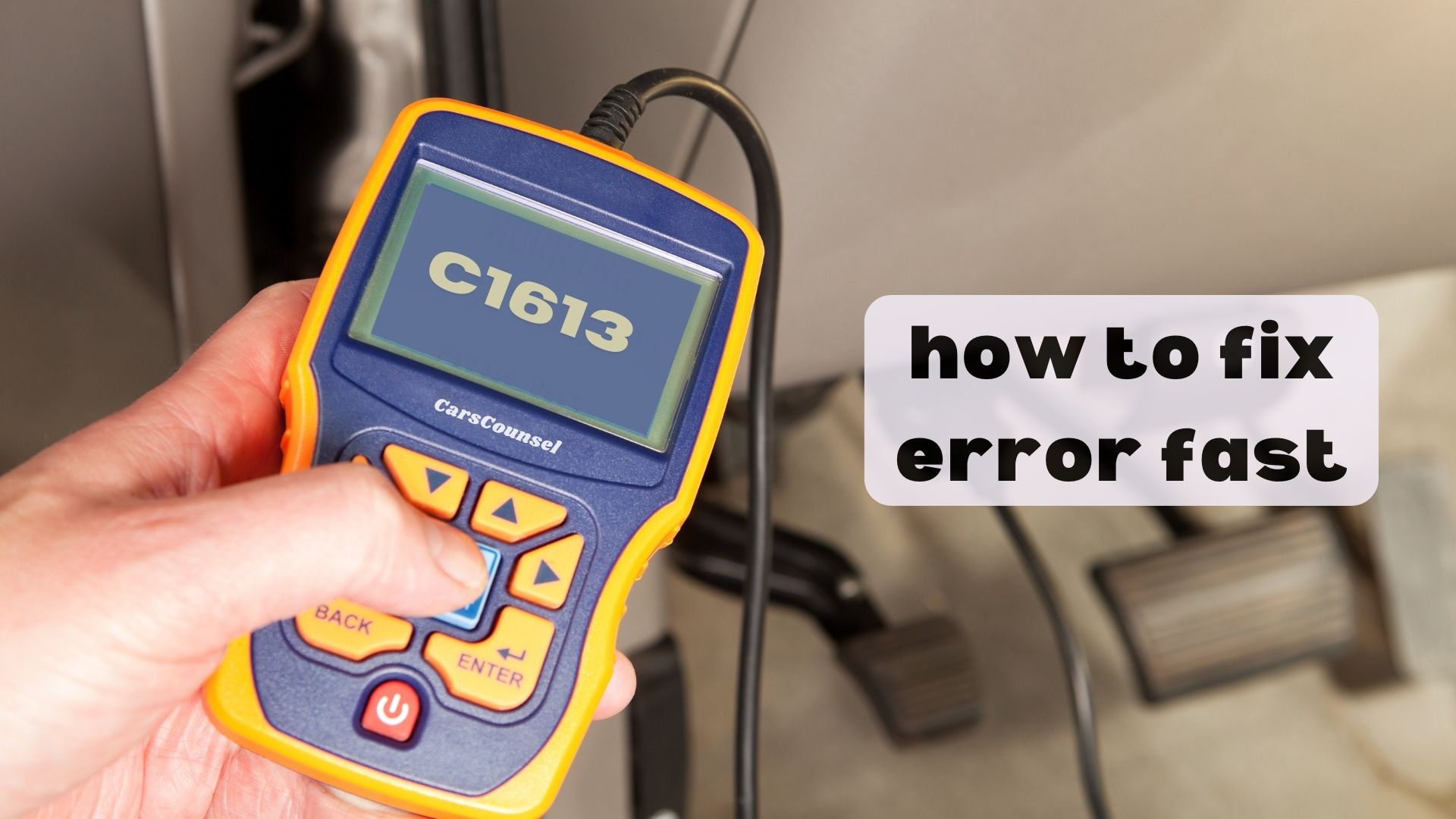
The C1613 diagnostic trouble code is a manufacturer-specific chassis code. Its exact definition depends heavily on the vehicle make, most notably indicating an All-Wheel Control (AWC) switch fault on Mitsubishi models, or a CAN communication error between the ABS and engine modules on Hyundai and Kia vehicles.
Because this code applies to entirely different systems across different brands, a scan tool and exact vehicle application must be verified before diagnosis. The code alone does not prove a specific module or switch has failed without proper circuit and network testing.
Quick Navigation
Key Takeaways
- C1613 is a manufacturer-specific chassis code with differing definitions depending on the vehicle make.
- On Mitsubishi applications, it typically indicates the AWC mode select switch circuit is stuck or malfunctioning.
- On Hyundai and Kia applications, it generally points to a CAN bus communication error between the ABS module and the engine computer.
- Symptoms vary by application but can include illuminated ABS or AWC warning lights, disabled traction control, or inability to change drive modes.
- Diagnosis requires verifying the exact factory definition for your vehicle and testing the relevant switch circuits or CAN bus network.
C1613 Code Description and Implications
C1613 is a manufacturer-specific chassis code, meaning its exact definition and affected system depend entirely on the vehicle application.
Some Mitsubishi applications: On vehicles equipped with All-Wheel Control (AWC) or Super-All Wheel Control (S-AWC), C1613 typically indicates an issue with the AWC mode select switch system. The AWC ECU detects that the switch signal is stuck in the “ON” position or is physically binding, preventing the driver from properly selecting driving modes.
Certain Hyundai and Kia applications: On many Hyundai and Kia models, C1613 is defined as a “CAN Wrong Message” or “CAN Signal Error.” This means the Hydraulic Electronic Control Unit (HECU) or ABS module is receiving invalid or missing data from the Engine Control Module (ECM) over the CAN bus network.
Common Causes of the C1613 Code
Because C1613 applies to different systems across different brands, the root cause depends on the verified vehicle application.
- Mitsubishi (AWC Switch) Causes: A faulty AWC mode select switch, open or shorted wiring harness between the switch and the AWC ECU, poor electrical connections, or liquid intrusion clogging the switch mechanism.
- Hyundai / Kia (CAN Communication) Causes: A communication disruption on the CAN bus network between the ABS/ESC module and the ECM, a faulty module failing to transmit data, or damaged network wiring.
- Shared Electrical Causes: Low battery voltage, failing alternators, or poor chassis grounds can cause intermittent module dropouts that trigger network or switch rationality faults on both platforms.
Symptoms Associated With C1613
When the control module detects a critical switch or network fault, it alters system operation to protect the drivetrain and maintain baseline safety.
- Mitsubishi Symptoms: An illuminated AWC warning light or “Service AWC” message on the dashboard, inability to change driving modes using the center console dial, and the vehicle defaulting to a single drive mode.
- Hyundai / Kia Symptoms: Illuminated ABS, ESC, or Check Engine lights. Traction control and stability control systems may be disabled, and the vehicle may experience limp mode or harsh shifting if critical data is lost.
Diagnosing the C1613 Trouble Code
Accurate diagnosis begins by confirming the exact vehicle make, model, and factory definition for C1613.
- For Mitsubishi AWC applications: Use a scan tool to monitor the AWC mode select switch live data while turning the dial. Visually inspect the switch for liquid spills, then test the switch circuit for continuity and shorts.
- For Hyundai / Kia CAN applications: Check for related CAN bus codes in the ABS and ECM modules. Verify battery health, as low voltage frequently causes CAN communication dropouts.
- Network Testing: If a network fault is suspected on Hyundai or Kia models, inspect the main CAN bus wiring and grounds. An oscilloscope may be required to check the CAN High and CAN Low waveforms.
Repairing the C1613 Issue
Repairs must follow the confirmed root cause identified during diagnosis.
- Mitsubishi Repairs: If the switch mechanism is physically bound or contaminated, cleaning or replacing the AWC mode select switch assembly is required. Repair any damaged console wiring and seal connectors against moisture.
- Hyundai / Kia Repairs: If a specific module is failing to broadcast its CAN message, follow the manufacturer diagnostic procedure to test and potentially replace the faulty ECM or ABS module. Repair any chafed CAN bus wiring found.
- Software Updates: Check for applicable software updates or reflashes for the ECM or ABS module that may address known communication bugs or switch rationality thresholds.
Cost Considerations for C1613 Repairs
The cost to resolve a C1613 code depends heavily on the underlying fault and the vehicle’s specific architecture.
For a Mitsubishi switch issue, replacing the AWC mode select dial involves moderate parts costs and labor to remove console trim panels.
For a Hyundai or Kia network issue, diagnosing a CAN bus fault requires specialized electrical testing time. If a control module requires replacement and programming, parts and labor costs will be higher.
Prevention Strategies for Future Occurrences
While electronic module failures cannot always be predicted, you can reduce the risk of circuit and network faults.
- Avoid spilling liquids into the center console cup holders or directly onto the AWC mode select switch on Mitsubishi vehicles, as moisture intrusion is a known cause of switch failure.
- Keep the battery and charging system in good condition, as Hyundai and Kia CAN networks are sensitive to voltage fluctuations that can trigger false communication codes.
- Inspect exposed wiring harnesses near the engine bay and firewall for signs of chafing or rodent damage during routine service.
Troubleshooting Tips and Best Practices
Follow these practices to avoid misdiagnosis and ensure accurate repairs.
- Do not assume module failure: Wiring faults, poor grounds, and low battery voltage cause the majority of CAN bus communication errors on Hyundai and Kia vehicles.
- Check for TSBs: On Mitsubishi applications, check for Technical Service Bulletins related to the AWC switch, as some model years have updated switch part numbers designed to resist moisture.
- Inspect aftermarket accessories: On Hyundai and Kia applications, ensure aftermarket accessories are wired correctly. Improper splicing into the OBD-II port or CAN bus wires frequently causes C1613.
- Verify your definition: When researching this fault code, always verify whether your specific vehicle uses the AWC switch definition or the CAN communication definition before ordering parts.
More OBD-II Codes
| C1612 | C1611 | C1604 | C1503 |
| C1283 | C1282 | C1616 | C1111 |
| C1102 | C1100 | C1095 | C0329 |
| C0276 | C1205 | C1210 | C1211 |
| U0151 | U0100 | U0001 | U1000 |
| P0700 | P0600 | P0500 | B1202 |
Frequently Asked Questions
Is C1613 a generic or manufacturer-specific code?
C1613 is a manufacturer-specific chassis code. Its definition varies significantly by brand, indicating an AWC switch fault on Mitsubishi vehicles or a CAN communication error on Hyundai and Kia models.
Can I drive my vehicle with a C1613 code?
Driving is conditionally possible but not recommended. On Mitsubishi models, you may lose AWC mode selection. On Hyundai or Kia models, ABS and stability control systems may be disabled, reducing vehicle safety.
Will disconnecting the battery clear the C1613 code?
Disconnecting the battery might temporarily clear the code. However, it does not repair the underlying switch fault or network communication issue, and the code will likely return once the modules run their self-tests.
Can aftermarket accessories cause a C1613 code?
Yes. On Hyundai and Kia applications, improperly installed aftermarket accessories that splice into the OBD-II port or CAN bus wiring frequently cause network communication errors that trigger C1613.
Does C1613 affect the transmission?
On Hyundai and Kia vehicles, the ABS module shares critical data with the transmission and ECM over the CAN bus. A severe communication failure can cause harsh shifting or trigger a transmission limp mode.
What Should You Do About the C1613 Code?
When a C1613 code appears, confirm the exact factory definition for your specific vehicle make and model. Because this code targets entirely different systems depending on the manufacturer, applying the wrong diagnostic path will lead to misdiagnosis.
Follow the applicable manufacturer diagnostic procedure to test the relevant system and components. Once the root cause is confirmed, complete the necessary electrical repairs, switch replacements, or module programming before returning the vehicle to normal service.

