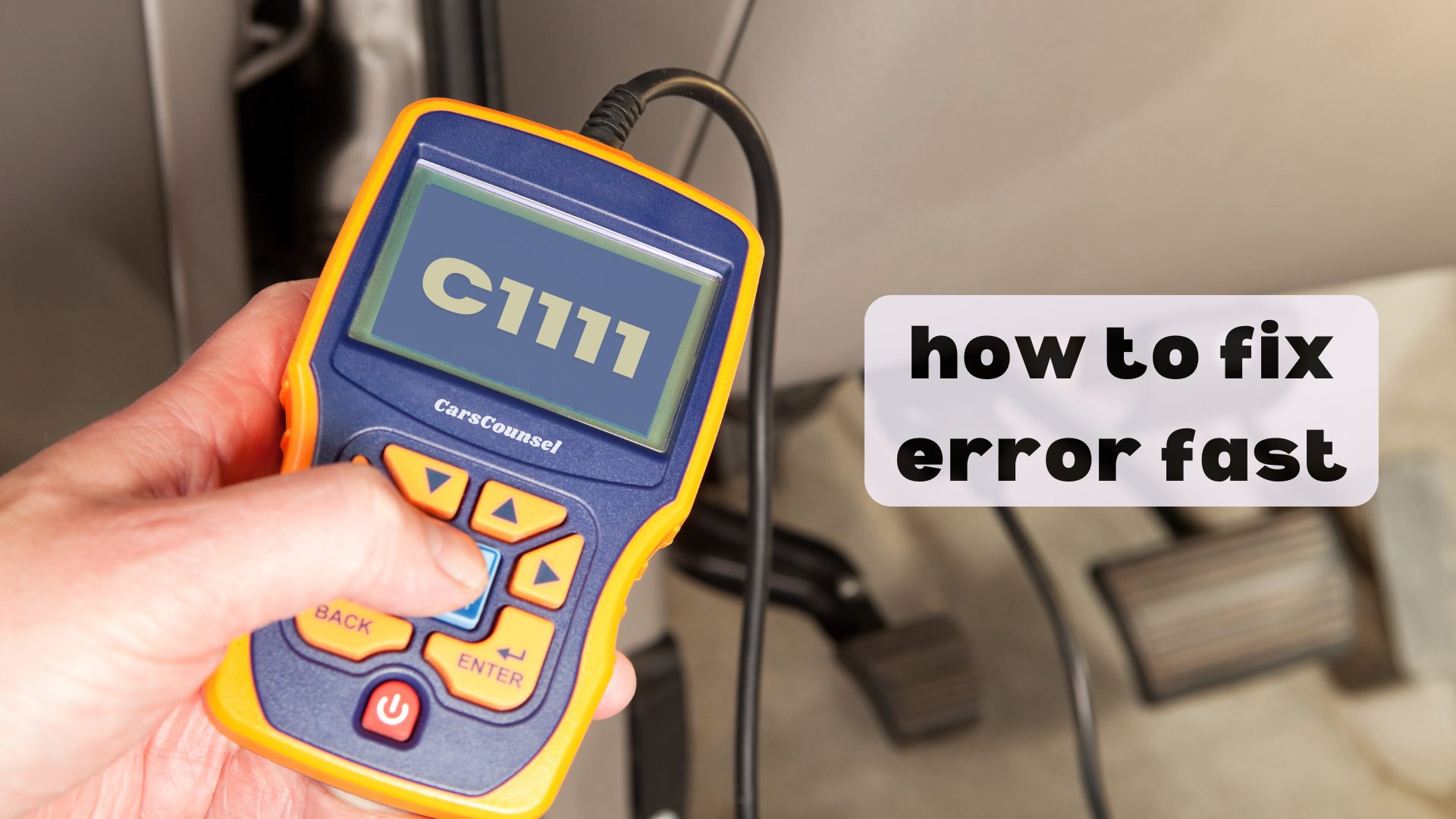
C1111 is a manufacturer-specific chassis code. On verified Nissan and Infiniti applications, it indicates a fault in the Anti-lock Braking System (ABS) pump motor or motor relay circuit.
Because it is manufacturer-specific, the exact definition must be verified for your vehicle. This code identifies an electrical condition but does not automatically prove the ABS pump has failed.
Quick Navigation
Key Takeaways
- C1111 indicates an electrical fault in the ABS pump motor or relay circuit on specific manufacturer applications.
- Possible causes include a blown fuse, a failed relay, damaged wiring, or an internal ABS actuator fault.
- Diagnosis requires checking the ABS power supply, inspecting the motor relay, and testing the actuator circuits.
- Repairs depend on the confirmed root cause and may involve replacing the relay or the entire ABS actuator assembly.
C1111 Code Description and Implications
C1111 is a manufacturer-specific diagnostic trouble code. It is heavily associated with Nissan and Infiniti vehicles.
On these applications, C1111 indicates that the ABS control unit has detected an open or short circuit in the ABS pump motor or the motor relay circuit.
The ABS pump motor generates the hydraulic pressure required for the anti-lock braking system to function during hard braking events.
Common Causes of the C1111 Code
A blown ABS motor fuse or a failed ABS motor relay can interrupt power to the pump motor.
Damaged, open, or shorted wiring between the ABS control module and the pump motor can trigger the fault.
Corroded connectors or poor ground connections at the ABS actuator can prevent the motor from operating.
An internal failure of the ABS pump motor or the ABS actuator assembly itself can cause the circuit fault.
Symptoms Associated With C1111
The most consistent symptom is an illuminated ABS warning light on the dashboard.
The Vehicle Dynamic Control (VDC) or traction control warning light may also illuminate alongside the ABS indicator.
The anti-lock braking function will be disabled, though standard base braking will remain fully operational.
MIL behavior varies by application. The Check Engine Light typically does not illuminate for chassis codes, but specific brake system warnings will command on.
Diagnosing the C1111 Trouble Code
Diagnosis must begin by confirming the exact factory definition and wiring diagrams for the specific make and model.
Retrieve the trouble code and record any related data using a scan tool capable of accessing the ABS and VDC modules.
Inspect the ABS motor fuses and test the ABS motor relay to ensure they are functioning correctly and providing power.
Inspect the wiring harness and connectors at the ABS actuator for physical damage, corrosion, or loose pins.
If power and ground are present at the actuator connector but the motor does not run when commanded, the internal motor or actuator may be faulty.
Repairing the C1111 Issue
Repairs must follow the confirmed root cause identified during electrical and mechanical testing.
If an ABS motor fuse is blown, replace the fuse and inspect the circuit for a short to ground that caused it to blow.
If the ABS motor relay is confirmed faulty, replace the relay with a component meeting the correct vehicle specification.
If the ABS actuator internal motor is confirmed failed after ruling out external circuits, follow the manufacturer procedure to replace the ABS actuator assembly.
Cost Considerations for C1111 Repairs
Repair costs for C1111 vary based on the underlying fault, vehicle accessibility, and local labor rates.
Replacing a relay or fuse involves minimal parts costs and minimal labor time.
Replacing the ABS actuator and pump assembly involves significant parts costs and requires brake system bleeding and module calibration.
Cost depends on diagnostic time, component accessibility, required parts, programming requirements, and labor.
Prevention Strategies for Future Occurrences
Inspecting exposed wiring harnesses near the ABS actuator and wheel wells can help identify chafed wires before they cause an open circuit.
Keeping the battery terminals clean and secure ensures stable voltage supply to the ABS control module during operation.
Troubleshooting Tips and Best Practices
Do not assume a C1111 code requires replacing the entire ABS actuator immediately; a blown fuse or failed relay is a highly likely culprit.
Always check the ABS fuses and relays in the engine compartment fuse box first, as these are easy to test and inexpensive to replace.
Check for applicable technical service bulletins, as manufacturers occasionally release updated ABS actuators or revised wiring harness pigtails to address chronic motor circuit faults.
More OBD-II Codes
| C1109 | C1102 | C1100 | C1095 |
| C0057 | C0045 | C1116 | C1143 |
| C1203 | C1204 | C1205 | C1210 |
| C1235 | C1259 | C1260 | C1282 |
| C1283 | C1503 | C1604 | C1611 |
| C1612 | C1613 | C1616 | C0329 |
Frequently Asked Questions
Is C1111 a generic or manufacturer-specific code?
No. C1111 is a manufacturer-specific chassis code. Its exact definition depends on the vehicle make, though it commonly indicates an ABS pump motor circuit fault on Nissan applications.
Can a C1111 code cause my brakes to fail completely?
No. The standard hydraulic base braking system will continue to operate. However, the anti-lock braking function will be disabled, meaning the wheels could lock up during hard braking.
Will C1111 clear itself if I replace a blown fuse?
Not automatically. While replacing a blown fuse may resolve the underlying electrical issue, the stored code usually requires a scan tool to clear before the ABS monitor can reset.
Is it safe to drive with the C1111 code active?
Driving is conditional. While standard brakes work, the loss of ABS reduces vehicle control during emergency stops or on slippery surfaces. Prompt diagnosis and repair are recommended.
Does C1111 mean my ABS pump is broken?
No. C1111 identifies an electrical circuit condition. While the internal pump motor can fail, blown fuses, bad relays, or broken wires must be ruled out through testing.
What Should You Do About the C1111 Code?
Confirm the exact factory definition and wiring diagrams for your specific vehicle application.
Follow the applicable manufacturer diagnostic procedure to test the relevant ABS motor circuits, fuses, relays, and the actuator assembly itself.
Repair or replace the confirmed failed component, then retest the system to ensure the anti-lock braking system operates correctly.

