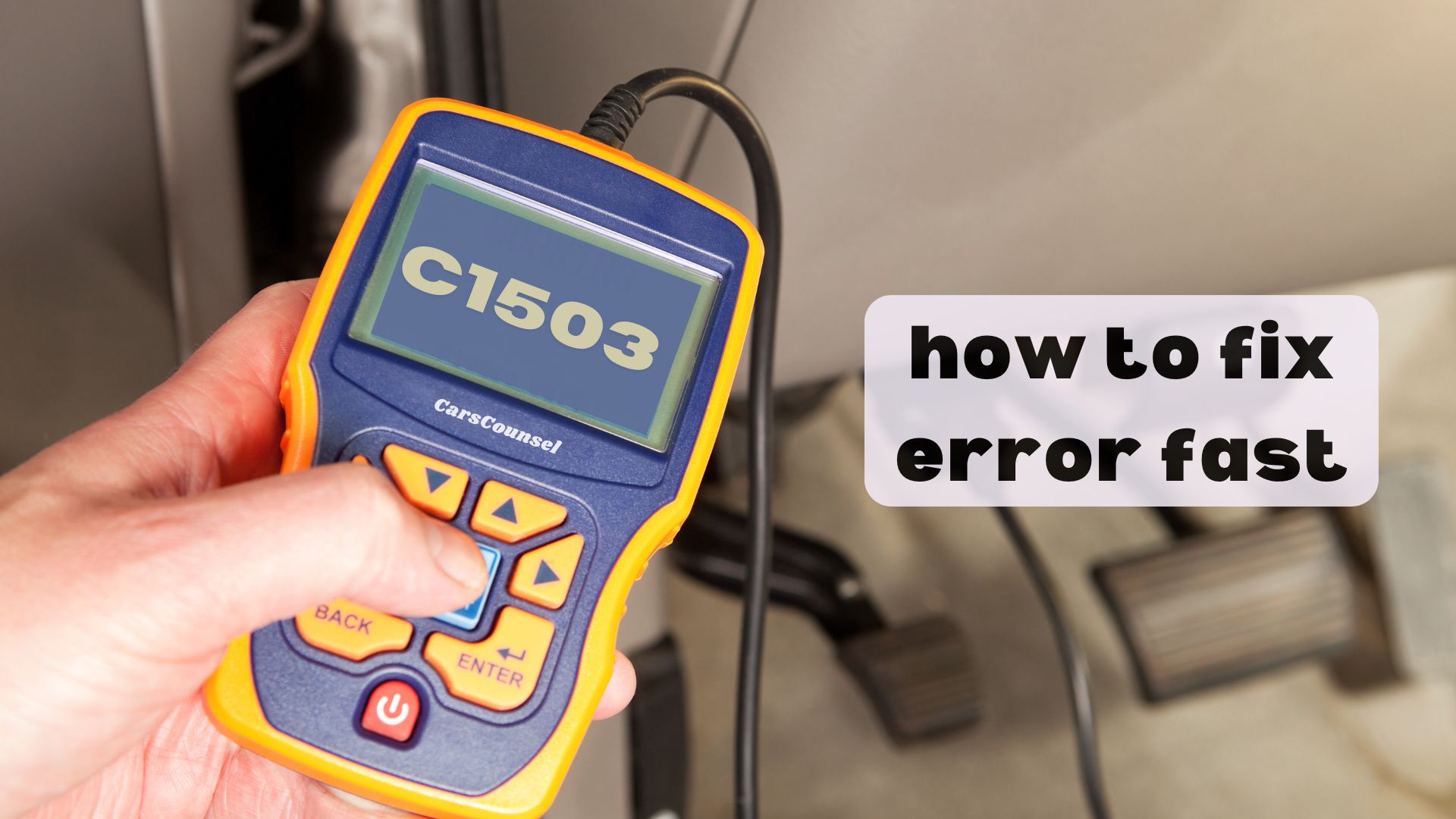
The C1503 trouble code is a manufacturer-specific chassis code. Its exact definition depends entirely on the vehicle application, ranging from a tire pressure sensor fault to a stability control valve malfunction.
Because it is manufacturer-specific, the exact application must be verified. The code identifies a detected condition, and testing is required to identify the root cause before replacing any components.
Quick Navigation
Key Takeaways
- C1503 is a manufacturer-specific code with definitions varying significantly between automakers.
- On Chrysler, Dodge, Jeep, and Ram applications, it indicates an internal fault with Tire Pressure Sensor 3.
- On Toyota and Lexus applications, it points to a dynamic stability control left front valve or traction control solenoid malfunction.
- On Hyundai and Kia applications, it typically indicates a traction control or electronic stability control switch circuit error.
- Proper diagnosis requires verifying the exact factory definition and testing the relevant sensor or solenoid circuits.
C1503 Code Description and Implications
The C1503 code is a manufacturer-specific chassis definition. Because it is not a generic SAE code, its exact meaning depends entirely on the vehicle application.
Chrysler, Dodge, Jeep, and Ram applications: On these vehicles, C1503 indicates an internal fault or dead battery in Tire Pressure Sensor 3. The wireless control module monitors the sensor and sets this error code if the signal is missing or the internal battery fails.
Toyota and Lexus applications: On these vehicles, C1503 indicates a dynamic stability control left front valve malfunction or a traction control solenoid circuit issue. The skid control ECU detects an open or short in the valve circuit.
Hyundai and Kia applications: On these vehicles, C1503 typically indicates a traction control system or electronic stability control switch input error, where the module detects an implausible signal from the ESC switch.
Common Causes of the C1503 Code
Electrical faults, component wear, and internal failures are the primary triggers, though the specific causes vary by manufacturer.
For TPMS applications: The issue stems from a depleted internal battery inside the tire pressure sensor, a failed sensor, or a missing sensor after a tire rotation.
For stability control and switch applications: The fault is caused by a failed ABS solenoid valve, damaged wiring harness, poor connector contact at the skid control ECU, or a faulty ESC switch on the dashboard.
Symptoms Associated With C1503
Symptoms vary drastically based on which system has detected the fault.
TPMS applications: The primary symptom is an illuminated Tire Pressure Warning Light and a message indicating a problem with Tire Pressure Sensor 3.
Stability control applications: You may experience illuminated ABS, traction control, and Check Engine lights. The vehicle stability and traction control systems will be disabled until the circuit is repaired.
Diagnosing the C1503 Trouble Code
Accurate diagnosis requires confirming the exact factory definition for your specific make and model before proceeding.
TPMS diagnosis: Use a TPMS scan tool to ping the sensors and verify if Sensor 3 is transmitting data. If the sensor does not respond, it likely has an internal failure or dead battery.
Stability control diagnosis: Inspect the ABS modulator wiring harness and connectors for damage. Test the solenoid valve resistance using a digital multimeter, and compare the readings to the manufacturer specification.
Repairing the C1503 Issue
Repairs must address the specific root cause identified during testing for your vehicle’s system.
Sensor replacement: If the TPMS sensor fails the activation test, replace the sensor and perform the vehicle-specific relearn procedure to register the new sensor ID.
Component replacement: If the wiring is intact but the ABS solenoid valve fails resistance testing, the ABS modulator or valve body assembly may require replacement. If the ESC switch is faulty, replace the dashboard switch assembly.
Cost Considerations for C1503 Repairs
Cost depends on diagnostic time, component accessibility, required parts, programming requirements, and labor.
Replacing a single TPMS sensor is generally a straightforward repair with moderate parts and labor costs. If the issue requires replacing an integrated ABS modulator or skid control ECU on a stability control application, the overall repair cost will increase.
Prevention Strategies for Future Occurrences
While internal sensor battery failures cannot be prevented due to normal aging, you can protect external circuits from common damage.
Inspecting exposed wiring and connectors near the wheel wells or ABS modulator can help identify developing damage, chafing, or debris buildup before it causes a circuit fault.
Troubleshooting Tips and Best Practices
Do not assume the ABS module or TPMS receiver requires replacement just because a C1503 code is present. A dead sensor battery or a pinched wire will produce the exact same fault reading.
Always check the tire pressures manually first. On TPMS applications, a severely underinflated tire can sometimes cause communication issues, though a specific sensor internal fault code usually points to the sensor itself.
Check for Technical Service Bulletins for your specific vehicle. Manufacturers occasionally release updated sensor part numbers, revised wiring harnesses, or software recalibrations to address chronic stability system or TPMS faults.
More OBD-II Codes
| C1283 | C1282 | C1260 | C1259 |
| C1237 | C1235 | P1773 | P1783 |
| P1788 | P1456 | P1457 | P1491 |
| C1211 | C1210 | C1205 | C1204 |
| P1002 | P1003 | P1013 | P1014 |
| P1015 | P1016 | P1018 | P1498 |
Frequently Asked Questions
Is C1503 a generic or manufacturer-specific code?
No. C1503 is a manufacturer-specific chassis code. It primarily indicates a tire pressure sensor fault on Chrysler vehicles, but it can indicate a stability control valve issue on Toyota or a switch error on Hyundai.
Can I drive my car with a C1503 code?
Driving is possible but requires caution. On TPMS applications, you lose the ability to monitor tire pressure electronically. On stability control applications, the traction and stability systems will be disabled.
Will disconnecting the battery clear the C1503 code?
Disconnecting the battery may temporarily erase the code, but it will not repair a physical wiring fault, dead sensor battery, or failed solenoid. The code will return once the monitor runs again.
Can a bad wheel bearing cause a C1503 code?
On TPMS applications, a failing wheel bearing does not typically cause a sensor internal fault code. However, severe vibration could theoretically damage the sensor, though this is rare.
Does C1503 always mean the sensor or module is bad?
No. The code identifies a detected circuit or internal condition. This is frequently caused by a dead TPMS sensor battery or damaged wiring. The component should only be replaced after testing confirms failure.
What Should You Do About the C1503 Code?
Confirm the exact factory definition for your vehicle, then follow the applicable manufacturer diagnostic procedure. Because C1503 is manufacturer-specific, the diagnostic path for a tire pressure sensor differs entirely from a stability control valve circuit.
Inspect the relevant system and components, including wiring harnesses, sensors, and control modules. Repair any confirmed wiring faults, or replace the relevant system components only after testing verifies the failure.

