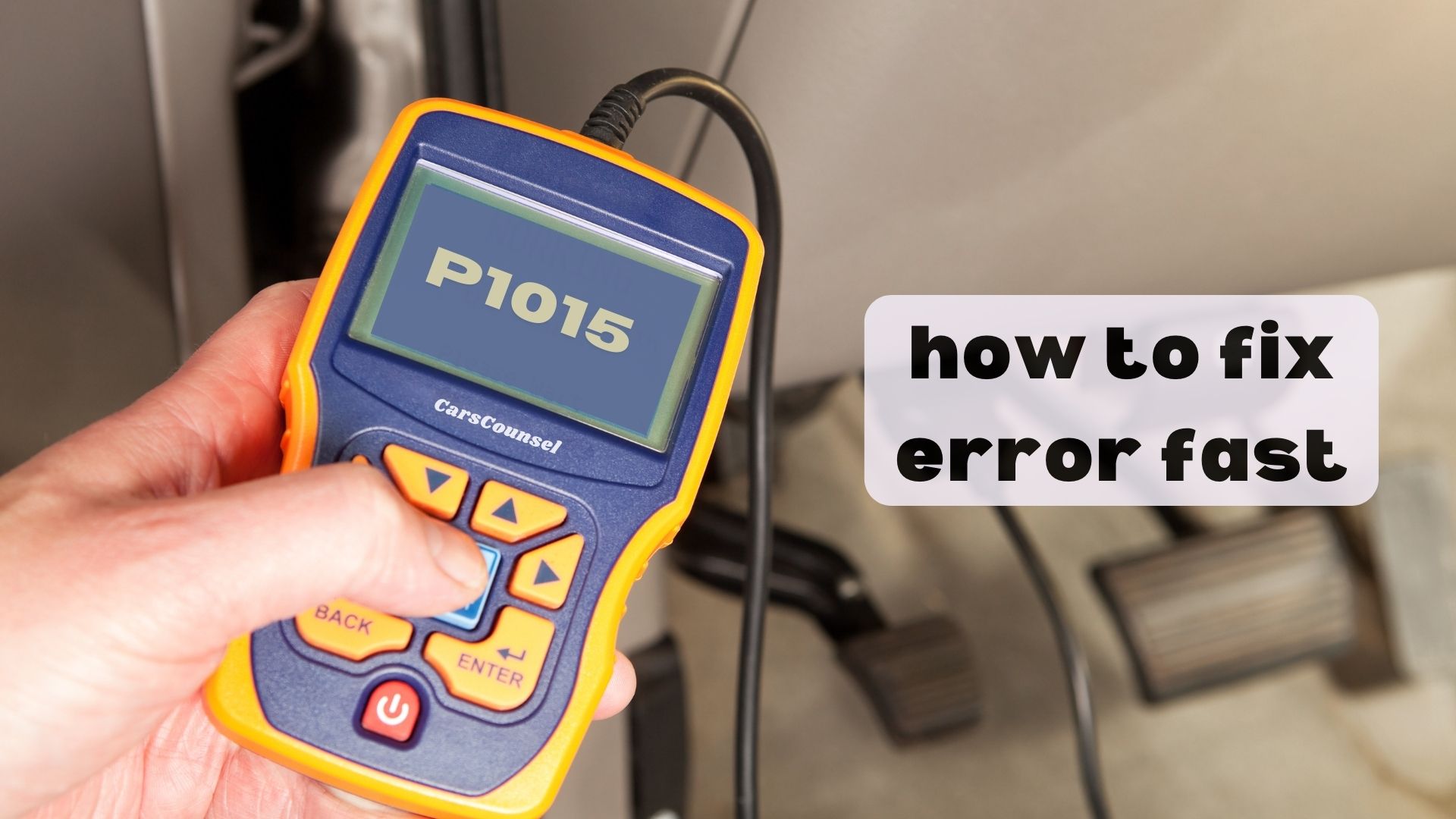
The P1015 diagnostic trouble code is a manufacturer-specific powertrain code. Its exact definition depends heavily on the vehicle make, pointing to a wastegate pressure fault on Ford, a Valvetronic sensor error on BMW, or a reductant module fault on GM diesels.
Because this code targets entirely different systems across manufacturers, the exact vehicle application must be verified before diagnosis. The code alone does not prove a specific sensor or actuator has failed without proper electrical and mechanical testing.
Quick Navigation
Key Takeaways
- P1015 is a manufacturer-specific code with differing definitions depending on the vehicle make.
- On Ford EcoBoost applications, it typically indicates that the wastegate control pressure is lower than expected.
- On BMW applications, it generally points to a Valvetronic eccentric shaft sensor error or plausibility fault.
- On GM diesel applications, it indicates a Reductant Control Module sensor serial communication circuit low voltage fault.
- Diagnosis requires verifying the exact factory definition and testing the relevant boost, Valvetronic, or DEF system circuits.
P1015 Code Description and Implications
The P1015 code indicates that a control module has detected a specific fault within a powertrain system. Because it is a manufacturer-specific code, the exact monitored component varies significantly by brand.
Some Ford EcoBoost applications: P1015 indicates that the wastegate control pressure is lower than expected. The PCM detects that the actual boost or wastegate actuator pressure does not match the commanded values.
Certain BMW applications: On these vehicles, P1015 indicates a Valvetronic eccentric shaft sensor error. The DME detects a plausibility fault or supply voltage issue with the sensor monitoring the variable valve lift system.
Specific GM diesel applications: On certain Duramax and diesel platforms, P1015 indicates a Reductant Control Module sensor serial communication circuit low voltage fault, affecting the DEF system’s ability to monitor fluid quality.
Common Causes of the P1015 Code
Because P1015 applies to different systems across different brands, the root cause depends on the verified vehicle application.
- Ford (Wastegate) Causes: A faulty wastegate actuator, vacuum leaks in the boost control solenoid lines, a failing boost control solenoid, or damaged turbocharger plumbing.
- BMW (Valvetronic) Causes: Engine oil leaking past the eccentric shaft sensor seal and pooling inside the electrical connector, a failed eccentric shaft sensor, or a faulty Valvetronic control module.
- GM Diesel (Reductant) Causes: Damaged wiring in the DEF sensor harness, poor electrical connections at the reductant module, or a failed reductant quality sensor.
Symptoms Associated With P1015
When the control module detects a critical system fault, it alters engine operation or disables the affected feature.
- Ford Symptoms: The check engine light will illuminate. Drivers may experience reduced engine power, poor acceleration, or a lack of expected turbo boost under heavy throttle.
- BMW Symptoms: The engine may enter a reduced power or limp mode. Rough idling, hesitation, or a distinct loss of low-end torque can occur due to the Valvetronic system defaulting to a safe position.
- GM Diesel Symptoms: The check engine light and DEF warning indicators may illuminate. The vehicle may eventually enforce a speed limit or prevent restarting if the emissions system cannot verify the reductant fluid quality.
Diagnosing the P1015 Trouble Code
Accurate diagnosis begins by verifying the exact vehicle application and reviewing manufacturer-specific service information.
- For Ford applications: Inspect all vacuum lines and boost control hoses for leaks, cracks, or disconnections. Test the wastegate actuator and boost control solenoid for proper operation and verify that the turbocharger plumbing is intact.
- For BMW applications: Remove the Valvetronic eccentric shaft sensor electrical connector and inspect it for oil contamination. If oil is present, the sensor seal has failed. Test the sensor circuits and verify the mechanical movement of the Valvetronic assembly.
- For GM Diesel applications: Inspect the wiring harness between the Reductant Control Module and the DEF tank sensor for opens, shorts, or corrosion. Verify the reference voltage and ground signals at the sensor connector.
Repairing the P1015 Issue
Repairs must follow the confirmed root cause identified during diagnosis.
- Ford Repairs: Replace any cracked or leaking vacuum hoses. If the plumbing is intact but pressure remains low, replace the faulty wastegate actuator or boost control solenoid and clear the codes.
- BMW Repairs: If oil is found in the connector, clean the harness and replace the eccentric shaft sensor and its sealing gasket. If the Valvetronic motor or module is confirmed faulty through electrical testing, replace and program the required components.
- GM Diesel Repairs: Repair damaged wiring in the reductant sensor circuit. If the wiring and voltages are correct but communication remains low or absent, replace the reductant quality sensor assembly.
Cost Considerations for P1015 Repairs
Cost depends on diagnostic time, component accessibility, required parts, programming requirements, and labor.
For a Ford boost control issue, replacing vacuum lines or a solenoid involves minimal parts costs and moderate labor. For a BMW Valvetronic sensor replacement, accessing the sensor requires valve cover removal, increasing labor time and gasket costs.
Prevention Strategies for Future Occurrences
While electronic module failures cannot always be predicted, you can reduce the risk of mechanical and circuit faults.
- On BMW engines equipped with Valvetronic, promptly address any external engine oil leaks near the valve cover to prevent oil from migrating down the wiring harness into sensitive sensor connectors.
- On turbocharged Ford applications, inspect all rubber vacuum and boost hoses for brittleness or cracking during routine maintenance, as heat degradation frequently causes pressure leaks.
Troubleshooting Tips and Best Practices
Follow these practices to avoid misdiagnosis and ensure accurate repairs.
- Do not assume turbo failure on Ford models: A simple cracked vacuum line to the wastegate actuator or a stuck bypass valve is a frequent culprit. Verify all pneumatic plumbing before condemning the turbocharger.
- Check for related codes: Look for other boost pressure, Valvetronic, or DEF system codes that might indicate a broader wiring harness issue or a shared module fault.
- Verify your definition: When researching this trouble code, always verify whether your specific vehicle uses the Ford wastegate, BMW Valvetronic, or GM diesel definition.
More OBD-II Codes
| P1013 | P1014 | P1016 | P1017 |
| P1018 | P1009 | P1010 | P1011 |
| P1008 | P1005 | P1004 | P1003 |
| P1002 | P0016 | P0010 | P0012 |
| P0011 | P0014 | P0299 | P0300 |
| P0301 | P0302 | P0303 | P0304 |
Frequently Asked Questions
Is P1015 a generic or manufacturer-specific code?
No. P1015 is a manufacturer-specific powertrain code. Its definition varies significantly by brand, indicating a wastegate fault on Ford, a Valvetronic sensor error on BMW, or a reductant module fault on GM diesels.
Can I drive my vehicle with a P1015 code?
It depends on the application. On Ford and BMW models, the engine may enter limp mode, severely limiting power and acceleration. On GM diesels, the vehicle may eventually enforce a speed limit or prevent restarting.
Will disconnecting the battery clear the P1015 code?
Disconnecting the battery might temporarily clear the code. However, it does not repair the underlying vacuum leak, oil-contaminated sensor, or wiring fault, and the code will return once the modules run their self-tests.
Can an oil leak cause a P1015 code on a BMW?
Yes. On BMW applications, engine oil can leak past the valve cover gasket or eccentric shaft sensor seal and travel down the wiring harness into the sensor connector, causing a plausibility or communication fault.
Does P1015 affect the transmission?
Generally, no. The P1015 code relates strictly to the turbo wastegate, Valvetronic valve lift system, or DEF reductant sensor. However, severe limp mode conditions will restrict overall vehicle speed and acceleration.
What Should You Do About the P1015 Code?
When a P1015 code appears, confirm the exact factory definition for your specific vehicle make and model. Because this code targets entirely different systems depending on the manufacturer, applying the wrong diagnostic path will lead to misdiagnosis.
Follow the applicable manufacturer diagnostic procedure to test the relevant system and components. Once the root cause is confirmed, complete the necessary mechanical repairs, wiring fixes, or sensor replacements before returning the vehicle to normal service.

