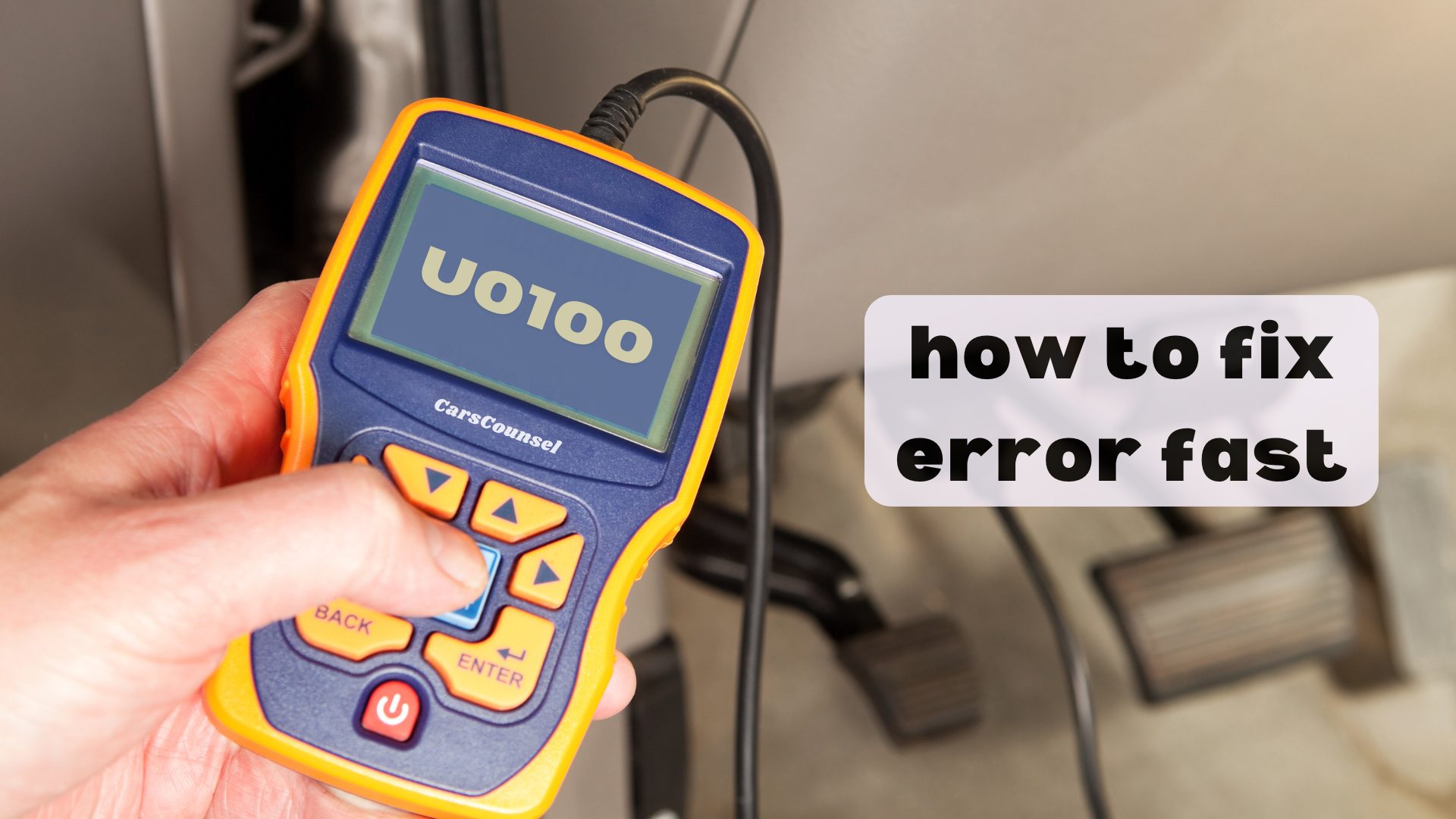
The U0100 code is a generic network communication code indicating that one or more control modules have lost communication with the Engine Control Module (ECM) or Powertrain Control Module (PCM).
Because this is a network fault, it does not prove the ECM or PCM has failed. The root cause could involve blown fuses, wiring issues, or poor grounds, requiring proper electrical diagnosis.
Quick Navigation
Key Takeaways
- U0100 indicates a loss of network communication with the Engine Control Module (ECM) or Powertrain Control Module (PCM).
- Other modules on the Controller Area Network (CAN) bus set this code when they cannot receive data from the engine computer.
- Possible causes include blown ECM fuses, poor module grounds, or damaged CAN bus wiring.
- Diagnosis requires verifying power and ground at the ECM before testing the communication network circuits.
U0100 Code Description and Implications
The U0100 code stands for Lost Communication with ECM/PCM “A”. Modern vehicles use a Controller Area Network (CAN) bus to allow various control modules to share data.
When modules like the Transmission Control Module (TCM) or Anti-lock Braking System (ABS) module cannot receive the expected data messages from the engine computer, they store this generic code.
This communication failure prevents the vehicle from operating normally. Depending on the application, the engine may not start, or the transmission may enter a fail-safe limp mode.
A flashing or solid Check Engine Light is typical, often accompanied by multiple other warning lights on the instrument cluster.
Common Causes of the U0100 Code
A blown fuse supplying power to the ECM or PCM is a potential cause. Without power, the module cannot boot up or broadcast its network messages.
A poor or corroded ground connection at the engine computer will prevent it from operating correctly, mimicking a complete module failure.
Damaged CAN bus wiring, including shorts to ground, shorts to voltage, or open circuits on the CAN High or CAN Low lines, will disrupt network communication.
In some cases, an internally failed ECM or PCM may stop communicating, but this must only be concluded after all external power, ground, and network circuits are verified.
Symptoms Associated With U0100
The most immediate symptom is often a no-start condition, as the immobilizer or fuel injection systems may not receive the necessary enable signals from the ECM.
Drivers may see a dashboard with multiple warning lights illuminated, including the Check Engine Light, ABS, and traction control indicators.
If the engine is running, the transmission may default to a limp mode, restricting gear changes and vehicle speed to protect the drivetrain.
Diagnosing the U0100 Trouble Code
Diagnosis begins by verifying the battery voltage, as low system voltage can cause widespread network communication dropouts across multiple modules.
Next, check all fuses related to the ECM or PCM. Use a multimeter to verify that the engine computer is receiving the correct battery voltage and has clean, tight ground connections.
If power and ground are confirmed, the next step is to inspect the CAN bus wiring at the ECM connector for continuity, shorts to ground, or shorts to voltage.
A scan tool capable of network topology mapping can help identify if the ECM is completely offline or if the issue is isolated to a specific branch of the network.
Repairing the U0100 Issue
If a blown fuse is found, the fuse must be replaced and the wiring inspected for a short to ground that caused the overload.
Corroded or loose ground straps must be cleaned and secured to restore the proper electrical path for the engine computer.
Damaged CAN bus wiring requires careful repair using proper soldering and heat shrink techniques to maintain the twisted pair geometry and network impedance.
If all power, ground, and network circuits test correctly and the module remains unresponsive, replacing the ECM or PCM and performing the required programming is necessary.
Cost Considerations for U0100 Repairs
Repair costs depend entirely on the confirmed root cause and the accessibility of the wiring harnesses on your specific vehicle.
Replacing a fuse or cleaning a ground connection is generally on the lower end of the cost spectrum.
Repairing damaged network wiring requires specialized diagnostic time and careful splicing, increasing labor costs.
Replacing and programming a new ECM or PCM is substantially more involved and requires specific software and security access.
Prevention Strategies for Future Occurrences
Inspecting exposed wiring harnesses near the engine bay can help identify developing damage from heat, vibration, or chafing before it causes a network short.
Keeping battery terminals clean and secure ensures stable system voltage, preventing low-voltage network dropouts that can stress control modules.
Ensuring that aftermarket accessories are wired correctly prevents accidental back-feeding or overloading of the vehicle’s sensitive communication circuits.
Troubleshooting Tips and Best Practices
Never replace the ECM or PCM based solely on a U0100 code without first verifying that the module is actually receiving battery power and ground.
Check for technical service bulletins related to your specific vehicle. Some applications have known issues with specific ground points or wiring harness chafing locations.
If multiple U-codes are present for different modules, focus diagnostic efforts on the main network backbone or the primary power distribution center rather than individual modules.
Review other OBD2 Codes if additional network or system faults are stored simultaneously.
More OBD-II Codes
| P0030 | P0100 | U0073 | U0155 |
| P0031 | P0101 | U0101 | U1000 |
| P0036 | P0107 | U0121 | U0001 |
| P0050 | P0108 | U0140 | P0600 |
| P0060 | P0111 | U0126 | P0601 |
| P0068 | P0112 | U1017 | P0602 |
Frequently Asked Questions
Can I drive my car with a U0100 code?
Driving is not recommended. A loss of communication with the engine computer can cause a no-start condition, stalling, or severe limp mode, making the vehicle unsafe to operate.
Will disconnecting the battery clear a U0100 code?
Disconnecting the battery may temporarily clear the code, but it does not repair the underlying electrical or network fault. The code will likely return once the modules attempt to communicate again.
Can a bad battery cause a U0100 code?
Yes. Low system voltage from a failing battery or alternator can cause control modules to shut down or drop off the network, triggering widespread communication codes including U0100.
Is U0100 a generic or manufacturer-specific code?
U0100 is a generic network communication code defined by the SAE. It applies across all vehicle makes, though the exact diagnostic pinouts and network architecture vary by manufacturer.
Does U0100 mean my engine computer is dead?
No. While an internally failed ECM or PCM can cause this code, power loss, blown fuses, bad grounds, or damaged network wiring are potential causes that must be ruled out first.
What Should You Do About the U0100 Code?
Confirm the exact factory definition and network architecture for your vehicle, then follow the applicable manufacturer diagnostic procedure. Verify power and ground at the engine computer before testing the communication bus circuits.
Address the confirmed root cause promptly to restore network communication and return the vehicle to normal operation.

