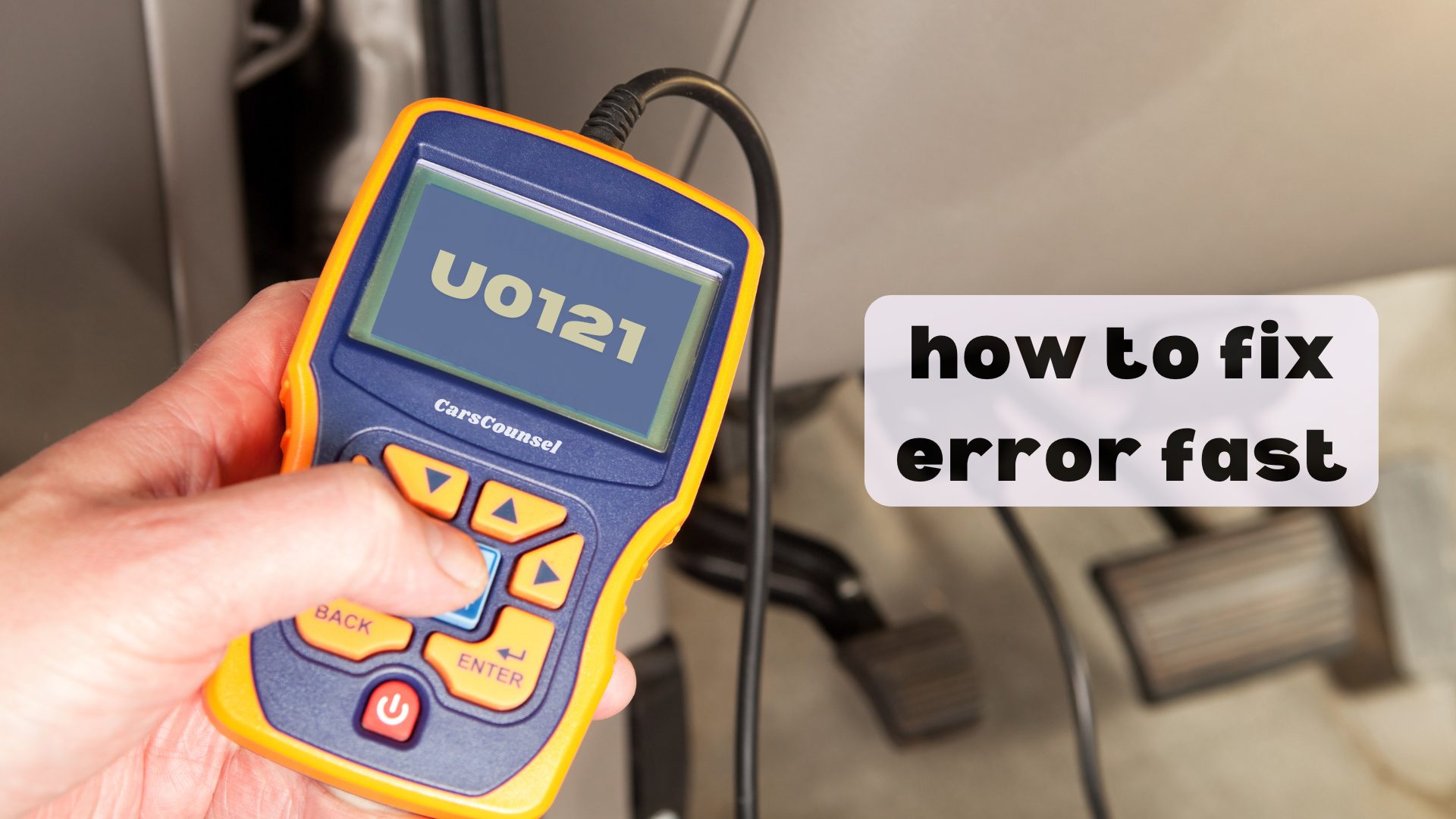
U0121 is a generic OBD-II network communication code indicating that a control module has lost communication with the Anti-Lock Brake System (ABS) control module over the vehicle’s data bus.
This code identifies a network communication fault rather than confirming a single failed component. The underlying cause requires targeted electrical and module diagnosis to identify the root cause.
Quick Navigation
Key Takeaways
- U0121 indicates a control module stopped receiving data messages from the Anti-Lock Brake System (ABS) control module over the communication network.
- Possible causes include a failed ABS module, damaged network wiring, corroded connectors, poor grounds, or low system voltage.
- Diagnosis requires verifying network communication with a scan tool, inspecting the ABS module wiring, and testing the data bus circuits.
- Repairs depend on the confirmed root cause and may involve wiring repair, ground cleaning, or ABS module replacement and programming.
U0121 Code Description and Implications
U0121 indicates that another module on the network, typically the Powertrain Control Module (PCM), has stopped receiving periodic data messages from the ABS control module.
Modern vehicles use a Controller Area Network (CAN) or similar data bus to allow modules to share information.
The ABS module broadcasts critical data, such as wheel speeds and stability control status, to other systems.
When these messages are missing for a specific timeout period, the receiving module logs a U0121 communication loss code.
Because U0121 is a generic network code, this fundamental communication monitoring logic applies across various vehicles from multiple manufacturers.
However, the exact network architecture, wiring diagrams, and diagnostic troubleshooting steps vary considerably depending on the specific vehicle application.
When diagnosing trouble codes related to network communication, generic diagnostic paths cannot account for manufacturer-specific module topologies.
Common Causes of the U0121 Code
The underlying causes for a network communication loss code generally involve the ABS module itself, the network wiring, or system voltage.
Failed ABS Control Module: An internal failure within the ABS module may prevent it from powering up or broadcasting data onto the network.
Wiring and Connector Issues: Damaged wiring, chafed insulation, or corroded connectors in the CAN bus circuits or the module’s power and ground feeds can interrupt communication.
Poor Ground Connections: A corroded or loose chassis ground for the ABS module can prevent it from operating correctly, causing it to drop off the network.
Low System Voltage: A weak battery or failing alternator can cause sensitive electronic modules to reset or shut down, resulting in temporary communication loss.
Symptoms Associated With U0121
The prominent symptom is the illumination of the Check Engine Light, often accompanied by ABS and Traction Control warning indicators.
Depending on the manufacturer’s fail-safe strategies, the vehicle may disable the anti-lock braking, traction control, and electronic stability control systems.
The speedometer or cruise control may stop functioning if they rely on wheel speed data transmitted by the ABS module over the network.
The transmission may shift harshly or enter a limp mode if it cannot receive engine load or vehicle speed data normally shared via the ABS module.
Diagnosing the U0121 Trouble Code
Diagnosis must begin by confirming the exact factory service information and network topology for the vehicle’s specific application.
Start by using a scan tool capable of communicating with multiple modules to verify which modules are online and which are unreachable.
Check for other U-codes or communication codes that might indicate a broader network failure rather than an isolated ABS module fault.
Visually inspect the wiring harness and connectors at the ABS module for physical damage, fluid intrusion, or corrosion.
Verify that the ABS module is receiving proper battery voltage and clean ground connections with the ignition on.
If power, ground, and network wiring test correctly, the ABS module itself may have failed internally.
Repairing the U0121 Issue
Repairs must follow confirmed diagnosis. Never replace the ABS module solely based on the presence of a communication code without verifying power, ground, and network circuits.
If network wiring damage or connector corrosion is found, repair the harness and secure the connections before re-evaluating the system.
If poor grounds are identified, clean the grounding points and secure the hardware to the manufacturer’s torque specification.
If electrical testing confirms the ABS module is receiving proper power and ground but is not communicating on the network, replace the ABS module.
New ABS modules typically require programming and calibration to the specific vehicle using a professional scan tool.
Cost Considerations for U0121 Repairs
Repair costs vary considerably depending on the confirmed root cause and the specific vehicle application.
Repairing damaged network wiring or cleaning corroded ground connections involves standard electrical labor and minimal parts costs.
Replacing an ABS control module involves substantial parts costs, plus additional labor and equipment fees for module programming and system bleeding.
Cost depends on diagnostic time, component accessibility, required parts, programming requirements, and labor.
Prevention Strategies for Future Occurrences
Preventing network communication codes requires attention to the vehicle’s electrical system and undercarriage environment.
Maintaining a healthy battery and charging system prevents voltage drops that can cause sensitive modules to reset or drop off the data bus.
Inspecting exposed wiring near the ABS module for damage from road debris or moisture intrusion can help identify developing harness issues.
Keeping electrical connectors and ground points clean and free of heavy corrosion helps ensure reliable module operation.
Troubleshooting Tips and Best Practices
Always check for Technical Service Bulletins related to U0121 for your specific vehicle application.
Manufacturers may release updated wiring harness repair kits, revised ABS modules, or software updates to address known network communication faults.
Do not assume the ABS module has failed simply because it is not communicating on the network.
A simple blown fuse, a corroded ground strap, or a broken CAN bus wire can produce the U0121 code without the module itself being defective.
If the vehicle recently underwent collision repair or undercarriage work, verify that all ABS module connectors were fully seated and no pins were pushed out.
More OBD-II Codes
| U0001 | U0073 | U0100 | U0101 |
| U0107 | U0109 | U010C | U0126 |
| U0140 | U0141 | U0151 | U0155 |
| U1000 | U1001 | U1017 | U1041 |
| U1064 | U1120 | U1900 | U2013 |
| P0600 | P0601 | P0603 | P0700 |
Frequently Asked Questions
Is the U0121 code generic or manufacturer-specific?
U0121 is a generic SAE-defined OBD-II network code. Its fundamental definition regarding lost communication with the ABS module applies across various manufacturers, though exact diagnostic steps vary.
Can a bad battery cause a U0121 code?
Yes. A weak battery or failing alternator can cause system voltage to drop during cranking or operation. This can cause the ABS module to reset or shut down, resulting in a temporary communication loss code.
Will disconnecting the battery clear the U0121 code?
Disconnecting the battery may temporarily clear the code, but it does not repair the underlying network or power fault. It also erases valuable freeze frame data and resets module adaptations, complicating professional diagnosis.
Can I drive my vehicle with a U0121 code?
Driving is not recommended. Losing communication with the ABS module typically disables the anti-lock braking, traction control, and stability control systems, which are critical safety features during emergency braking or slippery conditions.
Does U0121 always mean the ABS module is broken?
No. While internal module failure is a possible cause, blown fuses, corroded ground connections, damaged CAN bus wiring, or low system voltage can also prevent the module from communicating without the unit itself being defective.
What Should You Do About the U0121 Code?
Confirm the exact factory definition and network topology for your specific vehicle application before attempting repairs.
Do not assume the ABS control module requires replacement based solely on the presence of the diagnostic trouble code.
Inspect the module’s power feeds, ground circuits, and network wiring to rule out external electrical faults.
Follow the applicable manufacturer diagnostic workflow to isolate the relevant system and components before authorizing module replacement and programming.

