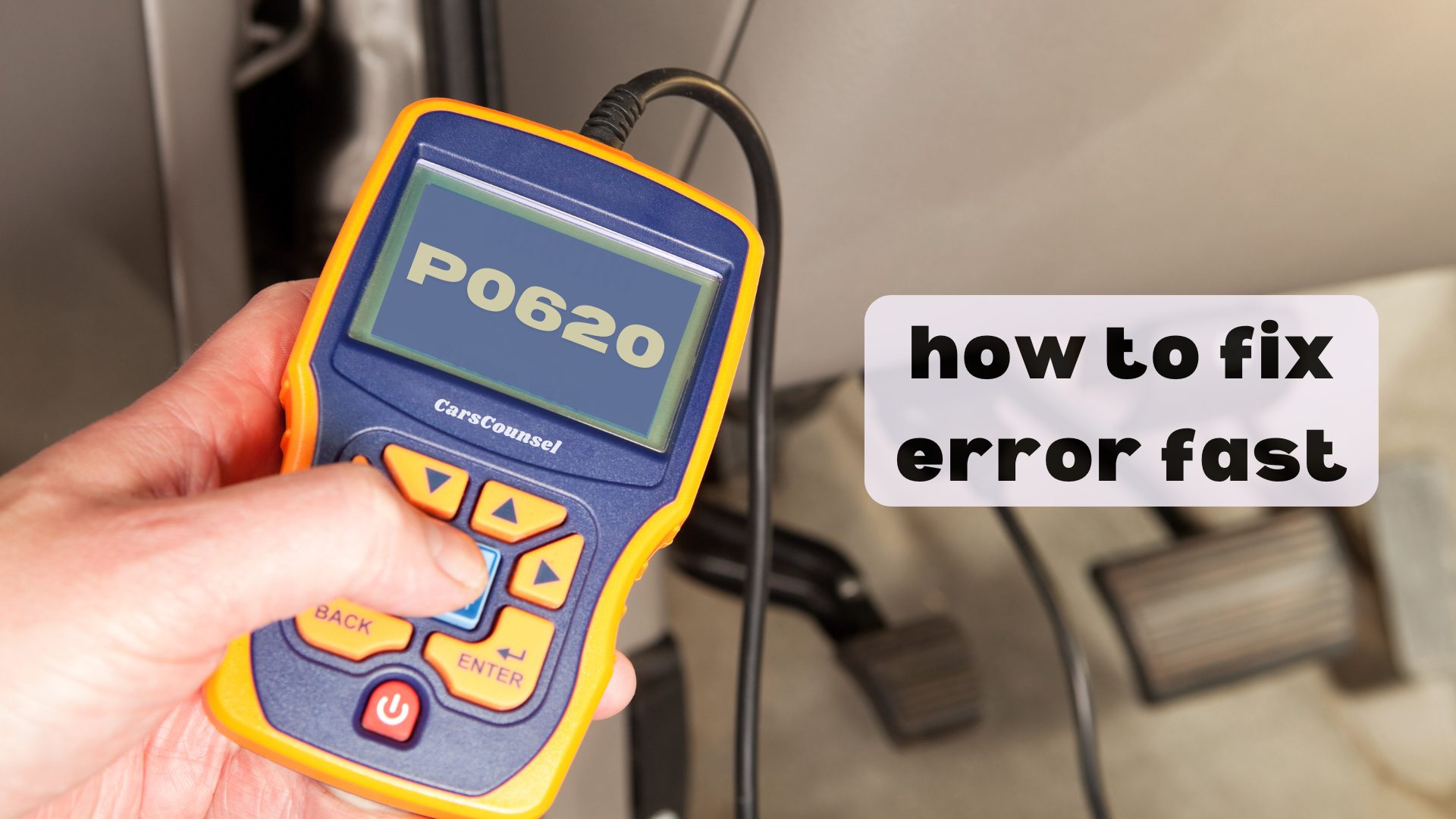
Among OBD2 issue codes, P0620 is a generic SAE definition indicating a Generator Control Circuit Malfunction. It means the powertrain control module detected an electrical fault in the circuit that commands the alternator’s output.
Because this code points to a specific control circuit, exact application verification is required. The code indicates an electrical condition, and testing is necessary to isolate the fault to the wiring, alternator, or control module.
Quick Navigation
Key Takeaways
- Condition detected: The PCM identified an electrical fault in the generator (alternator) control circuit.
- Electrical checks required: Diagnosis involves measuring circuit continuity, inspecting the wiring harness, and verifying module output.
- System impacts: A faulty control circuit prevents the PCM from regulating alternator output, leading to battery drain or overcharging.
- Component testing: The wiring, connectors, alternator regulator, and PCM driver must be evaluated to isolate the root cause.
P0620 Code Description and Implications
P0620 is a generic SAE definition for Generator Control Circuit Malfunction. Modern vehicles use the powertrain control module to regulate the alternator’s output by sending a duty cycle or voltage signal to the internal or external voltage regulator.
When the module detects that the control circuit is open, shorted to ground, or shorted to voltage, it stores P0620. This indicates an electrical failure in the command circuit rather than a mechanical failure of the alternator drive belt.
Common Causes of the P0620 Code
- Damaged or chafed wiring: The harness routing from the PCM to the alternator may be damaged by engine heat, vibration, or moving components.
- Corroded or loose connectors: Moisture intrusion at the alternator connector or the PCM can cause terminal corrosion, disrupting the control signal.
- Failed voltage regulator: The internal or external voltage regulator may fail electrically, creating an open or short condition on the control pin.
- Failed control module: In rare cases, the internal driver circuit within the PCM may fail, though external wiring and the regulator must be ruled out first.
Symptoms Associated With P0620
Possible symptoms include:
- Illuminated Check Engine Light (MIL) or battery warning light.
- Battery failing to charge properly, leading to a dead battery and hard starting.
- Alternator overcharging, which can damage sensitive electronic modules and blow fuses.
- Electrical accessories malfunctioning or dimming headlights due to unstable system voltage.
Diagnosing the P0620 Trouble Code
Diagnosing a generator control circuit code requires a digital multimeter, a scan tool, and the vehicle’s specific wiring diagrams. The first step is to verify the exact factory definition.
- Visual inspection: Inspect the wiring harness and connectors at the alternator and PCM for chafing, heat damage, or corrosion.
- Check system voltage: Measure the battery voltage with the engine running to verify if the alternator is currently charging or if it has defaulted to a base voltage.
- Test circuit continuity: Disconnect the PCM and alternator connectors, then test the control circuit wire for opens or shorts to ground and voltage.
- Verify module output: If the wiring tests correctly, use a scan tool to command the alternator field duty cycle and measure the response at the alternator connector.
Repairing the P0620 Issue
Repairs must follow confirmed diagnosis. Never replace the powertrain control module based solely on the presence of a P0620 code.
- Wiring repair: If the harness is chafed or broken, repair the wires using high-temperature solder and heat shrink tubing.
- Connector replacement: If the plug is corroded, replace the pigtail connector with a component meeting the correct vehicle specification.
- Alternator or regulator replacement: If the internal regulator fails electrical testing, replace the alternator assembly or the external voltage regulator.
- PCM replacement: If the module driver circuit fails testing and all external circuits are verified, follow the applicable PCM service or replacement procedure.
Cost Considerations for P0620 Repairs
Cost depends on diagnostic time, component accessibility, required parts, programming requirements, and labor.
Repairing a chafed wire is generally less involved than replacing an alternator assembly or programming a new powertrain control module.
Prevention Strategies for Future Occurrences
- Protect wiring harnesses: Ensure the alternator wiring is securely routed away from hot exhaust manifolds and sharp chassis edges.
- Keep connectors clean: Verify that weather seals are intact on the alternator connector to prevent moisture intrusion and terminal corrosion.
Troubleshooting Tips and Best Practices
- Do not assume the alternator is dead: A P0620 code frequently points to a simple chafed wire or corroded connector. Always verify circuit continuity before replacing the alternator.
- Check for related codes: Look for system voltage codes like P0562 or P0563, which can indicate a broader charging system or battery issue affecting the control circuit.
- Check for TSBs: Some manufacturers issue Technical Service Bulletins for updated wiring harness shields or revised alternator designs to address chronic electrical faults.
More OBD-II Codes
| P0615 | P0607 | P0606 | P0605 |
| P0604 | P0603 | P0621 | P0622 |
| P0625 | P0627 | P0628 | P0629 |
| P0562 | P0563 | P0654 | P0685 |
| P0600 | P0601 | P0633 | P0638 |
| P0641 | P0643 | P0645 | P0650 |
Frequently Asked Questions
Can a bad battery cause a P0620 code?
A severely degraded battery can cause system voltage fluctuations that confuse the PCM, but P0620 specifically targets the generator control circuit. Always load-test the battery, but focus diagnosis on the alternator control wiring.
Is it safe to drive with a P0620 code?
Driving is not recommended for long distances. If the PCM cannot control the alternator, the vehicle may run solely on battery power, leading to a sudden stall, or it may overcharge and damage sensitive electronic modules.
Will replacing the alternator fix a P0620 code?
It will fix the issue if the internal voltage regulator has failed electrically. However, if the root cause is a broken control wire or a corroded connector, replacing the alternator will not resolve the circuit fault.
Does P0620 mean my PCM needs to be replaced?
Not necessarily. While an internal PCM driver failure is possible, the root cause is usually a failed alternator regulator, chafed wiring, or a bad connection. Proper circuit testing is required before condemning the control module.
Can an aftermarket alternator trigger a P0620 code?
Yes. Some aftermarket alternators use internal regulators that do not correctly interpret or respond to the PCM’s duty cycle commands. Always use a component meeting the exact OEM specification for computer-controlled charging systems.
What Should You Do About the P0620 Code?
Because the P0620 code indicates an electrical fault in the generator control circuit, it requires verifying the wiring, connectors, and alternator regulator before replacing components. Confirm the exact factory definition for your vehicle.
Inspect the alternator harness for damage, check the main connectors, and test the relevant system and components. Follow the manufacturer’s diagnostic procedure to isolate the faulty component, repair the confirmed root cause, and verify the repair.

