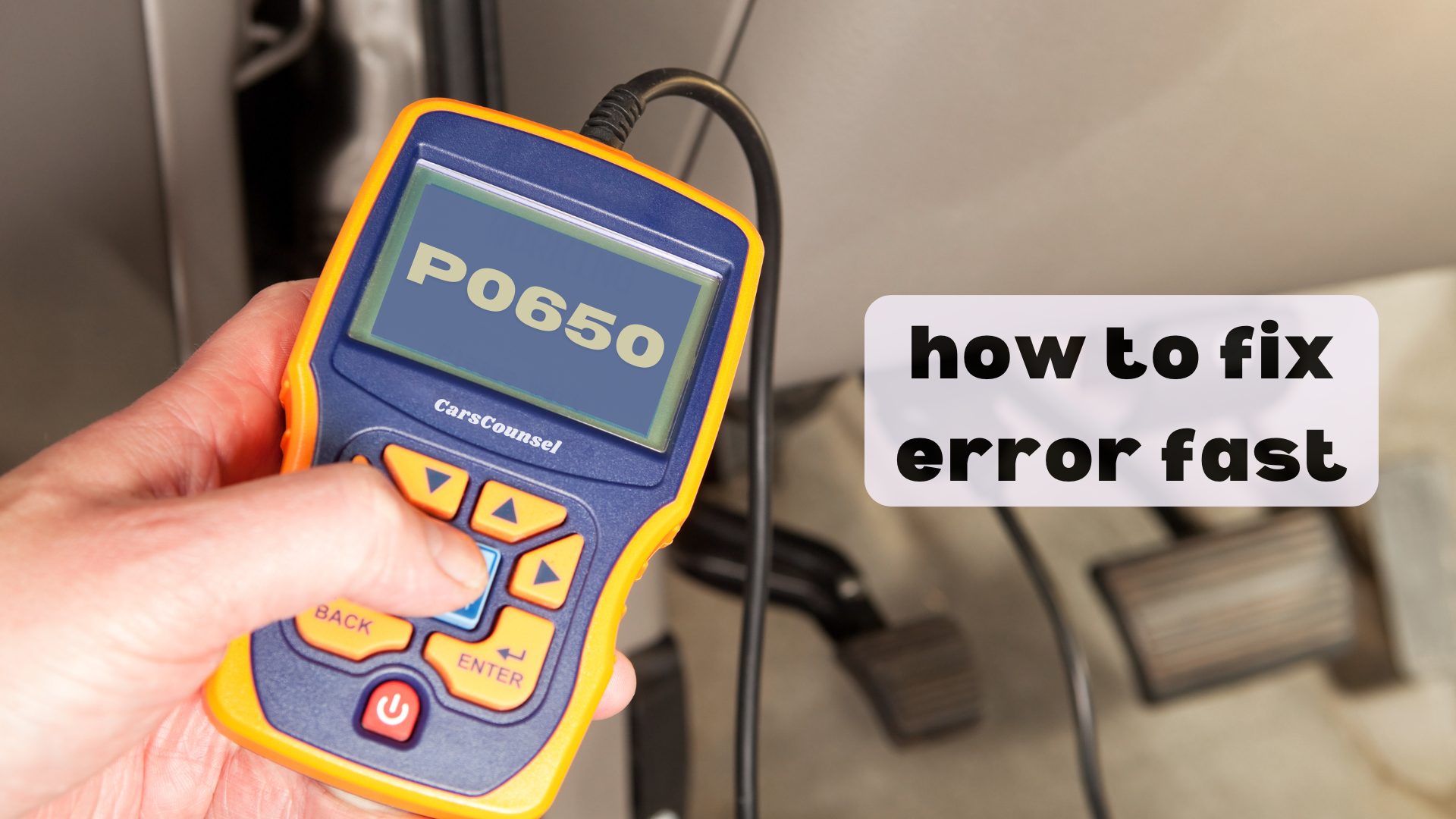
The P0650 code is a generic OBD-II powertrain code indicating a “Malfunction Indicator Lamp (MIL) Control Circuit” fault among various OBD2 Codes. It means the control module detected an electrical issue in the circuit that operates the Check Engine Light.
This code does not automatically mean the powertrain control module has failed. Possible causes include a burnt-out bulb, damaged wiring, or a blown fuse. Exact diagnosis requires verifying the MIL circuit’s electrical integrity.
Quick Navigation
Key Takeaways
- P0650 indicates an electrical fault in the circuit controlling the Malfunction Indicator Lamp (Check Engine Light).
- Possible causes include a burnt-out dashboard bulb, damaged wiring, or a blown fuse.
- Diagnosis requires checking the bulb, inspecting the circuit for opens or shorts, and verifying module outputs.
- Repairs may involve replacing the bulb, repairing harness damage, or addressing module issues.
P0650 Code Description and Implications
The P0650 code stands for “Malfunction Indicator Lamp (MIL) Control Circuit.” The powertrain control module (PCM) uses an internal driver to ground or supply voltage to the Check Engine Light on the dashboard.
When the ignition is turned on, the PCM briefly illuminates the MIL to verify the bulb and circuit are functional.
If the module detects an open circuit, a short to ground, or a short to voltage in the MIL control path during this check or while attempting to illuminate the light, it stores this generic code.
Common Causes of the P0650 Code
Burnt-out MIL bulb or LED: If the vehicle monitors circuit current, a failed bulb can trigger this code.
Damaged wiring or connectors: Chafed, broken, or corroded wires in the dashboard harness or between the instrument cluster and PCM can interrupt the circuit.
Blown fuse: A blown instrument cluster or PCM ignition fuse can disable power to the MIL circuit.
Faulty PCM or instrument cluster: Internal failure of the PCM’s MIL driver circuit or the instrument cluster’s internal circuitry can prevent the light from operating.
Symptoms Associated With P0650
Check Engine Light fails to illuminate: The MIL may not turn on during the initial key-on bulb check or when other diagnostic trouble codes are present.
Other warning lights: Depending on the vehicle’s network architecture, other dashboard warning lamps may also behave erratically if they share a common circuit or ground.
There may be no drivability symptoms, as the engine and transmission operate normally despite the indicator light circuit fault.
Diagnosing the P0650 Trouble Code
Verify the bulb operation: Turn the ignition to the “on” position without starting the engine and observe if the Check Engine Light illuminates briefly.
Inspect fuses and wiring: Check the instrument cluster and PCM fuses, then inspect the wiring harness between the PCM and the dashboard for physical damage.
Test the MIL control circuit: Use a scan tool with bidirectional controls to command the MIL on and off while measuring voltage or using a test light at the instrument cluster connector.
Repairing the P0650 Issue
Bulb replacement: If the bulb is burnt out and the vehicle monitors bulb current, replace the dashboard bulb or LED assembly.
Wiring repair: Repair or replace any damaged wiring, corroded pins, or loose connectors in the MIL control circuit.
Module replacement: If the wiring and bulb are verified, and the PCM driver fails testing, follow the manufacturer’s procedure for PCM or instrument cluster replacement and programming.
Cost Considerations for P0650 Repairs
Bulb replacement: Replacing a standard dashboard bulb involves low parts costs, though labor varies depending on dashboard disassembly requirements.
Wiring repair: Costs depend on the time required to trace and repair damaged harnesses behind the instrument panel.
Module replacement: Replacing and programming a PCM or instrument cluster involves significant parts costs and specialized labor.
Prevention Strategies for Future Occurrences
Address electrical issues promptly: Repair any aftermarket accessory wiring or dashboard modifications that could introduce shorts into the instrument cluster circuits.
Maintain battery health: Prevent severe voltage spikes that can damage sensitive internal module drivers by maintaining the battery and charging system.
Troubleshooting Tips and Best Practices
Do not ignore a missing Check Engine Light: If the MIL does not illuminate during a key-on-engine-off bulb check, the vehicle may fail emissions inspections and hide other critical diagnostic trouble codes.
Check for aftermarket tuning: Some aftermarket performance tunes or dash clusters intentionally disable the MIL circuit, which can trigger a P0650 code on the factory PCM.
Verify related network codes: If U-codes are present alongside P0650, the issue may involve a broader communication network failure between the PCM and the instrument cluster.
Use exact specifications: Always refer to the factory service manual for the correct pinout diagrams, fuse locations, and circuit testing procedures for your specific vehicle.
More OBD-II Codes
| P0645 | P0643 | P0641 | P0638 |
| P0633 | P0629 | P0651 | P0652 |
| P0654 | P0657 | P0660 | P0661 |
| P0601 | P0603 | P0606 | P0622 |
| P0700 | U0100 | U0140 | P0600 |
| P0602 | P0604 | P0605 | P0607 |
Frequently Asked Questions
Is it safe to drive with a P0650 code?
The vehicle is usually drivable, as P0650 affects the warning light circuit, not engine performance. However, a non-functional Check Engine Light means you will not be alerted to other serious issues.
Can a bad battery cause a P0650 code?
Severe voltage drops or spikes from a failing battery can occasionally damage the PCM’s internal MIL driver circuit. However, always verify the bulb and wiring first before condemning the module.
Will disconnecting the battery clear the P0650 code?
Disconnecting the battery may temporarily reset the module, but it will not repair a burnt-out bulb, damaged wiring, or a failed internal driver. The code will return once the monitor runs.
How much does it cost to fix a P0650 code?
Costs vary widely. Replacing a dashboard bulb involves low parts costs, while repairing hidden wiring harnesses or replacing and programming a failed PCM or instrument cluster requires significant labor and parts.
Can aftermarket tuning cause a P0650 code?
Yes. Some aftermarket performance tunes or modified instrument clusters intentionally disable or alter the MIL circuit, which can cause the factory PCM to detect a fault and store this code.
What Should You Do About the P0650 Code?
Confirm the exact factory definition and diagnostic procedure for your specific vehicle application. Begin by verifying the Check Engine Light’s operation during a key-on bulb check, then inspect the MIL circuit fuses and wiring.
Do not replace the powertrain control module without verified diagnostic evidence. Follow the manufacturer’s pinpoint tests to isolate the fault to the bulb, wiring, or internal module hardware before authorizing repairs.

