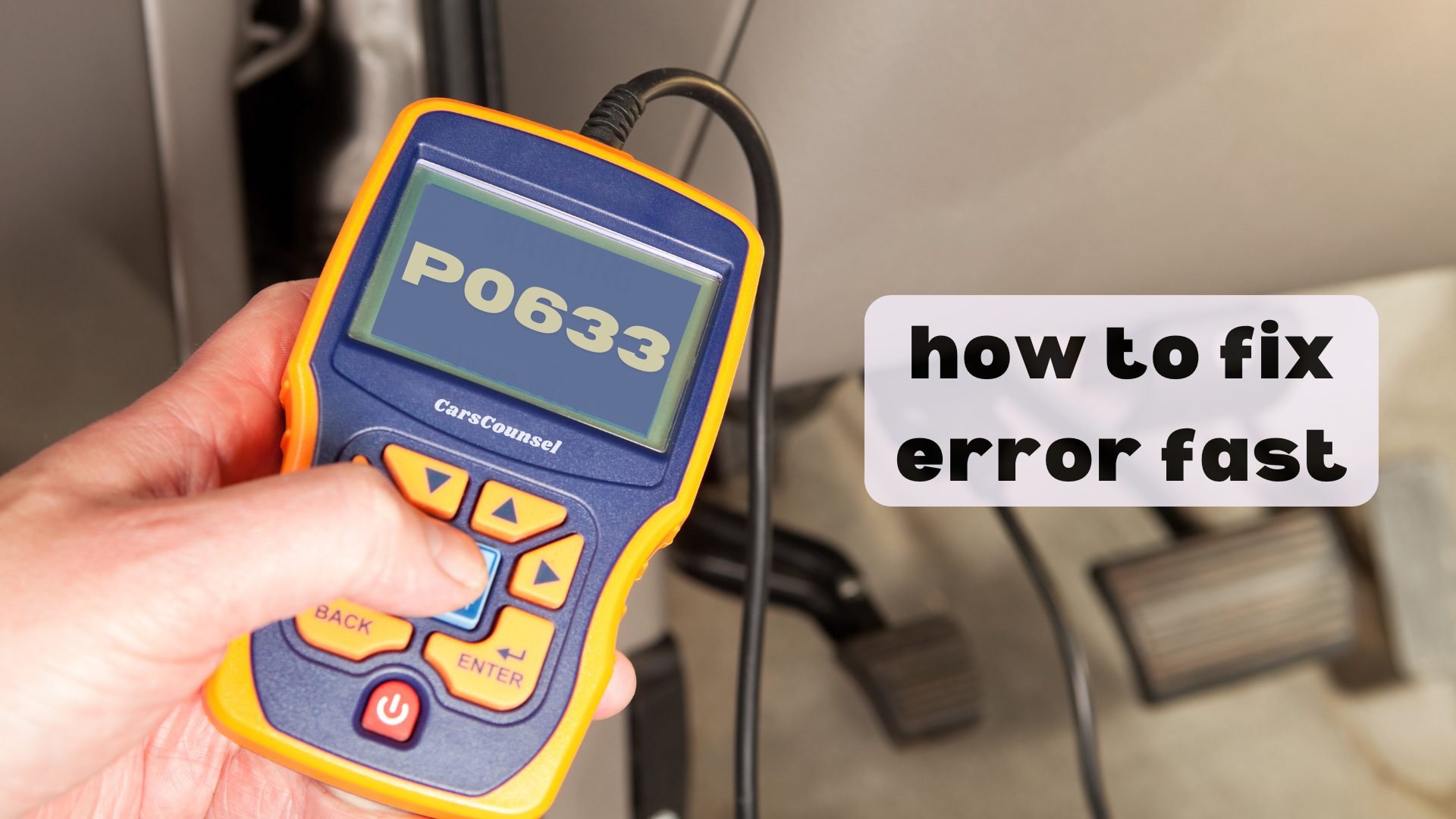
P0633 is a generic OBD-II diagnostic trouble code indicating the powertrain control module detected that the immobilizer key is not programmed or recognized.
This code identifies a security system authentication condition rather than confirming a single failed mechanical component. Targeted diagnosis and key programming are required.
Quick Navigation
Key Takeaways
- P0633 indicates the control module does not recognize the security code of the current ignition key.
- Possible causes include an unprogrammed key, a faulty transponder chip, or an immobilizer system communication fault.
- Diagnosis requires verifying key programming status, checking the transponder ring antenna, and scanning the immobilizer module.
- Repairs depend on the confirmed root cause and usually involve programming a new key or repairing the antenna wiring.
P0633 Code Description and Implications
P0633 is a generic OBD-II code indicating the powertrain control module (PCM) detected that the immobilizer key is not programmed.
Modern vehicles use an immobilizer system to prevent unauthorized starting. A transponder chip in the key communicates with a ring antenna around the ignition cylinder.
When the PCM does not receive the correct security code from the key, or if a new key has not been synchronized with the vehicle’s memory, it logs this code.
Because P0633 is a generic code, this fundamental monitoring logic applies across various vehicles from multiple manufacturers.
However, the exact immobilizer architecture and programming procedures vary depending on the specific vehicle application. When diagnosing an OBD2 issue related to the security system, verifying the exact factory service information is critical.
Common Causes of the P0633 Code
The underlying causes for an immobilizer key not programmed condition generally involve the key itself, the antenna, or the control module.
Unprogrammed Key: A newly cut key or a replacement key fob that has not been properly programmed to the vehicle’s immobilizer system.
Faulty Transponder Chip: The security chip inside the key or fob may be damaged, missing, or failed, preventing it from transmitting the code.
Damaged Ring Antenna: The immobilizer ring antenna around the ignition cylinder may be broken or have damaged wiring, failing to read the key.
Control Module Fault: An internal failure within the PCM or the dedicated immobilizer control module can prevent key recognition.
Symptoms Associated With P0633
The prominent symptom is the engine cranking but failing to start, or starting and immediately stalling.
A security or anti-theft warning light will typically illuminate or flash on the instrument cluster.
The Check Engine Light will also be illuminated due to the stored diagnostic trouble code.
Diagnosing the P0633 Trouble Code
Diagnosis must begin by confirming the exact factory service information and immobilizer programming procedures for the specific vehicle application.
Verify if the key being used is an original, programmed key or a newly cut replacement.
Try a known, working spare key to determine if the issue is isolated to a single key or affects the entire system.
Inspect the immobilizer ring antenna and its wiring harness for physical damage, loose connections, or corrosion.
Use a professional scan tool capable of accessing the immobilizer module to check for security-specific codes and key programming status.
Repairing the P0633 Issue
Repairs must follow confirmed diagnosis. Never replace the PCM or immobilizer module solely based on the presence of the code.
If a new key was recently cut, perform the manufacturer-specific key programming procedure using the required security access codes and diagnostic tool.
If the transponder chip in the key is damaged, replace the key shell or the entire key assembly and program it to the vehicle.
If the ring antenna or its wiring is damaged, repair the wiring or replace the antenna assembly.
If the control module is confirmed as the fault, follow the manufacturer’s procedure for module replacement and immobilizer synchronization.
Cost Considerations for P0633 Repairs
Repair costs vary considerably depending on the confirmed root cause and the specific vehicle application.
Programming a new key involves moderate labor and equipment costs, plus the cost of the key blank or fob.
Replacing a ring antenna involves standard parts costs and minimal labor.
Cost depends on diagnostic time, component accessibility, required parts, programming requirements, and labor.
Prevention Strategies for Future Occurrences
Preventing immobilizer faults requires careful handling of the vehicle’s keys and fobs.
Avoid exposing the key transponder to extreme physical shock, strong magnetic fields, or excessive moisture, which can damage the internal chip.
Ensure that any replacement keys are programmed correctly using the proper manufacturer procedures and equipment.
Troubleshooting Tips and Best Practices
Always check for Technical Service Bulletins related to P0633 for your specific vehicle application.
Manufacturers may release updated immobilizer software, revised ring antenna part numbers, or specific key programming instructions.
Do not assume the engine control module requires replacement simply because a security code is present.
A simple unprogrammed key, a dead fob battery on some push-to-start systems, or a damaged ring antenna can produce the P0633 code without the main computer being defective.
If the vehicle recently underwent PCM replacement or key duplication, verify that the immobilizer synchronization and key programming steps were fully completed.
More OBD-II Codes
| P0629 | P0628 | P0625 | P0622 |
| P0621 | P0620 | P0638 | P0641 |
| P0643 | P0645 | P0650 | P0651 |
| P0513 | B3031 | B1202 | P1610 |
| P1612 | P1614 | P0700 | P0300 |
| P0171 | P0174 | P0420 | P0430 |
Frequently Asked Questions
Is the P0633 code generic or manufacturer-specific?
P0633 is a generic SAE-defined OBD-II code. Its fundamental definition regarding an unprogrammed immobilizer key applies across various manufacturers, though exact programming procedures vary.
Can a dead key fob battery cause a P0633 code?
On some push-button start applications, a severely depleted fob battery can prevent the transponder signal from being read, potentially triggering a security code. Replacing the battery is a simple first step.
Will disconnecting the battery clear the P0633 code?
Disconnecting the battery will not program a new key or repair a faulty transponder. It may temporarily clear the code, but the vehicle will likely fail to start again until resolved.
Can I drive my vehicle with a P0633 code?
Driving is usually impossible. An active P0633 code means the immobilizer system does not recognize the key, which will typically prevent the engine from starting or cause it to stall immediately.
Does P0633 mean the PCM must be replaced?
Not necessarily. While a PCM failure is a possible cause, an unprogrammed key, a damaged transponder chip, or a faulty ring antenna are much more common. The security system must be tested first.
What Should You Do About the P0633 Code?
Confirm the exact factory definition and diagnostic procedure for your specific vehicle application before attempting repairs.
Do not assume the PCM or immobilizer module requires replacement based solely on the presence of the diagnostic trouble code.
Verify the key programming status, inspect the ring antenna wiring, and try a known working spare key to rule out external faults.
Follow the applicable manufacturer diagnostic workflow to isolate the relevant system and components before replacing any hardware.

