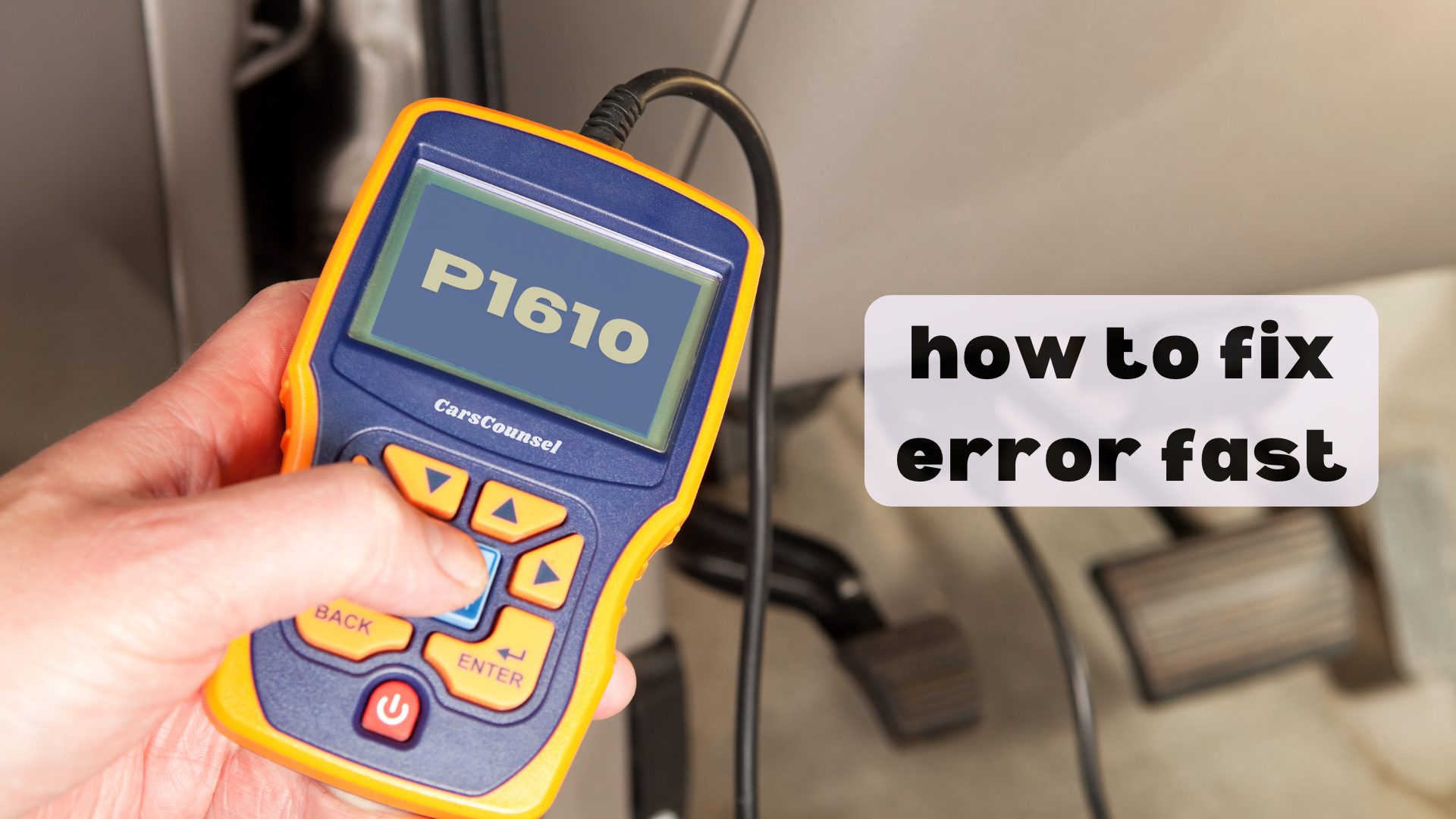
P1610 is a manufacturer-specific powertrain code. Its exact definition depends entirely on the vehicle application, frequently indicating an immobilizer system malfunction or an internal ECM circuit fault.
Because definitions vary, the exact application must be verified before diagnosis. The code identifies a detected security or module condition and does not automatically confirm a single failed component.
Quick Navigation
Key Takeaways
- P1610 is a manufacturer-specific code with definitions varying by vehicle make and model.
- On Nissan and Infiniti applications, it typically indicates a NATS immobilizer malfunction or “Lock Mode.”
- On certain Honda and GM applications, it may point to an internal ECM/PCM circuit failure.
- Diagnosis requires verifying the exact factory definition, checking key registration, and testing module communication.
P1610 Code Description and Implications
P1610 is a manufacturer-specific code, meaning its exact definition depends on the vehicle application.
Nissan and Infiniti applications: P1610 indicates a malfunction in the Nissan Anti-Theft System (NATS) or immobilizer system. The ECM detects an unregistered key or a communication failure with the immobilizer amplifier, placing the vehicle in “Lock Mode.”
Certain Honda, GM, and Toyota applications: P1610 may indicate an internal ECM/PCM circuit malfunction or a discrete communication fault between the ECM and the immobilizer control unit.
When diagnosing an error code related to the security or engine management system, verifying the exact factory service information is critical.
Common Causes of the P1610 Code
The underlying causes depend entirely on which system the code monitors on your specific vehicle.
Immobilizer Applications: Unregistered or damaged ignition keys, a failed immobilizer antenna or amplifier, damaged wiring between the antenna and the ECM, or a failed ECM.
Internal Circuit Applications: Internal ECM failure, poor module grounds, or voltage spikes damaging the control module’s internal processor.
Aftermarket Interference: Poorly installed aftermarket alarm systems or remote starters can disrupt the immobilizer communication loop.
Symptoms Associated With P1610
The most prominent symptom is a no-start condition. The engine may crank but will not start because the ECM disables the fuel injectors or ignition system.
The security or immobilizer warning light on the dashboard may illuminate or flash rapidly.
On some applications, the vehicle may start and immediately stall, or the Check Engine Light will illuminate alongside the security indicator.
Diagnosing the P1610 Trouble Code
Diagnosis must begin by confirming the exact factory definition for your specific make and model.
For immobilizer applications, try a known-good, fully programmed spare key to rule out a damaged key transponder.
Inspect the wiring harness and connectors at the immobilizer antenna ring and the ECM for physical damage or corrosion.
Use a scan tool capable of accessing the immobilizer system to check for key registration status and communication faults.
Repairing the P1610 Issue
Repairs must follow confirmed diagnosis. Never replace the ECM solely based on the presence of the code.
If a key is unregistered or damaged, have a new transponder key cut and programmed to the vehicle using the manufacturer’s security procedures.
If the immobilizer antenna or amplifier is confirmed faulty, replace the component and reprogram the system as required.
If the ECM is confirmed to have an internal failure, follow the applicable ECM service or replacement procedure, which may require immobilizer matching.
Cost Considerations for P1610 Repairs
Repair costs vary considerably depending on the confirmed root cause and the specific vehicle application.
Cutting and programming a new transponder key involves moderate parts and labor costs.
Replacing an immobilizer antenna or amplifier involves standard parts costs and minimal labor.
ECM replacement and immobilizer matching involve significant parts costs and specialized programming labor.
Cost depends on diagnostic time, component accessibility, required parts, programming requirements, and labor.
Prevention Strategies for Future Occurrences
Preventing immobilizer faults requires careful handling of the vehicle’s ignition keys.
Avoid dropping keys or exposing them to extreme moisture, which can damage the internal transponder chip.
Ensuring that any aftermarket alarm or remote start system is professionally installed can help prevent electrical interference with the factory immobilizer loop.
Troubleshooting Tips and Best Practices
Always check for Technical Service Bulletins related to P1610 for your specific vehicle application.
Manufacturers may release updated immobilizer amplifiers, revised ECM software, or specific key reprogramming procedures for known “Lock Mode” issues.
Do not assume the ECM requires replacement simply because a security code is present.
A damaged key, a broken antenna wire, or aftermarket alarm interference can produce the code without the control module itself being defective.
More OBD-II Codes
| P1604 | P1605 | P1606 | P1607 |
| P1608 | P1609 | P1611 | P1612 |
| P1614 | P1626 | P1628 | P1629 |
| P1600 | P1602 | P1603 | P1631 |
| P1632 | P1633 | P1635 | P1638 |
| P1639 | P1641 | P1651 | P1652 |
Frequently Asked Questions
Is the P1610 code generic or manufacturer-specific?
No. P1610 is a manufacturer-specific code. Its exact definition depends entirely on the vehicle application, such as an immobilizer fault or an internal ECM circuit issue.
Can a bad key cause a P1610 code?
Yes. On applications where P1610 monitors the immobilizer system, a damaged or unregistered key transponder will prevent the ECM from authorizing engine start, triggering the code.
Will disconnecting the battery clear the P1610 code?
Disconnecting the battery may temporarily reset the module, but it does not repair the underlying security or circuit fault. It may also erase valuable freeze frame and security data.
Can I drive my vehicle with a P1610 code?
Driving is typically impossible. An immobilizer malfunction or internal ECM failure will usually place the vehicle in a no-start “Lock Mode” or cause the engine to stall immediately.
Does P1610 mean the ECM must be replaced?
Not necessarily. While an internal ECM failure is possible on some applications, a damaged key, a failed immobilizer antenna, or wiring issues are much more common causes.
What Should You Do About the P1610 Code?
Confirm the exact factory definition and diagnostic procedure for your specific vehicle application before attempting repairs.
Do not assume the ECM requires replacement based solely on the presence of the diagnostic trouble code.
Inspect the immobilizer components, verify key registration, and test the relevant system and components to rule out external faults.
Follow the applicable manufacturer diagnostic workflow to isolate the relevant system and components before replacing any hardware.

