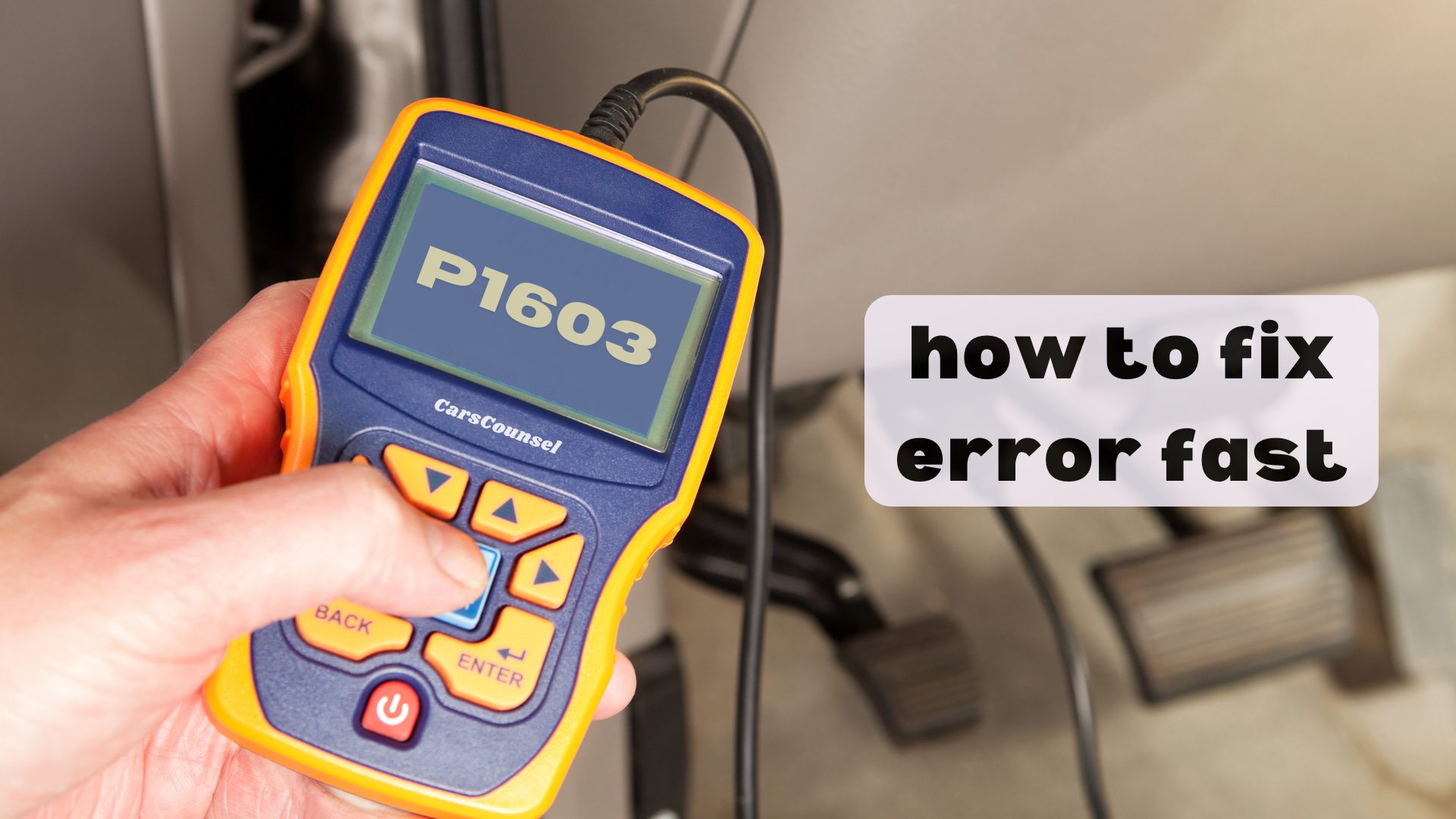
P1603 is a manufacturer-specific OBD-II diagnostic trouble code. Its exact definition depends on the vehicle application, commonly indicating an engine stall history event or an internal control module memory fault.
This code identifies a detected condition rather than confirming a single failed component. The underlying cause requires targeted diagnosis based on the exact factory definition for your specific vehicle.
Quick Navigation
Key Takeaways
- P1603 is a manufacturer-specific code, often indicating an engine stall history on Toyota or an internal ECM memory fault on other brands.
- Possible causes include an actual engine stall, low battery voltage, a failed ECM, or a loss of Keep Alive Memory power.
- Diagnosis requires verifying the exact factory definition, interviewing the driver about stalling, and testing module power circuits.
- Repairs depend on the confirmed root cause and may involve fixing drivability issues, repairing wiring, or replacing the ECM.
P1603 Code Description and Implications
P1603 is a manufacturer-specific code, meaning its exact definition and diagnostic procedures depend heavily on the vehicle application.
Some Toyota and Lexus applications: P1603 indicates an Engine Stall History. The powertrain control module detected an unexpected engine stall that was not caused by a specific sensor or actuator fault.
Certain Ford, GM, and other applications: P1603 indicates an internal Engine Control Module (ECM) fault, such as an EEPROM malfunction or a Keep Alive Memory (KAM) power loss.
Because it is manufacturer-specific, generic diagnostic paths cannot account for the unique systems monitored by different automakers. When diagnosing an OBD2 issue, verifying the exact factory definition is the most critical first step.
Common Causes of the P1603 Code
The underlying causes for a P1603 code vary significantly by application and monitored system.
Actual Engine Stall: On applications monitoring stall history, a mechanical, fuel, or ignition issue may have caused the engine to stall, prompting the module to store this code.
Low Battery Voltage: A weak battery or poor connection can cause voltage drops during cranking, leading the module to falsely record a stall event or lose memory.
Loss of KAM Power: On applications monitoring internal memory, a blown fuse or broken wire supplying constant battery power to the ECM can trigger the code.
Failed Control Module: An internal hardware or software failure within the ECM itself can cause memory corruption or processing errors.
Symptoms Associated With P1603
The prominent symptom is the illumination of the Check Engine Light.
On applications with an engine stall history definition, the vehicle may run perfectly normally, or it may exhibit stalling, rough idling, or hesitation depending on what caused the original stall.
On applications with an internal memory fault, the vehicle may experience a no-start condition, erratic transmission shifting, or multiple unrelated codes due to the loss of adaptive memory.
Depending on the manufacturer’s fail-safe strategies, the vehicle may enter a limp mode to protect the powertrain.
Diagnosing the P1603 Trouble Code
Diagnosis must begin by confirming the exact factory service information for the vehicle’s specific make, model, and engine.
For Toyota and Lexus applications, interview the driver to determine if the engine actually stalled. If a stall occurred, diagnose the root cause using standard fuel, spark, and air diagnostics.
If no stall occurred, test the battery and charging system for voltage drops during cranking that could cause a false trigger.
For internal memory fault applications, verify the constant battery power and ground circuits at the ECM connectors. Check the relevant KAM fuses.
If power and grounds are correct, the ECM may require reprogramming or replacement according to the manufacturer’s procedure.
Repairing the P1603 Issue
Repairs must follow confirmed diagnosis. Never replace the ECM solely based on the presence of the code.
If an underlying drivability issue caused an actual engine stall, repair the specific fuel, ignition, or air intake fault.
If a weak battery or corroded terminal caused a false stall trigger or memory loss, service the battery and clean the connections.
If external wiring damage or a blown KAM fuse is found, repair the harness and replace the fuse before re-evaluating the system.
If electrical testing confirms the ECM has suffered an internal memory failure, replace or reprogram the module using a component meeting the correct vehicle specification.
Cost Considerations for P1603 Repairs
Repair costs vary considerably depending on the confirmed root cause and the specific vehicle application.
Clearing a false history code or tightening a battery terminal involves minimal labor and no parts cost.
Repairing a mechanical stall cause involves variable costs depending on the failed component, such as a fuel pump or vacuum hose.
Replacing and programming an ECM involves higher parts and labor costs.
Cost depends on diagnostic time, component accessibility, required parts, programming requirements, and labor.
Prevention Strategies for Future Occurrences
Preventing P1603 codes requires attention to the vehicle’s electrical system and overall drivability.
Maintaining a healthy battery and clean terminal connections helps prevent voltage drops that can cause false stall detection or Keep Alive Memory loss.
Addressing minor drivability concerns, such as rough idling or hesitation, promptly can prevent conditions that lead to actual engine stalling.
Troubleshooting Tips and Best Practices
Always check for Technical Service Bulletins related to P1603 for your specific vehicle application.
Manufacturers may release updated diagnostic procedures advising technicians to interview the customer before replacing any parts for a stall history code.
Do not assume the engine computer requires replacement simply because an internal module code is present.
A simple blown fuse, a corroded battery terminal, or a temporary low-voltage event can produce the P1603 code without the ECM being physically defective.
If the vehicle recently underwent battery replacement or electrical work, verify that all constant power fuses are intact and connections are secure.
More OBD-II Codes
| P1580 | P1586 | P1587 | P1588 |
| P1600 | P1602 | P1604 | P1605 |
| P1606 | P1607 | P1608 | P1609 |
| P0603 | P0604 | P0605 | P0606 |
| P0607 | P0602 | P0601 | P0600 |
| P0300 | P0171 | P0174 | P0420 |
Frequently Asked Questions
Is the P1603 code generic or manufacturer-specific?
No. P1603 is a manufacturer-specific code. Its exact definition depends on the vehicle application, commonly indicating an engine stall history on Toyota or an internal ECM memory fault on other brands.
Can a bad battery cause a P1603 code?
Yes. On applications monitoring engine stall history, a weak battery can cause voltage drops during cranking that the ECM misinterprets as an unexpected stall. On others, it can cause Keep Alive Memory loss.
Will disconnecting the battery clear the P1603 code?
Disconnecting the battery may clear the code, but it also erases valuable freeze frame data and resets Keep Alive Memory, which can cause temporary drivability issues and complicate professional diagnosis.
Can I drive my vehicle with a P1603 code?
It depends on the application and symptoms. If the vehicle is stalling or running poorly, driving is unsafe. If it runs normally and the code is merely a stored history event, it may be driven to a shop.
Does P1603 mean the ECM must be replaced?
Not necessarily. On Toyota, it usually just means the engine stalled, requiring diagnosis of the stall cause. On other brands, wiring or fuse issues can cause memory faults. The ECM is replaced only after confirmed internal failure.
What Should You Do About the P1603 Code?
Confirm the exact factory definition and diagnostic procedure for your specific vehicle application before attempting repairs.
Do not assume the engine control module requires replacement based solely on the presence of the diagnostic trouble code.
Interview the driver about stalling events, inspect the battery and constant power circuits, and review live data to rule out external faults.
Follow the applicable manufacturer diagnostic workflow to isolate the relevant system and components before authorizing module replacement.

