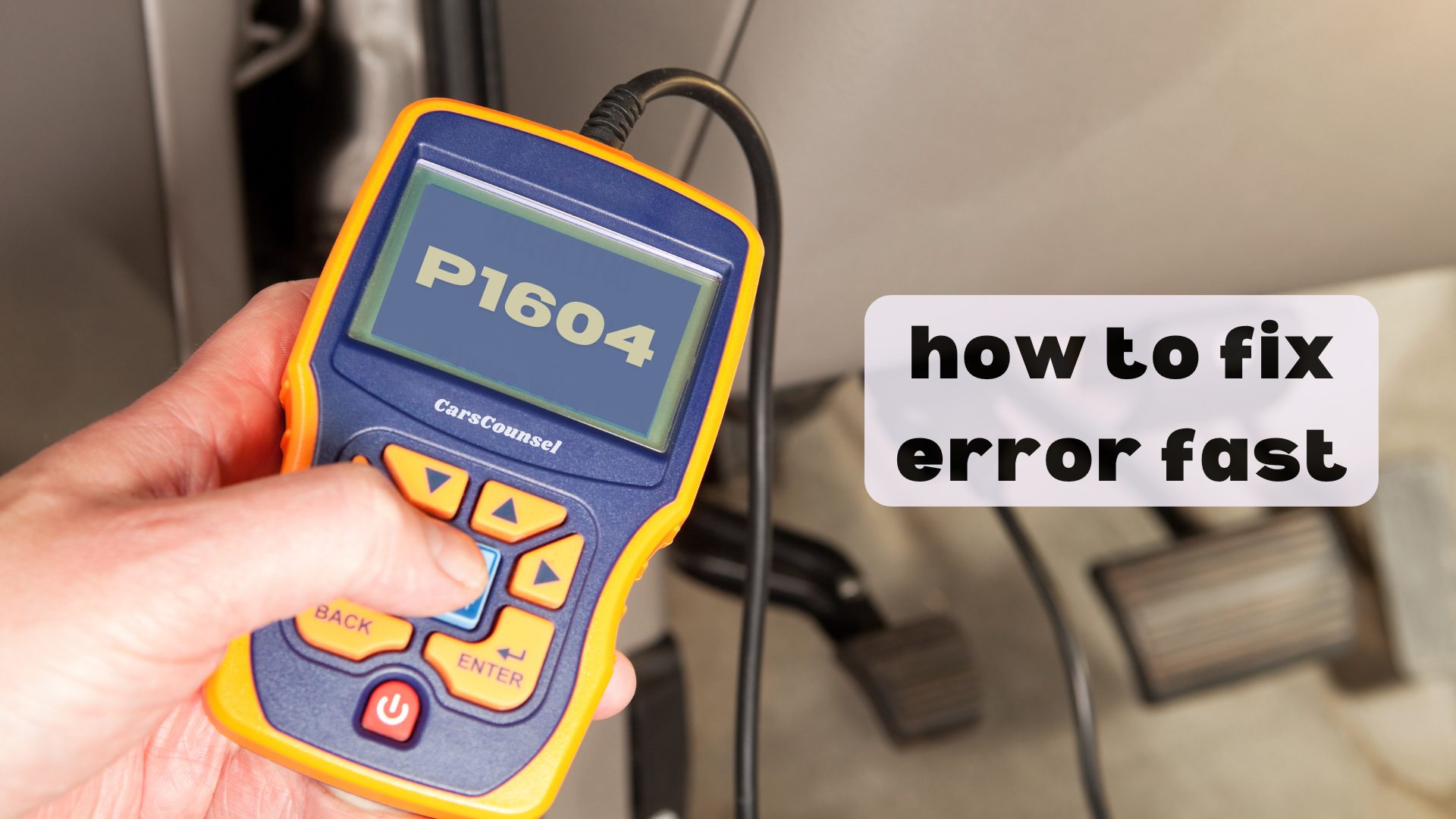
The P1604 code is a manufacturer-specific OBD-II powertrain code indicating a “Startability Malfunction.” It is primarily found in Toyota, Lexus, and Scion vehicles when the engine control module detects an issue during the engine start sequence.
This code identifies a starting condition and does not automatically prove a specific sensor or module has failed. Proper diagnosis requires verifying the exact application, checking the immobilizer system, and testing the starting circuits.
Quick Navigation
Key Takeaways
- P1604 indicates the control module detected a malfunction during the engine start sequence, such as extended cranking or a no-start condition.
- The code flags a starting condition, which does not automatically confirm a failed starter, battery, or engine control module.
- Immobilizer system faults, weak batteries, or fuel delivery issues are frequent causes to verify before replacing components.
- Diagnosis requires checking the security system status, battery health, and verifying fuel and spark delivery during cranking.
P1604 Code Description and Implications
The P1604 code stands for “Startability Malfunction.” The engine control module (ECM) monitors the engine cranking and starting process.
If the ECM detects that the engine fails to start, requires an excessively long cranking time, or stalls immediately after starting, it stores the P1604 code. This code is highly specific to Toyota, Lexus, and Scion platforms.
Common Causes of the P1604 Code
Several electrical and mechanical conditions can cause the control module to detect a startability malfunction.
- Immobilizer system malfunction: The vehicle security system fails to recognize the key transponder, preventing fuel or spark delivery.
- Battery or connection issues: A weak battery or corroded cables cause voltage drops during cranking, resetting the ECM or failing to operate the fuel pump.
- Fuel delivery problems: A failing fuel pump, clogged filter, or faulty fuel pump relay prevents adequate fuel pressure.
- Ignition system faults: Failed ignition coils or spark plugs prevent combustion.
- Sensor failures: A faulty mass airflow (MAF) sensor, crankshaft position sensor, or camshaft position sensor can disrupt the starting sequence.
- ECM software or internal failure: Outdated calibration or an internal module fault.
Symptoms Associated With P1604
Because P1604 relates to the engine starting sequence, symptoms directly affect the vehicle’s ability to run.
- Extended cranking: The engine turns over for a long time before starting.
- No-start condition: The engine cranks but fails to fire.
- Immediate stalling: The engine starts but dies within a second or two.
- Illuminated warning lights: The Check Engine Light or a flashing security indicator may be present.
Diagnosing the P1604 Trouble Code
Accurate diagnosis requires distinguishing between a security system fault, an electrical issue, or a mechanical failure.
- Verify battery health: Test the battery voltage and load capacity, and inspect the battery terminals for corrosion.
- Check the immobilizer system: Observe the security indicator light on the dashboard while attempting to start the vehicle.
- Scan for additional codes: Look for related immobilizer, fuel system, or sensor codes that may point to the root cause.
- Verify fuel and spark: Check fuel pressure at the rail and verify spark delivery during cranking.
- Review live data: Monitor critical sensor data, such as engine RPM and MAF readings, while cranking the engine.
Repairing the P1604 Issue
Repairs must address the specific root cause identified during diagnosis. Clearing the code without fixing the underlying condition will result in its return.
- Battery and cable service: Clean terminals, tighten connections, or replace a weak battery.
- Immobilizer repair: Reprogram keys, replace the key fob battery, or service the transponder receiver if the security system is at fault.
- Fuel system repair: Replace a failed fuel pump, relay, or clogged filter if fuel pressure is low.
- Sensor replacement: Replace confirmed failed sensors, such as the MAF or crankshaft position sensor, following manufacturer testing procedures.
- ECM service: If all other systems test correctly, follow the applicable ECM software update or replacement procedure.
Cost Considerations for P1604 Repairs
Cost depends on diagnostic time, component accessibility, required parts, programming requirements, and labor.
A simple battery replacement is relatively low cost, while an immobilizer system repair or ECM replacement involves higher parts and programming expenses.
Prevention Strategies for Future Occurrences
Maintaining the vehicle’s electrical and security systems reduces the likelihood of startability faults.
- Maintain battery health: Regularly test the battery and keep terminals clean to prevent voltage drops during cranking.
- Protect key fobs: Replace key fob batteries promptly and avoid damaging the transponder chip to prevent immobilizer faults.
- Address fuel system warnings: Replace fuel filters as scheduled and address any fuel delivery symptoms before they lead to a no-start condition.
Troubleshooting Tips and Best Practices
When addressing a P1604 code, avoid common diagnostic shortcuts that lead to unnecessary parts replacement.
- Never ignore a flashing security light: If the immobilizer indicator flashes rapidly when the key is inserted, the ECM is actively disabling the start sequence.
- Check for Technical Service Bulletins (TSBs): Toyota and Lexus frequently issue ECM software updates or revised immobilizer procedures for specific models experiencing false P1604 codes.
- Review related faults: If multiple starting or immobilizer codes are present, review other OBD2 Codes to identify a shared network or power supply issue.
- Avoid parts-cannon diagnosis: Do not replace the ECM or fuel pump without verifying battery voltage, immobilizer status, and fuel pressure first.
More OBD-II Codes
| P1603 | P1602 | P1600 | P1586 |
| P1580 | P1571 | P1605 | P1606 |
| P1607 | P1608 | P1609 | P1611 |
| P0601 | P0602 | P0603 | P0604 |
| P0605 | P0606 | P0335 | P0340 |
| P1346 | P1349 | P1351 | P0171 |
Frequently Asked Questions
Is P1604 a generic or manufacturer-specific code?
No. P1604 is a manufacturer-specific code, primarily used by Toyota, Lexus, and Scion to indicate a startability malfunction.
Can I drive my car with a P1604 code?
If the engine starts and runs normally, short trips may be possible. However, if the code causes extended cranking or stalling, driving is unsafe and the vehicle should be diagnosed promptly.
Will replacing the battery fix the P1604 code?
It might. A weak battery or corroded terminals can cause voltage drops during cranking, resetting the ECM or failing to operate the fuel pump. Battery testing is a required first step.
Does P1604 mean my immobilizer system is broken?
Not necessarily. While an immobilizer fault preventing key recognition is a common cause, P1604 can also result from fuel delivery issues, sensor failures, or a weak battery. Proper diagnosis is required.
Can a bad key fob cause a P1604 code?
Yes. If the key fob battery is dead or the transponder chip is damaged, the immobilizer system may fail to recognize the key, disabling the fuel or ignition system and triggering the code.
What Should You Do About the P1604 Code?
When the P1604 code appears, your first step should be to verify the battery health and observe the dashboard security indicator light. Do not ignore extended cranking times or immediate stalling symptoms.
Confirm the exact factory definition and diagnostic procedure for your specific vehicle application. Have a qualified technician verify the immobilizer status and test the relevant system and components before authorizing major repairs.

