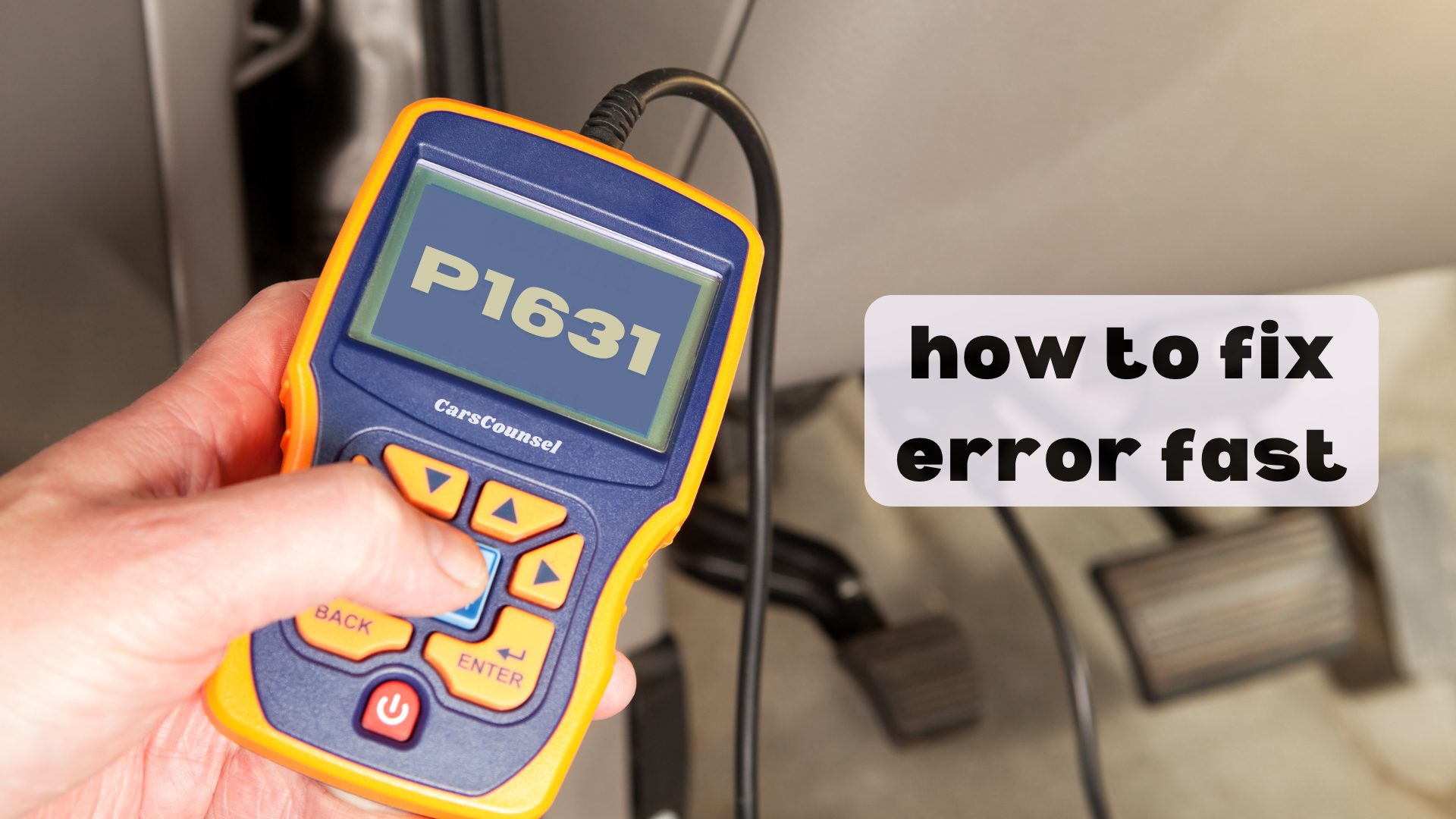
P1631 is a manufacturer-specific powertrain code. Its exact definition depends on the vehicle make, but it is most commonly associated with a theft deterrent or immobilizer system fault, particularly on General Motors vehicles.
Because this code relates to the vehicle’s security system, exact application verification is required. Understanding this and other OBD2 codes helps isolate the fault to the ignition sensor, wiring, or control modules.
Quick Navigation
Key Takeaways
- Condition detected: The powertrain control module detected an incorrect or missing theft deterrent password or start signal.
- System impacts: A security mismatch will typically disable the fuel injectors, causing the engine to crank but not start, or start and immediately stall.
- Diagnostic checks: Diagnosis involves inspecting the ignition lock cylinder sensor, checking the steering column wiring, and verifying module communication.
- Component testing: The Passlock sensor, body control module (BCM), and related wiring must be evaluated to isolate the root cause.
P1631 Code Description and Implications
P1631 is a manufacturer-specific code, and its exact definition depends on the vehicle application.
General Motors applications: P1631 typically indicates a Theft Deterrent Start Signal or Password Incorrect fault. This is heavily associated with the GM Passlock system, where the powertrain control module (PCM) does not receive the correct security password from the body control module (BCM) or ignition lock cylinder.
Other applications: On some other manufacturers, P1631 may indicate a control module internal fault, a throttle actuator control issue, or a communication error between the engine and transmission modules.
When the PCM detects a security mismatch, it disables fuel delivery to prevent unauthorized driving.
Common Causes of the P1631 Code
- Failed Passlock sensor: The internal resistor or Hall-effect sensor inside the ignition lock cylinder may fail, sending an incorrect password.
- Damaged steering column wiring: Repeated turning of the steering wheel can cause the wires connecting the ignition lock cylinder to the BCM to break or chafe inside the steering column.
- Failed Body Control Module (BCM): The BCM may fail to process the security signal or communicate the password to the PCM.
- PCM communication fault: The PCM may fail to recognize the valid password due to an internal fault or loss of communication with the BCM.
Symptoms Associated With P1631
- Engine cranks but will not start (fuel injectors disabled).
- Engine starts and immediately stalls.
- Flashing or solid Security or Theft deterrent warning light on the dashboard.
- Illuminated Check Engine Light with P1631 stored.
Diagnosing the P1631 Trouble Code
- Verify the exact definition: Confirm the specific P1631 definition for your exact make, model, and year using manufacturer service information.
- Check the security light: Observe the dashboard security light behavior during cranking. A flashing light usually confirms an active immobilizer fault.
- Inspect steering column wiring: Remove the steering column covers and inspect the small wires leading from the ignition lock cylinder for breaks, chafing, or poor connections.
- Test the Passlock sensor: Measure the resistance or voltage signal of the Passlock sensor in the ignition lock cylinder while turning the key, comparing it to manufacturer specifications.
- Check module communication: Use a scan tool to verify that the BCM and PCM are communicating properly on the vehicle’s data bus.
Repairing the P1631 Issue
- Wiring repair: If broken wires are found in the steering column, repair or replace the harness pigtail using solder and heat shrink to ensure a lasting connection.
- Ignition lock cylinder replacement: If the internal Passlock sensor is confirmed faulty, replace the ignition lock cylinder housing or sensor assembly.
- Security relearn procedure: After repairing wiring or replacing components, perform the manufacturer’s specific theft deterrent relearn procedure to synchronize the new password.
- Module replacement: If the BCM or PCM has an internal fault, follow the applicable module replacement and programming procedure.
Cost Considerations for P1631 Repairs
Cost depends on diagnostic time, component accessibility, required parts, programming requirements, and labor.
Repairing broken wires in the steering column is relatively inexpensive in parts but requires careful labor. Replacing an ignition lock cylinder or programming a new BCM involves higher parts and programming costs.
Prevention Strategies for Future Occurrences
- Handle keys gently: Avoid putting excessive lateral pressure on the ignition key while turning, which can stress the internal lock cylinder sensor and wiring.
- Protect column wiring: Ensure the steering column wiring harness is properly routed and secured to prevent chafing against moving column components.
Troubleshooting Tips and Best Practices
- Try the spare key: If the vehicle uses a chipped key, try a spare key to rule out a damaged key transponder causing the security mismatch.
- Attempt a security relearn: On many GM vehicles, leaving the key in the “On” position for 10-15 minutes until the security light stops flashing can sometimes reset the system temporarily.
- Check for TSBs: Some manufacturers issue Technical Service Bulletins for updated steering column wiring harness pigtails to address chronic wire breakage inside the column.
More OBD-II Codes
| P1626 | P1628 | P1629 | P1608 |
| P1609 | P1611 | P1632 | P1635 |
| P1638 | P1639 | P1650 | P1651 |
| P0601 | P0602 | P0603 | P0604 |
| P0605 | P0606 | P1641 | P1652 |
| P1653 | P1654 | P1655 | P1660 |
Frequently Asked Questions
Can a bad ignition key cause a P1631 code?
On vehicles using a resistor chip in the key, a damaged chip can cause this code. On Passlock systems, the sensor is in the lock cylinder, so a standard worn key rarely causes P1631.
Is it safe to drive with a P1631 code?
You cannot drive the vehicle if the code actively prevents the engine from starting. If the engine starts and runs normally, the fault may be intermittent, but the vehicle could stall unexpectedly.
Will replacing the ignition lock cylinder fix a P1631 code?
It will fix the issue if the internal Passlock sensor has failed. However, if the root cause is broken wiring in the steering column or a failed body control module, replacing the cylinder will not resolve the fault.
Does P1631 mean my PCM needs to be replaced?
Not necessarily. P1631 indicates a security mismatch or communication fault. The root cause is typically broken wiring, a failed lock cylinder sensor, or a BCM issue. Proper circuit testing is required before condemning the PCM.
Can a security relearn procedure clear a P1631 code?
A relearn procedure synchronizes the security password between modules. If the code was caused by a temporary module glitch or battery disconnect, a relearn may clear it. It will not fix broken wires or a failed sensor.
What Should You Do About the P1631 Code?
Because the P1631 code is manufacturer-specific, its exact meaning depends on your vehicle’s make and model. It requires verifying the factory definition before replacing any components.
Confirm whether your application uses this code for a theft deterrent system fault or a control module communication issue. Follow the manufacturer’s diagnostic procedure to isolate the faulty component, repair the confirmed root cause, and verify the repair.

