P1650 is a manufacturer-specific diagnostic trouble code, meaning its exact definition depends entirely on the vehicle application. It does not have a single universal definition across all makes and models.
Because definitions vary significantly, verifying the exact factory definition for your specific vehicle is mandatory. The code indicates a detected condition, and testing is required to identify the root cause.
Quick Navigation
Key Takeaways
- Manufacturer-specific definition: P1650 means different things depending on the automaker, commonly pointing to the power steering pressure switch or the throttle actuator control system.
- Exact application verification: Always confirm the specific factory definition for your vehicle before beginning any diagnostic or repair steps.
- Targeted testing required: Diagnosis involves testing the specific circuit or component identified by your manufacturer’s service information.
- Avoid parts cannon: Do not replace sensors or control modules based solely on the presence of this code without proper electrical testing.
P1650 Code Description and Implications
P1650 is a manufacturer-specific code. Because it is not a standardized generic SAE code, its exact definition and diagnostic procedures vary significantly between different automakers.
Ford, Mazda, Jaguar, and Lincoln applications: P1650 typically indicates a Power Steering Pressure (PSP) Switch Out of Self-Test Range fault. The powertrain control module monitors the PSP switch during the Key On Engine Running (KOER) self-test and expects a state change when the steering wheel is turned.
GM and Chevrolet applications: P1650 often indicates a Control Module Throttle Actuator Control (TAC) System Malfunction. The module detects an internal fault or performance issue within the electronic throttle control system.
Common Causes of the P1650 Code
Because the definition varies by manufacturer, the possible causes depend on the specific system being monitored.
For PSP switch applications: A failed power steering pressure switch, damaged wiring to the switch, low power steering fluid, or a faulty power steering pump can prevent the expected signal change during the self-test.
For TAC system applications: A faulty throttle body, damaged accelerator pedal position sensor, wiring harness issues, or an internal powertrain control module fault may trigger the code.
General electrical issues: Corroded connectors, chafed wires, or poor grounds in the relevant control circuits can interrupt signals and cause a fault.
Symptoms Associated With P1650
Symptoms vary based on the underlying system fault and the specific vehicle application.
- Illuminated Check Engine Light (MIL).
- For PSP switch faults: The vehicle may drive normally, as this primarily affects the idle speed control during steering maneuvers. Some applications may exhibit rough idle when turning the wheel.
- For TAC system faults: Reduced engine power, limp mode activation, poor throttle response, or the engine refusing to start.
Diagnosing the P1650 Trouble Code
Diagnosis must begin by confirming the exact factory definition for your specific make, model, and year. Never assume a universal diagnostic path.
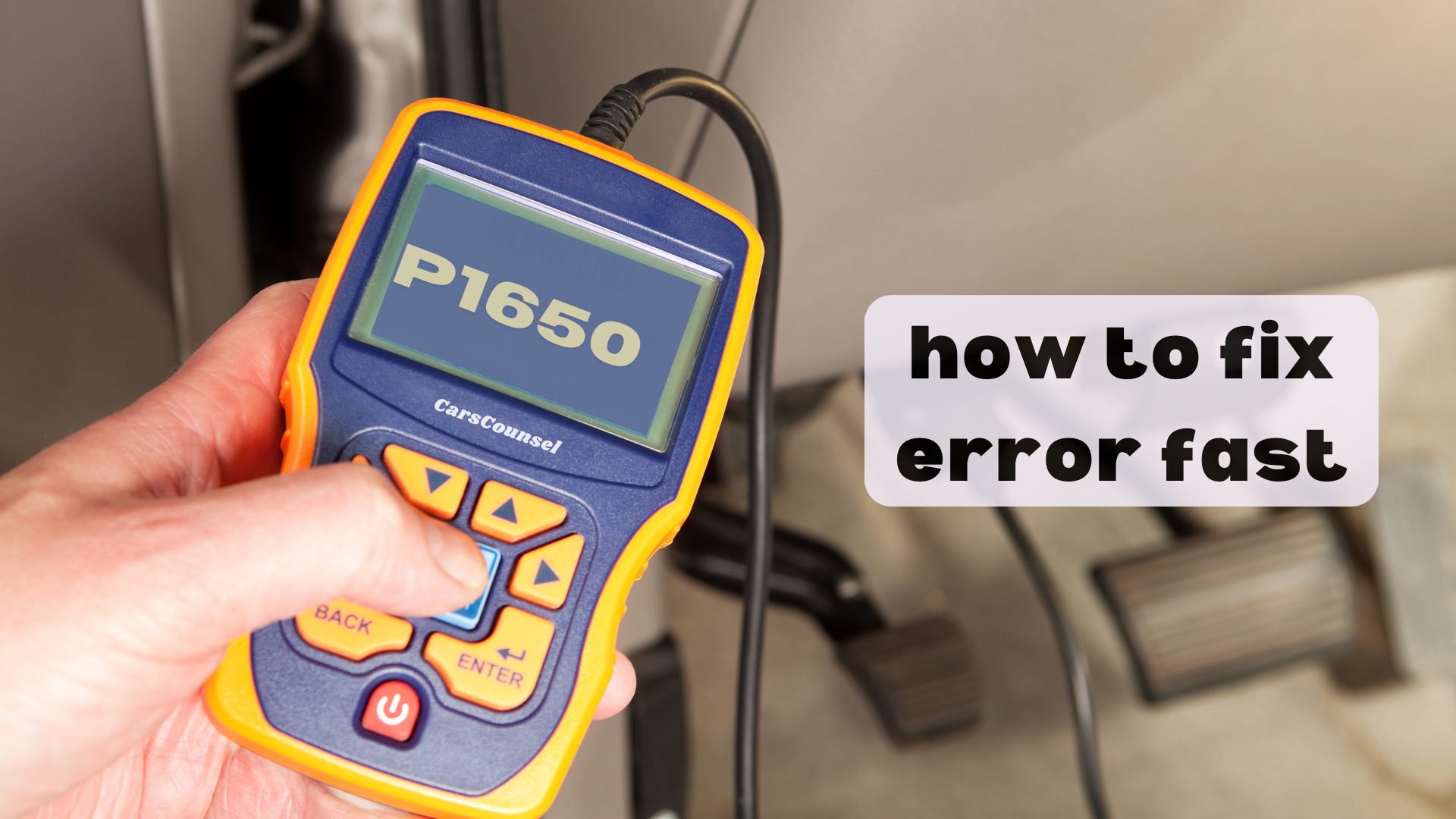
- Verify the definition: Use a scan tool to read the error code and consult the manufacturer’s service information to confirm what P1650 means for your specific vehicle.
- For PSP switch applications: Monitor the PSP switch PID during a KOER self-test. Turn the steering wheel lock-to-lock and verify if the switch state changes as commanded.
- For TAC system applications: Inspect the throttle body and accelerator pedal sensors. Check live data for throttle position correlation and test the relevant control circuits.
- Inspect wiring: Visually inspect the harness and connectors for the specific component identified by your manufacturer for damage, corrosion, or loose pins.
Repairing the P1650 Issue
Repairs must follow confirmed diagnosis based on the exact manufacturer procedure.
- PSP switch replacement: If the power steering pressure switch fails testing or the fluid level is correct but the signal remains static, replace the switch.
- Throttle body or sensor replacement: If the electronic throttle body or accelerator pedal position sensor fails correlation or circuit testing, replace the confirmed failed component.
- Wiring repair: Repair any chafed wires or replace corroded connectors to restore a clean signal path.
- Module service: If the manufacturer diagnostic procedure confirms an internal control module fault, follow the applicable module service or replacement procedure.
Cost Considerations for P1650 Repairs
Cost depends on diagnostic time, component accessibility, required parts, programming requirements, and labor.
Replacing a power steering pressure switch is generally less involved than diagnosing and replacing an electronic throttle body assembly that requires recalibration.
Prevention Strategies for Future Occurrences
- Maintain fluid levels: For vehicles with a PSP switch, keep the power steering fluid at the correct level and inspect for leaks to prevent switch damage.
- Protect wiring harnesses: Ensure engine bay wiring is securely routed away from hot exhaust components and sharp edges to prevent chafing.
Troubleshooting Tips and Best Practices
- Do not guess the definition: Assuming P1650 is a throttle issue on a Ford vehicle will lead to unnecessary and incorrect throttle body replacements. Always verify the factory definition first.
- Check for related codes: Look for accompanying codes. A PSP switch fault may appear alongside idle control codes, while a TAC fault will likely trigger other electronic throttle codes.
- Check for TSBs: Some manufacturers issue Technical Service Bulletins for updated sensor designs or revised software calibrations to address chronic false fault detection.
More OBD-II Codes
| P1635 | P1637 | P1638 | P1639 |
| P1641 | P1632 | P1651 | P1652 |
| P1653 | P1654 | P1655 | P1656 |
| P1658 | P1660 | P1661 | P1662 |
| P0500 | P0505 | P1600 | P1602 |
| P1604 | P1606 | P1608 | P1609 |
Frequently Asked Questions
Is P1650 a generic OBD-II code?
No. P1650 is a manufacturer-specific code. Its exact definition depends entirely on the automaker, commonly pointing to the power steering pressure switch or the throttle actuator control system.
Can a bad power steering pump cause a P1650 code?
Yes, on applications where P1650 monitors the power steering pressure switch. If the pump fails to generate adequate pressure, the switch may not change state during the self-test, triggering the code.
Will a P1650 code put my car in limp mode?
It depends on the application. If P1650 indicates a throttle actuator control system fault, the vehicle may enter limp mode. If it indicates a power steering pressure switch fault, limp mode is unlikely.
How do I clear a P1650 code after repairs?
Use an OBD-II scan tool to clear the code after confirming the repair. If the root cause was a power steering pressure switch or throttle body fault, the code should not return after a successful drive cycle.
Can I drive with a P1650 code active?
Driving is conditionally safe if the code relates to a power steering pressure switch. However, if it indicates a throttle actuator control fault, the vehicle may stall or lose power, making driving unsafe.
What Should You Do About the P1650 Code?
Because the P1650 code is manufacturer-specific, it requires verifying the exact factory definition for your vehicle before testing any components. Do not assume it relates to the throttle system if your vehicle uses it for the power steering system.
Confirm the exact definition, inspect the relevant wiring and connectors, and test the relevant system and components. Follow the manufacturer’s diagnostic procedure to isolate the faulty component, repair the confirmed root cause, and verify the repair.

