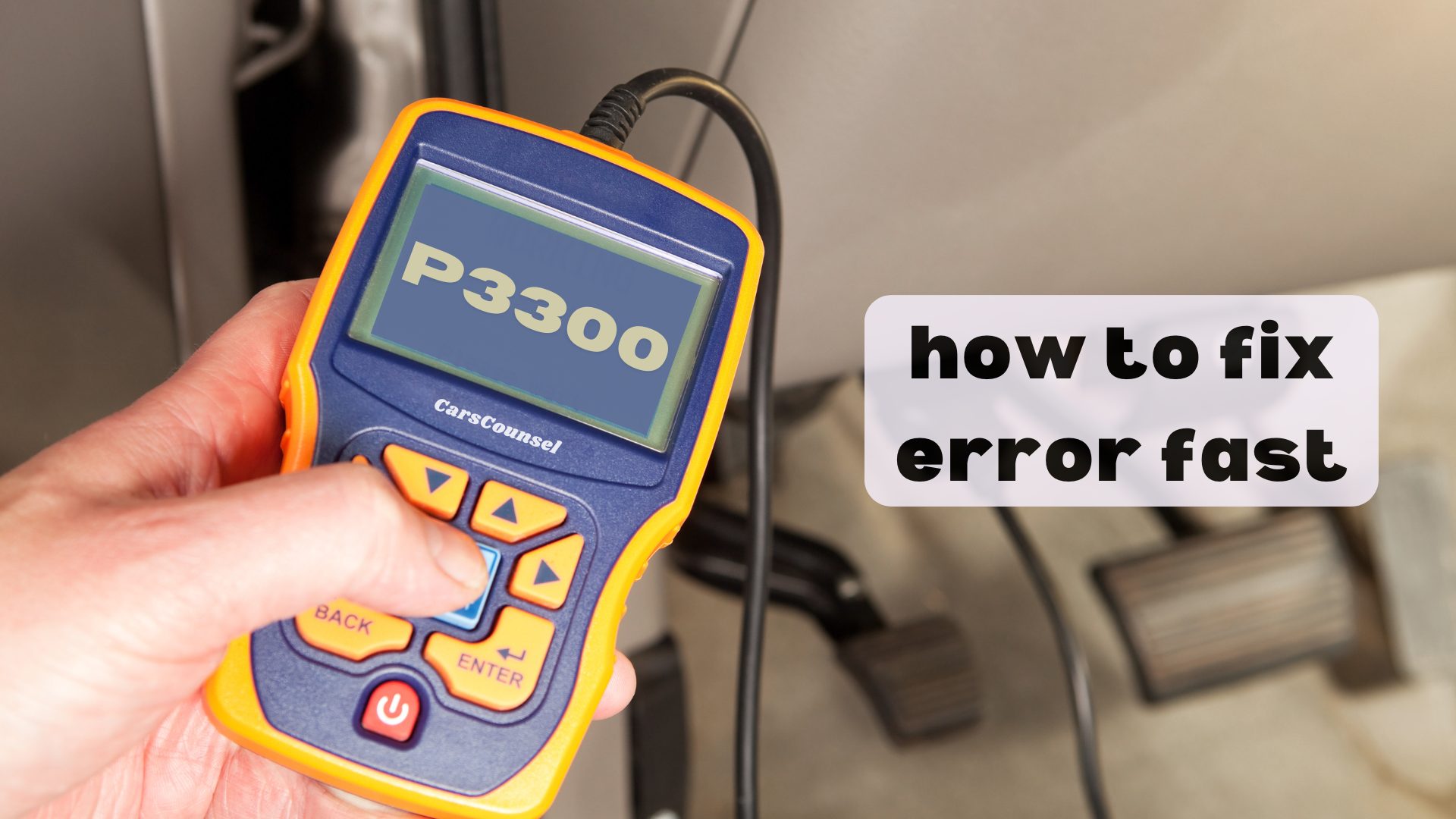
The P3300 code is a manufacturer-specific OBD-II trouble code, meaning its exact definition depends entirely on the vehicle make, model, and year. Because the P3000-P33FF range is reserved for manufacturer-controlled powertrain systems, there is no single universal definition for this code.
The exact application must be verified using factory service information, as the code could indicate a camshaft position sensor fault on one brand and an ignition or starter circuit issue on another. The code alone does not prove that any specific component has failed.
Quick Navigation
Key Takeaways
- P3300 is a manufacturer-specific code, meaning its exact definition varies by vehicle make and model.
- The code indicates a detected fault in a manufacturer-controlled powertrain system, but does not automatically prove a specific component has failed.
- Possible causes vary widely but may include camshaft position sensor circuit faults, ignition system issues, or starter relay faults depending on the manufacturer.
- Diagnosis requires consulting the exact factory service manual for the specific vehicle before testing or replacing any parts.
P3300 Code Description and Implications
Because P3300 falls within the P3000-P33FF range, it is a manufacturer-controlled diagnostic trouble code. This means the Society of Automotive Engineers (SAE) does not mandate a single universal definition for it.
Volkswagen and Audi applications: On many verified VAG platforms, P3300 indicates a short to ground in the Bank 1 exhaust camshaft position sensor circuit.
Other applications: Depending on the manufacturer, P3300 may be grouped under general ignition system faults, starter motor engagement protection circuits, or other proprietary powertrain monitors.
Some online resources incorrectly list P3300 as a universal hybrid battery or hybrid powertrain control module code. This is inaccurate; hybrid-specific faults typically fall under the P0Axx generic range or specific manufacturer ranges, making exact factory verification essential.
Common Causes of the P3300 Code
Because the definition varies by manufacturer, the possible causes depend entirely on the verified system being monitored.
For applications where P3300 indicates a camshaft position sensor circuit fault, possible causes include damaged wiring, corroded connectors, or a failed sensor.
For applications where it relates to an ignition or starter circuit, causes may involve faulty relays, open or shorted control wires, or internal control module faults.
Symptoms Associated With P3300
Symptoms depend entirely on the underlying system the manufacturer is monitoring.
If the code relates to a camshaft position sensor, symptoms may include extended cranking times, rough idling, or reduced engine performance.
If the code relates to a starter or ignition circuit, the vehicle may experience a no-crank or no-start condition.
MIL behavior varies by application. Some vehicles may illuminate the Check Engine Light, while others may store the DTC without commanding it or may trigger a specific system warning light.
Diagnosing the P3300 Trouble Code
Diagnosis must begin by confirming the exact factory definition of P3300 for the specific vehicle make, model, year, and engine configuration. Assuming the code relates to a hybrid battery or a specific sensor without verifying the application will lead to incorrect testing.
For applications where the code relates to a camshaft position sensor, the diagnostic path includes inspecting the sensor wiring for shorts to ground and verifying the sensor signal against manufacturer specifications.
For applications where the code relates to a starter or ignition circuit, testing the relevant relays, fuses, and control circuits is required.
Repairing the P3300 Issue
Repairs must follow the confirmed root cause identified during the manufacturer-specific diagnostic procedure.
If testing confirms wiring damage or connector corrosion in a sensor circuit, repairing the harness is necessary.
If a specific sensor, relay, or actuator fails the manufacturer’s electrical tests, replacing the confirmed failed component is required.
Cost Considerations for P3300 Repairs
Repair costs for a P3300 code vary based on the exact vehicle application, the confirmed root cause, and local labor rates.
If the issue is limited to a wiring repair or a standard sensor replacement, costs may be minimal. If the diagnosis confirms an internal control module fault or requires extensive harness repair, the overall cost will increase accordingly.
Prevention Strategies for Future Occurrences
Because P3300 relates to manufacturer-specific systems, preventing the code depends on the exact failure mechanism.
Inspecting exposed engine wiring harnesses and sensor connectors during routine service can help identify developing damage or corrosion before it causes a circuit fault.
Troubleshooting Tips and Best Practices
Always verify the exact application before purchasing parts or attempting repairs. A P3300 code on a Volkswagen involves a completely different diagnostic path than a P3300 on a different manufacturer’s platform.
Avoid relying on generic code lists that label P3300 as a universal hybrid battery fault. Always consult the exact factory service manual or a verified professional repair database for the specific vehicle.
More OBD-II Codes
| P2407 | P2419 | P242F | P2431 |
| P2433 | P2942 | P3400 | P3401 |
| P3425 | P3441 | P3449 | P3497 |
| P0335 | P0340 | P0300 | P0325 |
| P0301 | P0302 | P0303 | P0304 |
| P0420 | P0430 | P0171 | P0174 |
Frequently Asked Questions
Is the P3300 code generic or manufacturer-specific?
No. P3300 is a manufacturer-specific code. Its exact definition, monitored system, and diagnostic procedure depend entirely on the vehicle make, model, and year.
Is P3300 always a hybrid battery code?
No. While some online sources incorrectly list it as a universal hybrid battery code, P3300 is a manufacturer-controlled code that often relates to camshaft sensors, ignition systems, or starter circuits depending on the brand.
Can I drive my car with a P3300 code?
It depends on the application. If the code relates to a starter circuit, the vehicle may not start. If it relates to a camshaft sensor, the engine may run poorly. Always verify the exact fault before driving.
Will clearing the code fix a P3300 fault?
No. Clearing the code will not repair a shorted wire, failed sensor, or faulty relay. Because P3300 is a hard electrical or system fault, the code will return once the monitor runs again.
Does P3300 always mean the PCM is broken?
No. The code indicates a detected fault in a manufacturer-controlled circuit. The root cause is typically a wiring issue, sensor fault, or relay failure, requiring diagnosis before replacing any module.
What Should You Do About the P3300 Code?
Confirm the exact factory definition for your specific vehicle application. Because P3300 is a manufacturer-controlled code, the diagnostic path will differ significantly between a camshaft sensor circuit, an ignition fault, or a starter relay issue.
Follow the applicable manufacturer diagnostic procedure to test the relevant system and components. Once the root cause is confirmed, complete the necessary repairs and verify the system operation before returning the vehicle to service.

