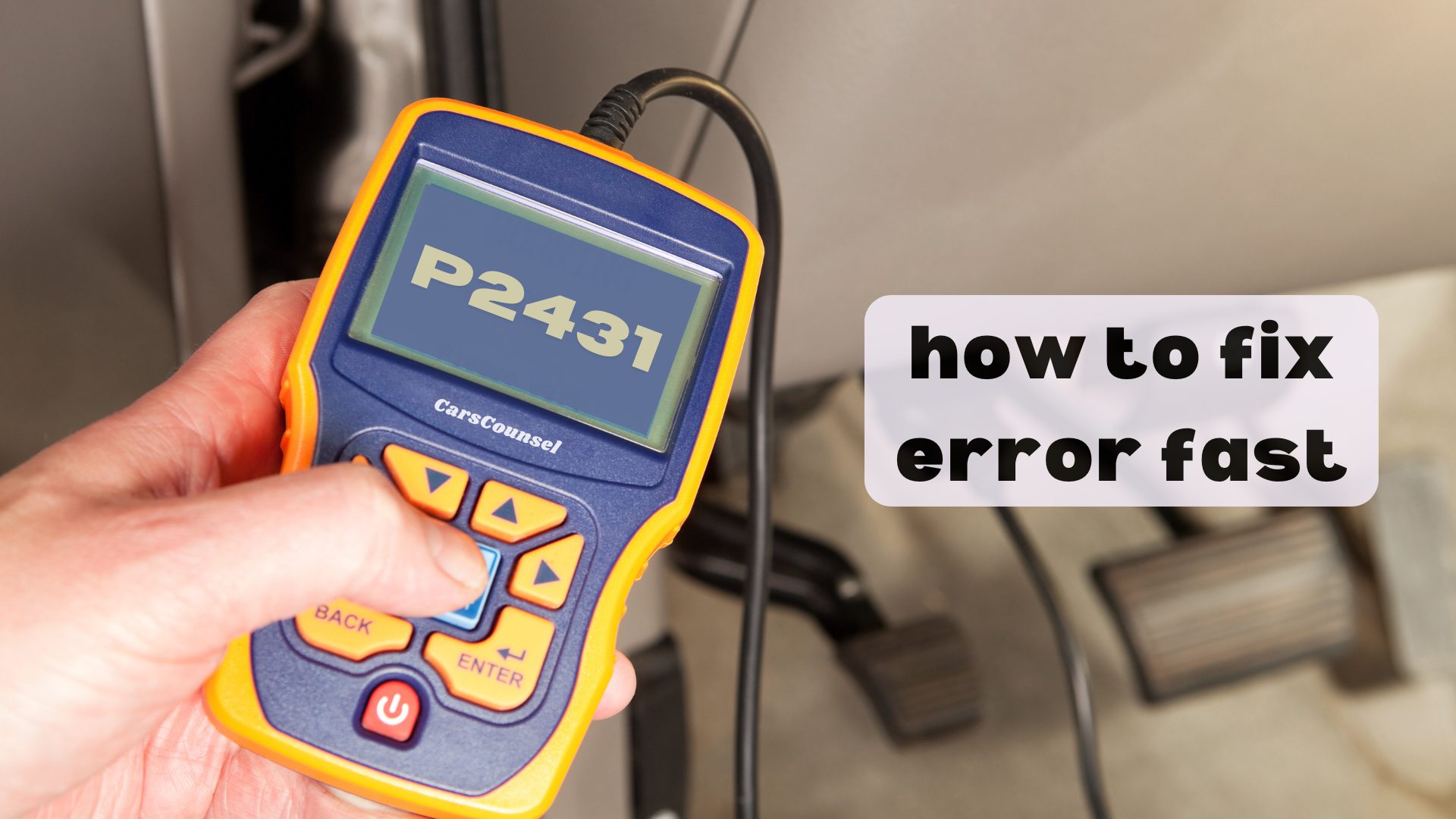
The P2431 code is a generic OBD-II diagnostic trouble code indicating “Secondary Air Injection System Air Flow/Pressure Sensor Circuit Range/Performance Bank 1.” It means the powertrain control module detected an irrational signal from the Bank 1 secondary air injection pressure or flow sensor.
This code does not automatically prove the sensor has failed. Diagnosis requires inspecting the secondary air injection system for exhaust leaks, testing the sensor circuit, and verifying the air pump operation before replacing components.
Quick Navigation
Key Takeaways
- The P2431 code indicates the control module detected a range or performance fault in the Bank 1 secondary air injection air flow or pressure sensor circuit.
- Possible causes include a failed sensor, damaged wiring, exhaust leaks before the sensor, or a faulty secondary air injection pump.
- Diagnosis involves inspecting the air injection hoses, testing the sensor’s reference voltage and signal circuit, and verifying air pump operation.
- Repairs may involve fixing exhaust leaks, repairing wiring, or replacing the confirmed failed sensor or air pump.
P2431 Code Description and Implications
The P2431 code indicates that the powertrain control module detected a range or performance fault in the Bank 1 secondary air injection air flow or pressure sensor circuit. This generic category of error codes applies to vehicles equipped with a secondary air injection system.
The secondary air injection system pumps fresh air into the exhaust stream during cold starts to help the catalytic converter reach operating temperature faster and reduce emissions. The control module monitors the pressure or flow sensor to verify the system is operating correctly.
When the module detects that the sensor signal is outside the expected range or does not correlate with the air pump command, it stores this code and may illuminate the Check Engine Light.
Common Causes of the P2431 Code
A failed secondary air injection pressure or flow sensor is a possible cause. The internal sensing element can degrade, providing an erratic or static voltage signal to the control module.
Damaged wiring, chafed insulation, or corroded connectors in the sensor harness will interrupt the 5-volt reference, signal, or ground circuits, causing a performance fault.
An exhaust leak upstream of the sensor, a failing secondary air injection pump, or a stuck check valve can cause actual air flow to deviate from expected parameters, triggering a rationality fault.
Symptoms Associated With P2431
An illuminated Check Engine Light is expected once the monitor detects the circuit or performance fault. MIL behavior varies by application, but the light commands when the electrical or rationality fault is verified.
You may hear a loud whining or buzzing noise from under the hood during cold starts if the secondary air injection pump is failing or if the check valve is stuck.
In some applications, there may be no noticeable drivability symptoms, as the secondary air injection system operates only during cold starts and does not affect normal driving performance.
Diagnosing the P2431 Trouble Code
Diagnosis must begin by confirming the exact factory definition and checking for related secondary air injection or misfire codes. Record freeze-frame data to see the engine temperature and sensor readings when the code set.
Perform a thorough visual inspection of the secondary air injection hoses, check valves, and electrical connectors. Look for cracked hoses, melted plastic, or exhaust soot indicating a leak.
Use a scan tool to monitor the secondary air injection pressure sensor live data while commanding the air pump on. Test the sensor’s reference voltage, signal, and ground circuits with a multimeter.
If the wiring and air pump test correctly but the sensor signal remains irrational, the sensor itself may be faulty.
Repairing the P2431 Issue
Repairs must follow confirmed diagnosis. If an exhaust leak is found in the secondary air injection hoses or check valve, replace the damaged components to restore proper air flow routing.
If electrical testing confirms the pressure or flow sensor is providing an erratic signal despite a stable 5-volt reference and good ground, replace the sensor using a component meeting the exact vehicle specification.
If the secondary air injection pump is confirmed failed or drawing excessive current, replace the pump and verify the check valve is not allowing exhaust backpressure to damage the new pump.
Cost Considerations for P2431 Repairs
Cost depends on diagnostic time, component accessibility, required parts, programming requirements, and labor.
Replacing a secondary air injection hose or check valve involves minimal parts and moderate labor expenses.
If the pressure sensor or the air injection pump requires replacement, the cost of the component and the labor to access it under the vehicle or in the engine bay will dictate the overall repair price.
Prevention Strategies for Future Occurrences
Inspecting the secondary air injection hoses and check valves during routine under-hood service can help identify developing cracks, heat damage, or degradation before they cause an exhaust leak.
Ensuring that the air injection pump intake filter is clean and free of debris helps prevent the pump from failing prematurely due to restricted air flow.
Some electrical sensor failures occur due to normal component aging and harsh engine bay environments, and cannot be reliably prevented.
Troubleshooting Tips and Best Practices
Do not attempt to fix a P2431 code by simply replacing the pressure sensor without checking the air pump and hoses first. A leaking check valve or cracked hose is a frequent cause of rationality faults.
Always verify the exact location of the secondary air injection components. On some applications, the pump is located low in the engine bay or behind a wheel well, making it susceptible to water and road debris intrusion.
Check for technical service bulletins for your exact vehicle application, as some manufacturers release updated check valve designs or revised pump assemblies to address chronic secondary air injection faults.
More OBD-II Codes
| P2401 | P2402 | P2404 | P2407 |
| P2419 | P242F | P2534 | P2600 |
| P2601 | P2723 | P2942 | P3000 |
| P2002 | P2004 | P2005 | P2006 |
| P0440 | P0441 | P0442 | P0446 |
| P0420 | P0430 | P0171 | P0174 |
Frequently Asked Questions
Is the P2431 code generic or manufacturer-specific?
Yes, P2431 is a generic SAE OBD-II diagnostic trouble code. However, the exact secondary air injection system architecture and testing procedures vary by manufacturer and vehicle application.
Will a P2431 code cause my engine to stall?
No. The secondary air injection system operates primarily during cold starts to reduce emissions. A P2431 code does not affect normal warm-engine drivability and will not cause the engine to stall.
Does a P2431 code mean my air pump is broken?
Not necessarily. While the air pump can fail, the code is also caused by a failed pressure sensor, damaged wiring, or a leaking check valve. Proper electrical and mechanical testing is required first.
Can an exhaust leak cause a P2431 code?
Yes. An exhaust leak in the secondary air injection hoses or a stuck check valve can cause actual air flow to deviate from expected parameters, triggering a rationality or performance fault in the control module.
Can I clear the P2431 code without fixing the problem?
Clearing the code only resets the warning light. If the underlying exhaust leak, failed sensor, or wiring issue remains, the monitor will detect the fault during the next cold start and turn the light back on.
What Should You Do About the P2431 Code?
Confirm the exact factory definition and check for related secondary air injection codes for your specific vehicle application. Follow the applicable manufacturer diagnostic procedure to verify whether the fault lies in the air injection hoses, the sensor circuit, or the air pump.
Once testing confirms the root cause, repair or replace the confirmed failed component in the relevant system and components, then retest the secondary air injection operation and clear the codes.

