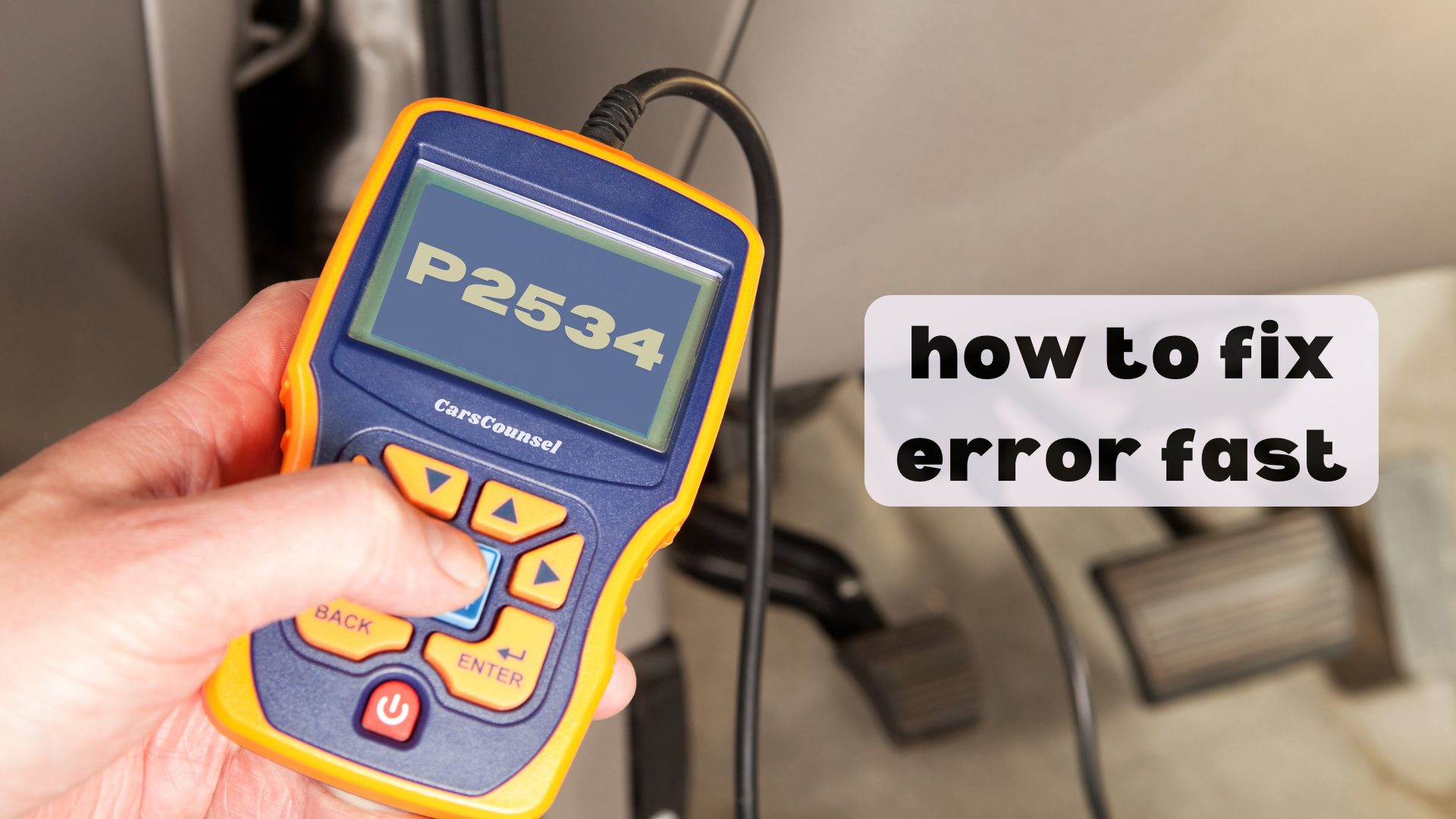
The P2534 code is a generic OBD-II diagnostic trouble code indicating “Ignition Switch Run/Start Position Circuit Low.” It means the powertrain control module detected an abnormally low voltage on the ignition switch circuit when it should be receiving power.
This code does not automatically prove the ignition switch has failed. Diagnosis requires checking the wiring, fuses, and testing the switch circuits before replacing any components.
Quick Navigation
Key Takeaways
- The P2534 code indicates the control module detected a low voltage condition on the ignition switch run/start circuit.
- Possible causes include a faulty ignition switch, blown fuses, damaged wiring, or corroded connectors.
- Diagnosis involves verifying fuse integrity, inspecting the harness, and testing the switch circuits for proper voltage.
- Repairs may involve replacing fuses, repairing wiring, or replacing the confirmed failed ignition switch assembly.
P2534 Code Description and Implications
The P2534 code indicates that the powertrain control module detected a low voltage condition on the ignition switch run/start position circuit. This generic OBD2 error code applies to many vehicles equipped with electronically monitored ignition circuits.
The module monitors the ignition switch to verify that the electrical state matches the physical key position. When the key is turned to the “Run” or “Start” position, the module expects to see battery voltage on the specific circuit.
If the module detects that the voltage remains low or drops out while the engine is running or cranking, it stores this code. This indicates an electrical supply fault, not necessarily a complete ignition system failure.
Common Causes of the P2534 Code
A blown fuse supplying power to the ignition switch or the control module is a primary cause. An open fuse prevents battery voltage from reaching the run/start circuit.
Damaged wiring, chafed insulation, or corroded connectors in the harness between the ignition switch and the powertrain control module will interrupt the voltage signal.
An internally failed ignition switch can prevent the internal contacts from closing properly, failing to pass battery voltage to the run/start circuit when the key is turned.
In rare instances, an internal fault within the powertrain control module itself may prevent it from properly reading the ignition circuit voltage.
Symptoms Associated With P2534
An illuminated Check Engine Light is expected once the monitor detects the circuit fault. MIL behavior varies by application, but the light commands when the electrical fault is verified.
You may experience a no-crank or no-start condition if the control module does not receive the proper run/start signal to enable the starter relay or fuel injection system.
In some applications, the engine may stall unexpectedly while driving if the ignition switch intermittently drops voltage on the run circuit, cutting power to critical engine sensors.
Diagnosing the P2534 Trouble Code
Diagnosis must begin by confirming the exact factory definition and checking for related electrical or immobilizer codes. Record freeze-frame data to see the conditions when the code set.
Check all relevant fuses in the interior and under-hood fuse boxes. A visual inspection or multimeter continuity test will quickly identify a blown fuse protecting the ignition circuit.
Inspect the wiring harness and connectors at the ignition switch and the control module for physical damage, corrosion, or loose pins.
Use a multimeter to test the ignition switch output terminals for proper battery voltage in the “Run” and “Start” positions according to the manufacturer wiring diagram.
Repairing the P2534 Issue
Repairs must follow confirmed diagnosis. If a blown fuse is found, replace it with the correct amperage rating and investigate why it blew, such as a short to ground in the harness.
If the wiring harness is damaged or connectors are corroded, repair the circuit and secure the harness to prevent future rubbing or moisture intrusion.
If electrical testing confirms the ignition switch fails to output voltage in the run or start positions, replace the switch using a component meeting the exact vehicle specification.
Cost Considerations for P2534 Repairs
Cost depends on diagnostic time, component accessibility, required parts, programming requirements, and labor.
Replacing a blown fuse or repairing a damaged wire involves minimal parts and labor expenses.
If the ignition switch is located behind the steering column airbag and lock cylinder, the labor hours to safely access and replace it will increase the overall repair cost.
Prevention Strategies for Future Occurrences
Inspecting exposed ignition wiring harnesses and connectors under the dashboard during routine service can help identify developing insulation damage or moisture intrusion before it causes an open circuit.
Avoiding the attachment of heavy aftermarket accessories directly to the ignition switch circuits helps prevent overloading the internal switch contacts and blowing fuses.
Some internal ignition switch failures occur due to normal mechanical and electrical component aging and cannot be reliably prevented through standard maintenance.
Troubleshooting Tips and Best Practices
Do not assume the ignition switch is faulty without checking the fuses first. A simple blown fuse is a frequent cause of a low voltage circuit code.
Always verify battery health and main ground connections. A severely depleted battery or poor main ground can cause system-wide low voltage conditions that trigger multiple circuit codes.
Check for technical service bulletins for your exact vehicle application. Some manufacturers release revised ignition switch designs or updated wiring harness pigtails to address chronic contact failures.
More OBD-II Codes
| P2431 | P242F | P2419 | P2407 |
| P2404 | P2402 | P2600 | P2601 |
| P2723 | P2942 | P3000 | P3300 |
| P0621 | P0622 | P0560 | P0562 |
| P0563 | P0602 | P0601 | P0603 |
| P0604 | P0605 | P0606 | P0607 |
Frequently Asked Questions
Is the P2534 code generic or manufacturer-specific?
Yes, P2534 is a generic SAE OBD-II diagnostic trouble code. However, the exact ignition switch wiring and diagnostic steps vary by manufacturer and vehicle application.
Can a blown fuse cause a P2534 code?
Yes. The ignition switch circuits are protected by fuses. A blown fuse will cut power to the run/start circuit, causing the control module to detect a low voltage condition.
Will a P2534 code prevent my car from starting?
It can. If the control module does not receive the proper run/start signal due to the circuit fault, it may disable the starter relay or fuel injection system, resulting in a no-start condition.
Does a P2534 code mean I need a new ignition switch?
Not necessarily. While an internal switch failure is possible, the code is frequently caused by a blown fuse, damaged wiring, or corroded connectors. Proper electrical testing is required first.
Can I clear the P2534 code without fixing the problem?
Clearing the code only resets the warning light. If the underlying blown fuse, wiring fault, or failed switch remains, the monitor will detect the low voltage immediately and turn the light back on.
What Should You Do About the P2534 Code?
Confirm the exact factory definition and check for related electrical codes for your specific vehicle application. Follow the applicable manufacturer diagnostic procedure to verify whether the fault lies in the fuses, wiring, or the ignition switch itself.
Once testing confirms the root cause, repair or replace the confirmed failed component in the relevant system, then retest the ignition circuits to ensure proper voltage is present in all key positions.

