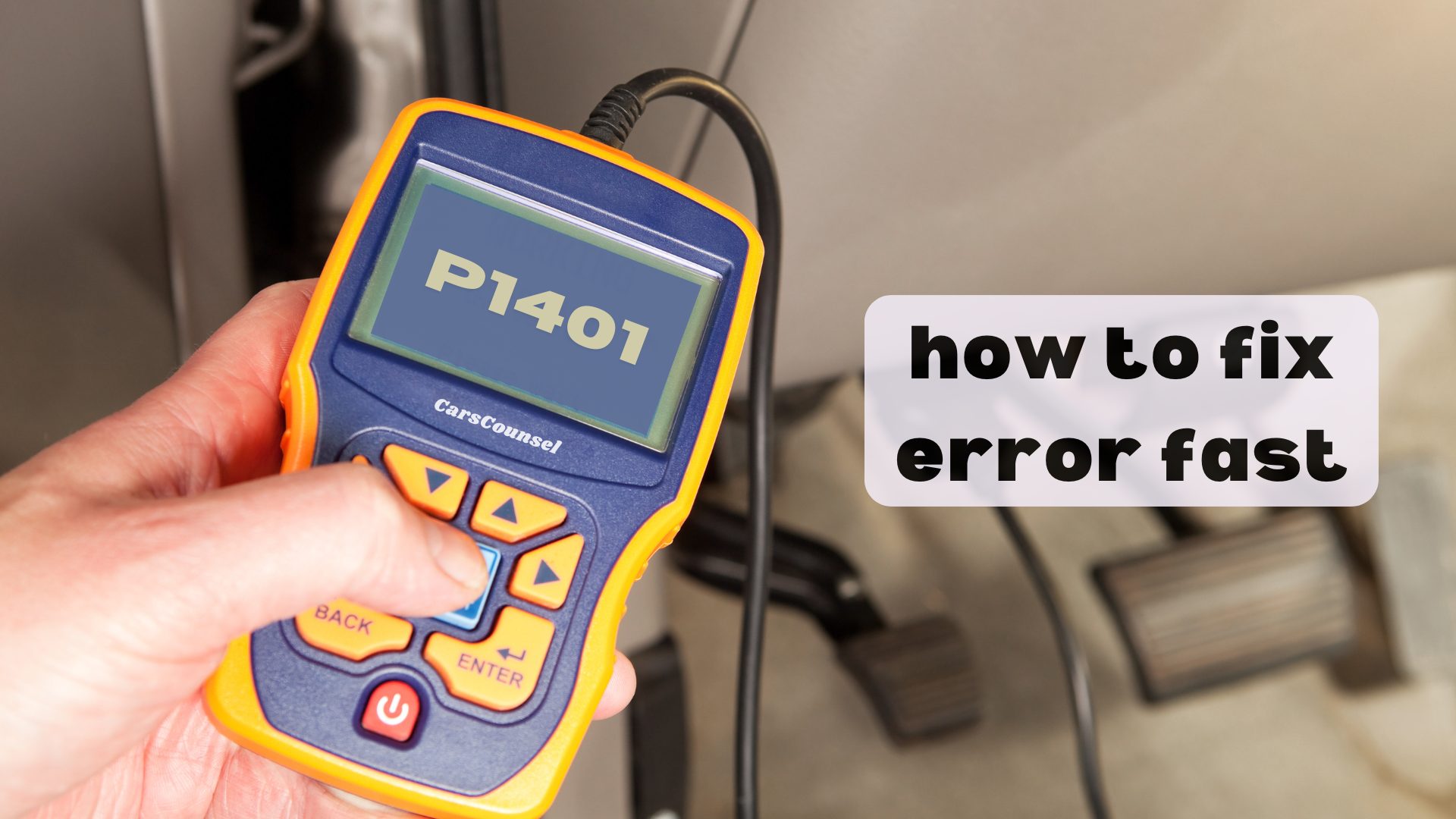
P1401 is a manufacturer-specific OBD-II diagnostic trouble code. Its exact definition depends on the vehicle application, but it typically indicates a fault in the Exhaust Gas Recirculation (EGR) system monitoring circuits.
This code identifies a detected condition rather than confirming a single failed component. The underlying cause requires targeted electrical and component diagnosis based on the exact factory definition.
Quick Navigation
Key Takeaways
- P1401 is a manufacturer-specific code indicating a fault in the EGR monitoring system, such as a DPFE sensor circuit high voltage on many Ford applications.
- Possible causes include a failed DPFE or EGR position sensor, damaged wiring, corroded connectors, or restricted EGR passages.
- Diagnosis requires verifying the exact factory definition, inspecting the EGR wiring, and testing the sensor circuits and vacuum supply.
- Repairs depend on the confirmed root cause and may involve sensor replacement, wiring repair, or cleaning carbon deposits from the EGR system.
P1401 Code Description and Implications
P1401 is a manufacturer-specific code, meaning its exact definition and diagnostic procedures depend on the vehicle application.
Some Ford applications: P1401 indicates a high voltage condition in the Differential Pressure Feedback EGR (DPFE) sensor circuit. The DPFE sensor measures the pressure drop across an orifice in the EGR tube to calculate exhaust gas flow.
Certain Volkswagen, Audi, and Toyota applications: P1401 may indicate an EGR flow deviation, an EGR valve position sensor circuit fault, or an EGR temperature sensor issue.
Because it is a manufacturer-specific code, generic diagnostic paths cannot account for the unique sensor types and circuit architectures used by different automakers.
When diagnosing OBD2 trouble codes related to emissions, verifying the exact factory definition is the most critical first step.
Common Causes of the P1401 Code
The underlying causes for a P1401 code vary by application but generally involve the EGR sensors, wiring, or mechanical passages.
Failed DPFE or Position Sensor: The internal electronics of the sensor may fail, sending an out-of-range voltage signal to the control module.
Wiring and Connector Issues: Damaged wiring, chafed insulation, or corroded connectors in the sensor circuit can cause a short to voltage or an open circuit.
Restricted EGR Passages: Heavy carbon buildup in the EGR valve, tube, or intake manifold can restrict flow, causing the sensor readings to deviate from expected values.
Vacuum Supply Problems: On vacuum-operated EGR valves, a cracked hose or a failing vacuum solenoid can prevent the valve from opening properly.
Symptoms Associated With P1401
The prominent symptom is the illumination of the Check Engine Light.
Depending on the manufacturer’s fail-safe strategies, the vehicle may enter a limp mode or disable the EGR system entirely.
Drivers may notice engine hesitation, rough idling, or knocking under acceleration if the EGR valve is stuck open or closed.
Fuel efficiency may decrease slightly, and the vehicle may fail an emissions test due to elevated Nitrogen Oxide (NOx) levels.
Diagnosing the P1401 Trouble Code
Diagnosis must begin by confirming the exact factory service information for the vehicle’s specific make and engine.
For DPFE sensor applications, visually inspect the sensor hoses for melting, cracking, or blockages, as these are common failure points.
Use a digital multimeter to test the sensor’s reference voltage, signal circuit, and ground according to the manufacturer’s specifications.
Use a scan tool capable of displaying live data to monitor the EGR sensor readings at idle and during a commanded EGR flow test.
If the electrical circuits test correctly, inspect the EGR valve and passages for mechanical carbon restriction.
Repairing the P1401 Issue
Repairs must follow confirmed diagnosis. Never replace EGR components solely based on the presence of the code.
If the DPFE sensor hoses are melted or cracked, replace the hoses and retest the system before condemning the sensor.
If electrical testing confirms the sensor has failed its circuit tests, replace the DPFE or EGR position sensor.
If carbon buildup is restricting flow, remove the EGR valve and clean the passages with an appropriate solvent and brush.
If vacuum supply issues are found, replace the cracked hoses or the faulty vacuum control solenoid.
Cost Considerations for P1401 Repairs
Repair costs vary considerably depending on the confirmed root cause and the specific vehicle application.
Replacing a set of DPFE sensor hoses or cleaning carbon deposits involves minimal parts costs and standard labor.
Replacing a DPFE sensor or EGR position sensor involves moderate parts costs and minimal labor.
Cost depends on diagnostic time, component accessibility, required parts, programming requirements, and labor.
Prevention Strategies for Future Occurrences
Preventing EGR system codes requires attention to the engine’s combustion environment and maintenance schedule.
Using high-quality fuel and addressing engine misfires or oil consumption issues promptly helps reduce the rate of carbon buildup in the EGR passages.
Inspecting the DPFE sensor hoses during routine maintenance can help identify developing heat damage before it causes a circuit or pressure fault.
Troubleshooting Tips and Best Practices
Always check for Technical Service Bulletins related to P1401 for your specific vehicle application.
Manufacturers may release updated DPFE sensor designs with improved heat resistance, or revised EGR cleaning procedures to address known flow issues.
Do not assume the EGR valve itself has failed simply because an EGR sensor code is present.
A simple melted rubber hose on a DPFE sensor or a corroded connector pin is a much more probable cause than a mechanical valve failure.
If the vehicle exhibits severe knocking, verify that the EGR valve is not stuck in the open position, which can cause a severe lean misfire at idle.
More OBD-II Codes
| P1400 | P1399 | P1398 | P1397 |
| P1396 | P1395 | P1403 | P1404 |
| P1405 | P1406 | P1407 | P1408 |
| P1409 | P1410 | P1415 | P1416 |
| P1444 | P1445 | P1446 | P1447 |
| P1475 | P1476 | P1477 | P1478 |
Frequently Asked Questions
Is the P1401 code generic or manufacturer-specific?
No. P1401 is a manufacturer-specific code. Its exact definition depends on the vehicle application, though it commonly relates to DPFE or EGR position sensor circuits on Ford, VW, and Toyota vehicles.
Can a bad DPFE sensor hose cause a P1401 code?
Yes. On applications using a DPFE sensor, the rubber hoses connecting the sensor to the EGR tube frequently melt or crack. This causes incorrect pressure readings and triggers the code without the sensor itself being faulty.
Will disconnecting the battery clear the P1401 code?
Disconnecting the battery may temporarily clear the code, but it does not repair the underlying electrical or mechanical fault. It also erases valuable freeze frame data and resets readiness monitors, complicating professional diagnosis.
Can I drive my vehicle with a P1401 code?
Driving short distances is usually possible, but extended driving is not recommended. A malfunctioning EGR system can cause engine knocking, elevated NOx emissions, and potential catalytic converter damage over time.
Does P1401 always mean the EGR valve must be replaced?
No. This code typically points to a sensor circuit fault, a damaged vacuum hose, or carbon restriction. The EGR valve itself is only replaced if mechanical testing confirms it is stuck or internally failed.
What Should You Do About the P1401 Code?
Confirm the exact factory definition and diagnostic procedure for your specific vehicle application before attempting repairs.
Do not assume the EGR valve requires replacement based solely on the presence of the diagnostic trouble code.
Inspect the relevant sensor wiring, vacuum hoses, and EGR passages to rule out external electrical faults and carbon restrictions.
Follow the applicable manufacturer diagnostic workflow to isolate the relevant system and components before replacing any hardware.

